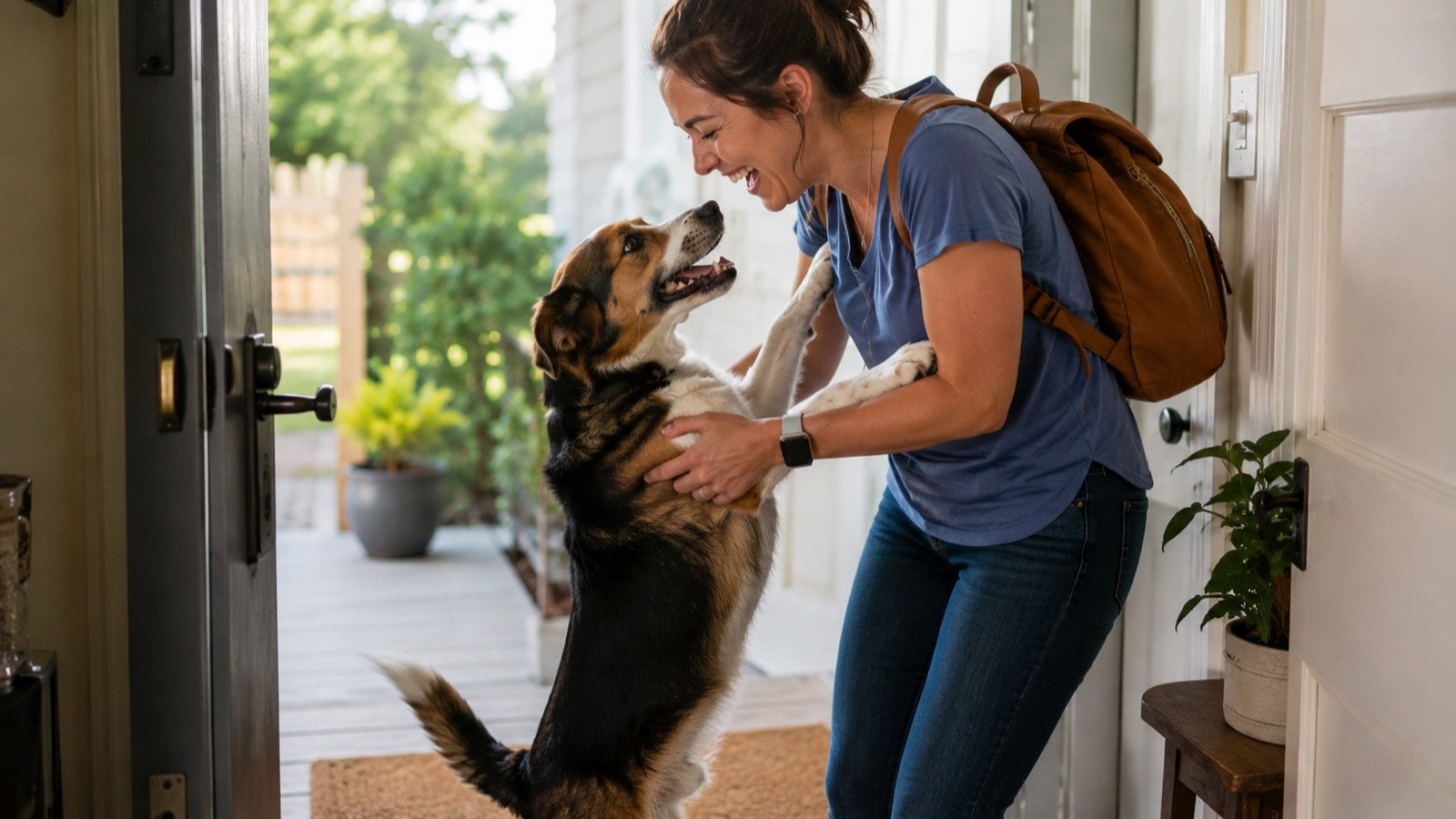
To stop a dog jumping on people, stop rewarding the jump with attention. Turn away and ignore your dog the instant they jump, and give attention only when all four paws are on the floor. Teach a "sit" to say hello, ask visitors to do the same, and be consistent — jumping fades when it stops working.
Jumping up is one of the most common — and most misunderstood — dog behaviors. Your dog isn't being dominant or rude. They're saying an excited hello, aimed at your face. The trick isn't to punish the greeting; it's to teach a better one. Here's how.
Why does my dog jump on people?
Two reasons, almost always: greeting and attention. Our faces are up high, so a dog jumps to get close to them. And here's the catch — when your dog jumps and you look at them, talk to them, or push them down, that's all attention. To your dog, even "off!" is a reaction worth having. So the jumping gets paid, and the habit grows.
The core idea: your dog jumps because it works. Make jumping stop working — and make keeping four paws down work instead — and the behavior fades on its own.
Should you knee, push, or grab your dog?
No. Kneeing a dog in the chest, grabbing their paws, or shoving them off can hurt or frighten them — and plenty of dogs read the rough contact as exciting play, so it backfires. Aversive corrections also risk your dog's trust. Veterinary behavior guidance (AVSAB) recommends reward-based methods over punishment for exactly these reasons. The kind fix works better anyway.
How do you stop jumping? (the four-on-the-floor method)
- The instant your dog jumps, remove your attention. Turn your back, fold your arms, look away, and say nothing. Become the most boring thing in the room.
- The moment all four paws are on the floor, reward it — attention, praise, a treat. You're teaching that calm gets the hello, jumping makes you disappear.
- Teach a "sit to greet." Ask for a sit before any attention. A sitting dog can't jump, and it gives your dog a clear, rewarding job to do when they're excited.
- Repeat, everywhere. Practice with calm family first, then guests. Expect a brief spike in jumping before it fades — that's normal.
How do you handle greetings at the door and with visitors?
Guests are the hardest test because they're exciting and they often reward jumping by accident. Set your dog up to win:
- Manage the moment: keep your dog on a leash or behind a gate at first, so they can't practice jumping on visitors.
- Brief your guests: ask them to ignore your dog until they sit, then say hello calmly. One person rewarding a jump can undo days of work.
- Reward calm heavily during arrivals, and keep your own hellos low-key.
Should you teach an "off" cue?
Yes — a simple "off" gives your dog a clear word for "four paws on the floor," and it works for furniture and counters too. Teach it calmly: the moment all four paws are down, say "off," then mark and reward. Said gently — never as a scold — and paired with the four-on-the-floor rule, "off" becomes a helpful reminder, not a punishment. Together with a "sit to greet," it gives your dog two polite alternatives to jumping — the same building blocks I use to teach a reliable recall.
An over-excited dog jumps more. Brain Training for Dogs burns mental energy and builds the impulse control behind a calm greeting — all force-free. See what's inside in our honest review.
Read our Brain Training for Dogs review → Independent review · we may earn a commission at no extra cost to you.Why does consistency matter so much?
Jumping is kept alive by intermittent rewards — if it works even one time in ten, your dog keeps trying. That's why everyone who meets your dog has to follow the same rule: no attention for jumping, lots of attention for four-on-the-floor. When the whole household and your visitors are consistent, most dogs improve within a few weeks.
What if it's pure over-excitement?
Some dogs jump because they're bursting with unspent energy. Daily exercise plus mental work takes the edge off, making calm greetings far easier to teach — start with my list of 12 games that tire a dog out. And if your dog blows past you the second they're excited, that's a focus gap I cover in why your dog ignores you — the same excitement that shows up as pulling hard on the leash the moment you step outside. It all ties back to the basics in my home training guide.
Frequently asked questions
Why does my dog jump on people?
Mostly to greet and get attention. Faces are up high, so jumping is your dog's way of saying hello — and because people react (even by pushing them off), the jumping gets rewarded and becomes a habit.
Should I knee my dog in the chest to stop jumping?
No. Kneeing, pushing, or grabbing can hurt or scare your dog, and many read it as exciting attention or play, which makes jumping worse. Ignore the jump and reward four paws on the floor instead.
How do I stop my dog jumping when I come home?
Keep arrivals calm and boring. Ignore your dog until all four paws are down, then greet quietly. Ask for a sit before any attention. With consistency, the excited jumping fades within weeks.
Can an older dog stop jumping?
Yes. Jumping is a learned habit, and dogs of any age can learn a better greeting. It just takes consistency from everyone who meets your dog — reward calm, ignore the jump.
What command do you use to stop a dog jumping?
A calm "off" (for four paws on the floor) plus a "sit to greet" are the two most useful. Say "off" gently the moment all four paws are down, then reward — it's a cue, not a scold.
How do I stop my dog jumping up on visitors?
Manage first: keep your dog on a leash or behind a gate when guests arrive, and ask visitors to ignore your dog until they sit. Reward calm, four-on-the-floor greetings heavily. Consistency from every guest is what makes it stick.
Sources
Where this guide makes a claim about training method, behaviour or health, this is where it comes from. Checked August 2026.
- ASPCA. Teaching Your Dog Not to Jump on People. Accessed August 2026. aspca.org
- American Veterinary Society of Animal Behavior (AVSAB). Humane Dog Training Position Statement, 2021 — recommends that only reward-based training methods are used for all dog training, including the treatment of behaviour problems. Accessed August 2026. avsab.org
- ASPCA. Position Statement on Training Aids and Methods — opposes any training equipment that causes a pet physical discomfort or undue anxiety. Accessed August 2026. aspca.org
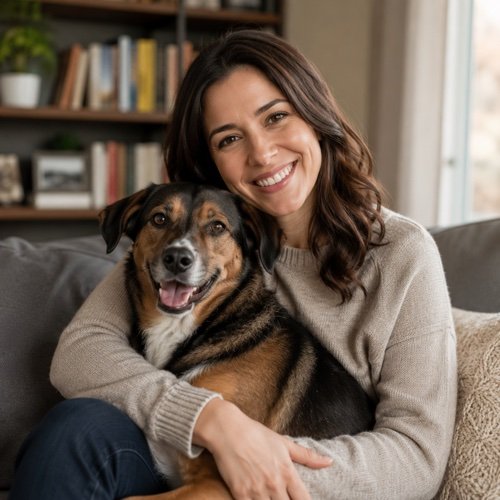
Canine behavior writer & rescue foster
Megan has fostered more than 30 rescue dogs, plenty of them bouncy greeters, and has taught every one a calm "sit to say hello" with nothing but consistency and rewards. She writes PawHonest to share honest, force-free dog advice.
A note on trust: If your dog's jumping comes with growling, stiffness, or seems driven by fear rather than excitement, consult a certified trainer or behaviorist. PawHonest is reader-supported: we may earn a small commission on purchases through our links, at no extra cost to you, and only recommend what we'd use on our own dogs.