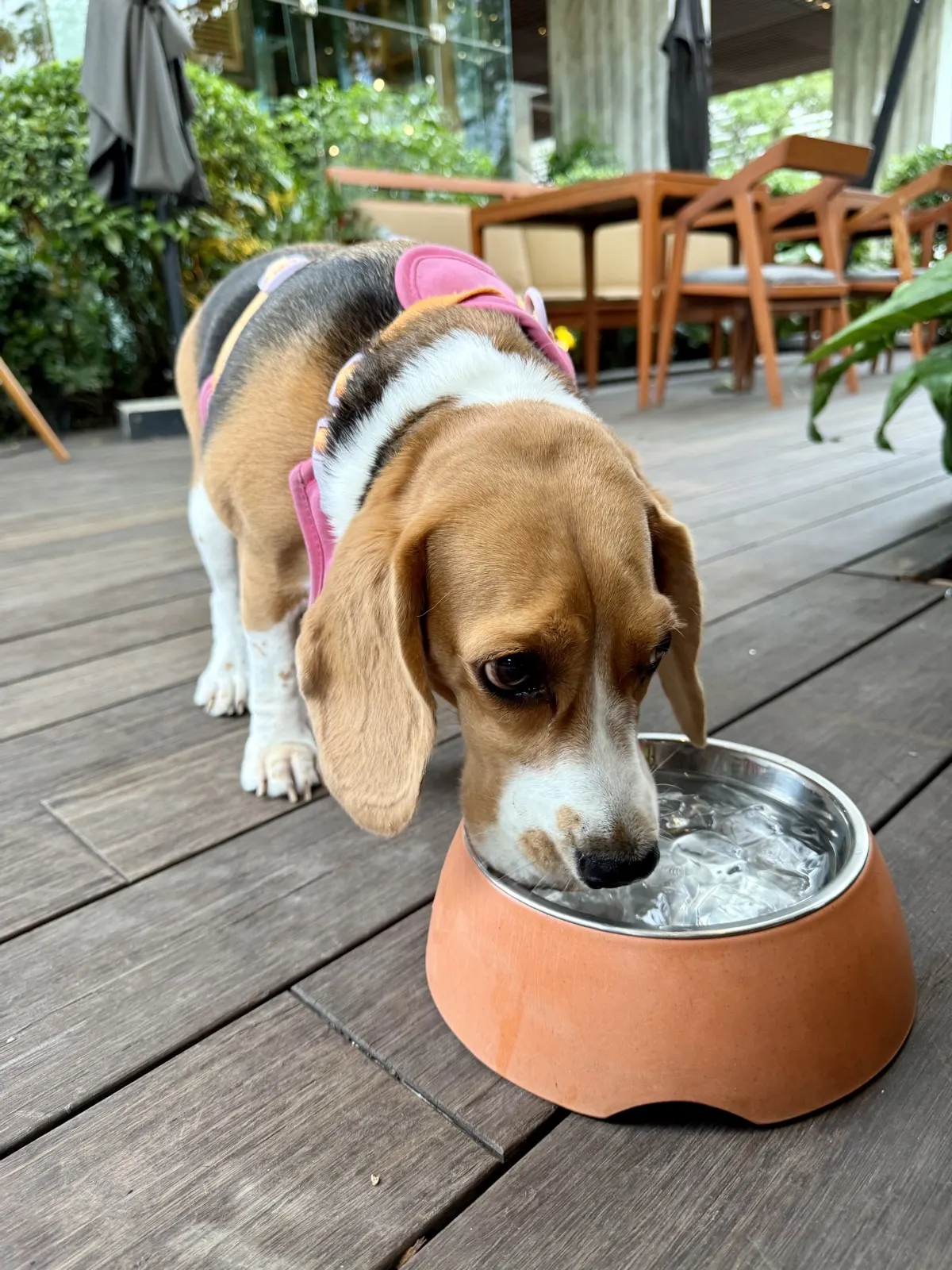
Diarrhea past two days, or any diarrhea with blood, black stool, vomiting, lethargy or a swollen belly, needs a vet — not more waiting. In a puppy, diarrhea plus vomiting is urgent regardless of how many days it's been. A healthy adult dog with one or two loose stools and no other symptoms can usually be watched for 24 hours first.
Go to an emergency vet now if you see: stool that's black and tarry, or has fresh blood in it · a puppy under 6 months with diarrhea and vomiting, especially if unvaccinated · a hard or visibly swollen belly · repeated vomiting alongside the diarrhea · pale, grey or blue gums · weakness, collapse, or a dog too flat to get up. These don't wait for a morning appointment.
I've fostered dogs who came off a shelter transport with stress diarrhea that cleared in a day, and I've fostered one whose "just a bit off" turned into an overnight emergency vet trip by dinnertime. The difference wasn't how many days it had been going on. It was a handful of specific signs — and almost nobody explains what they actually are.
Here's how to read those signs, including a check that gives you a real number instead of a guess.
How long is too long?
Veterinary guidance is consistent on this: frequent loose or watery stools that carry on for more than two days are a reason to call your vet, even without any other symptoms. So if you're at three days, you're past that line, not approaching it.
That doesn't automatically mean an emergency room. It means a same-day or next-day appointment with your regular vet — unless one of the signs below is also present, in which case it moves to "now."
Why two days, not "a week to see if it clears up": a dog that's still eating, drinking and acting normal on day one is very different from the same dog on day three, because dehydration and whatever's driving the diarrhea both have more time to build. Watching a single episode is reasonable. Watching three days of it usually isn't.
The colors that change the answer
Most articles on this list "causes" — diet change, stress, garbage-eating, parasites, infection — without telling you which ones matter right now. Color and texture are what actually narrow it down fast.
- Black, tarry stool (melena). This is digested blood, usually from the stomach or upper small intestine. It doesn't look like blood — it looks like tar. See a vet the same day.
- Fresh red blood, or streaks of it. Blood from lower in the digestive tract, closer to the surface and easier to notice. Also a same-day vet visit, not a wait-and-see.
- Profuse, "raspberry jam"-looking bloody diarrhea, with vomiting. This specific description is used in veterinary literature for acute hemorrhagic diarrhea syndrome (AHDS) — a condition that shows up suddenly, hits small and toy breeds disproportionately, and can cause dangerous fluid loss fast. It's treatable, with good outcomes when caught early, but it needs same-day care.
- Ordinary soft or loose stool, normal brown color, no blood. This is the category where watching for 24 hours is reasonable, provided nothing else on this page applies.
Puppies play by different rules
If your dog is a puppy, everything above gets stricter, for one reason: parvovirus.
Parvo mainly affects puppies between 6 weeks and 6 months old, especially those who aren't fully vaccinated, and the classic picture is lethargy and loss of appetite followed by vomiting and diarrhea — often bloody — within 24 to 48 hours. It progresses fast because puppies are small and dehydrate quickly.
The number worth knowing: with aggressive hospital treatment, survival is above 90%. With appropriate outpatient care, it's closer to 80%. Both numbers depend entirely on getting treatment started early — this is not a disease where three days of watching and waiting is a safe strategy.
If your puppy has diarrhea and vomiting, isn't fully vaccinated, and seems flat or uninterested in food, that combination is worth a same-day call regardless of what day of the illness you're on. Our guide to the first days with a new puppy covers the vaccination timeline this depends on.
The hydration test that gives you a number, not a feeling
Dehydration, not the diarrhea itself, is usually what makes this dangerous — and it's the one thing you can actually check at home with your hands.
The skin tent test: gently lift the loose skin between your dog's shoulder blades, then let go. In a normally hydrated dog it snaps back almost instantly. If it sinks back slowly, or stays "tented" for a couple of seconds, that's a real sign of fluid loss.
is where dehydration starts showing at all — semi-dry gums, but skin still snaps back normally. By 6–7% the gums are dry and the skin is slow to settle. At 8–10% the eyes look sunken and the pulse turns weak and fast. Past 12%, skin turgor is gone completely and consciousness can be affected — a genuine emergency.
Source: Merck Veterinary Manual, The Fluid Resuscitation Plan in AnimalsYou don't need to diagnose the exact percentage. What matters is the direction: gums that feel tacky instead of wet, or a skin tent that doesn't spring back within about a second, means it's time to call rather than keep watching.
Never give a human anti-diarrheal without your vet's say-so. Some, like loperamide, are used in dogs but at very specific doses and only once serious causes are ruled out — giving it to a dog with a parasite, an obstruction or a toxin can make things worse, not better. Ibuprofen, paracetamol and aspirin are separately toxic to dogs and are never appropriate here.
What actually helps in the first 24 hours, if it isn't an emergency
For a healthy adult dog with mild, isolated diarrhea and none of the signs above:
Never withhold water. Dehydration is the actual danger here, and water is the one thing that protects against it. Keep the bowl full and easy to reach.
Don't fast a puppy, a small dog, or a diabetic dog. Older advice to withhold food for 12–24 hours has shifted — current veterinary guidance leans toward offering a bland, easily digestible diet sooner rather than skipping meals, especially in dogs where fasting itself carries risk.
Track it. Note how many episodes, whether it's getting looser or firmer, and any color change. If you do end up calling a vet, "it's been three episodes since this morning, going from soft to watery, no blood" is far more useful than "he's had diarrhea for a few days."
My own rule of thumb, from fostering: one loose stool from a dog who's otherwise himself — eating, drinking, greeting me at the door — I watch. A second one within the same day, or any dip in energy, and I've stopped watching and started calling. It's a low bar on purpose.
Where a probiotic fits in
A probiotic isn't a treatment for anything on the emergency list above — it won't touch parvovirus, a bleeding disorder or a blockage, and it's not a substitute for a vet ruling those out. What it can help with is ordinary, diet-related loose stool, and supporting a gut that's recovering once the vet has confirmed there's nothing more serious going on.
The probiotic I've used through a foster dog's recovery is PawBiotix, built on Bacillus coagulans — the strain with actual canine research behind it — plus chicory root inulin as a prebiotic. It's a liquid, so it goes into food easily instead of being picked out. From $49 a bottle, one-time purchase, with a 60-day money-back guarantee.
Read my full PawBiotix review → Independent review · we may earn a commission at no extra cost to you.One thing to expect: stool can get slightly looser for the first two to three days after starting any new probiotic, as the gut population shifts, before it settles and improves. That's a normal adjustment, not a sign it isn't working — we cover what that window looks like, and when it stops being normal, in our guide to how much probiotic a dog actually needs.
The short version
Two days of diarrhea is the point where veterinary guidance says to call, so three days is already past due. Move that up to "now" if you see black or bloody stool, repeated vomiting, a swollen belly, or a puppy with both vomiting and diarrhea. Check hydration with the skin-tent test rather than guessing. If none of that applies and your dog is otherwise acting like themselves, watching for 24 hours with water always available is reasonable — but the moment energy or appetite dips too, stop watching and call.
Frequently asked questions
Is 3 days of diarrhea in a dog an emergency?
Diarrhea lasting more than two days already crosses the point where veterinary guidance says to get it checked, so three days is past due, not borderline. It's an emergency specifically if it comes with blood, black or tarry stool, repeated vomiting, lethargy, a swollen belly, or if your dog is a puppy. Without those signs, an otherwise normal, active, eating dog still needs a same-day or next-day vet visit at three days — just not an emergency-room visit.
What does black or tarry diarrhea in a dog mean?
Black, tarry stool (melena) usually means digested blood from higher up in the digestive tract — the stomach or upper small intestine. It looks very different from fresh red blood, which comes from lower down and is easier to spot. Either color is a reason to see a vet the same day, not to wait and watch.
How can I check if my dog is dehydrated without a vet?
Lift the skin between your dog's shoulder blades and let go. In a hydrated dog it snaps back within about a second. If it sinks back slowly, or stays tented, that's a sign of dehydration serious enough to call your vet. Check the gums too — pink and moist is normal; dry, tacky or pale gums point the same way.
Should I withhold food from a dog with diarrhea?
Not without talking to your vet first, and never in a puppy, a small dog, or a diabetic dog, where skipping meals carries its own risk. Fasting advice has also shifted in recent years toward feeding a bland, easily digestible diet sooner rather than later. Water should never be withheld — dehydration is the main danger with diarrhea, and access to water is what protects against it.
Is diarrhea more dangerous in puppies than adult dogs?
Yes, considerably. Puppies dehydrate faster because of their smaller size, and diarrhea combined with vomiting in a puppy under six months — especially one that isn't fully vaccinated — is a classic early presentation of parvovirus, a disease that can turn serious within 24 to 48 hours. A puppy showing both symptoms together should be seen the same day, not after 48 or 72 hours of waiting.
Can a probiotic help stop dog diarrhea?
It can help with mild, diet-related diarrhea and support recovery once a serious cause has been ruled out, but it isn't a treatment for the emergency causes above — parvovirus, a bleeding disorder or a foreign object need a vet, not a supplement. It's also normal for stool to be slightly looser for the first two to three days after starting any new probiotic, before it improves.
My dog has diarrhea but is acting completely normal — do I still need a vet?
If it's a single loose stool, your dog is eating, drinking and behaving normally, and there's no blood, you can reasonably watch it for a day. If it repeats, lasts past two days, or your dog's energy or appetite dips at any point, that's the signal to stop watching and call — dogs are good at hiding how unwell they feel until a problem is already advanced.
Sources
Where this guide makes a claim about a health sign or a number, this is where it comes from. Checked September 2026.
- VCA Animal Hospitals. "Diarrhea in Dogs" — guidance on the two-day threshold for veterinary care and warning signs of serious illness. Accessed September 2026. vcahospitals.com
- Merck Veterinary Manual. "Acute Hemorrhagic Diarrhea Syndrome in Dogs" — clinical description, affected breeds, and survival outcomes. Accessed September 2026. merckvetmanual.com
- Merck Veterinary Manual. "Canine Parvovirus Infection (Parvoviral Enteritis in Dogs)" — age range affected, timeline of signs, and survival rates by treatment type. Accessed September 2026. merckvetmanual.com
- Merck Veterinary Manual. "The Fluid Resuscitation Plan in Animals" — clinical signs by percentage of dehydration. Accessed September 2026. merckvetmanual.com
- Cornell University, Riney Canine Health Center. The Power of Probiotics — guidance referenced for the probiotic and gut-adjustment section. Accessed September 2026. vet.cornell.edu
Canine behavior writer & rescue foster
Megan has fostered more than 30 rescue dogs, including several with stomachs upset enough to need a vet visit. She writes PawHonest to share the honest, hype-free advice she wishes she'd had — and she is not a veterinarian.
A note on trust: This article summarises published veterinary guidance and is educational, not medical advice. Megan is not a veterinarian. For diarrhea that's bloody, black, paired with vomiting, or in a puppy, see your vet the same day — those need diagnosis, not a wait-and-see approach. PawHonest is reader-supported: we may earn a small commission on purchases made through our links, at no extra cost to you.