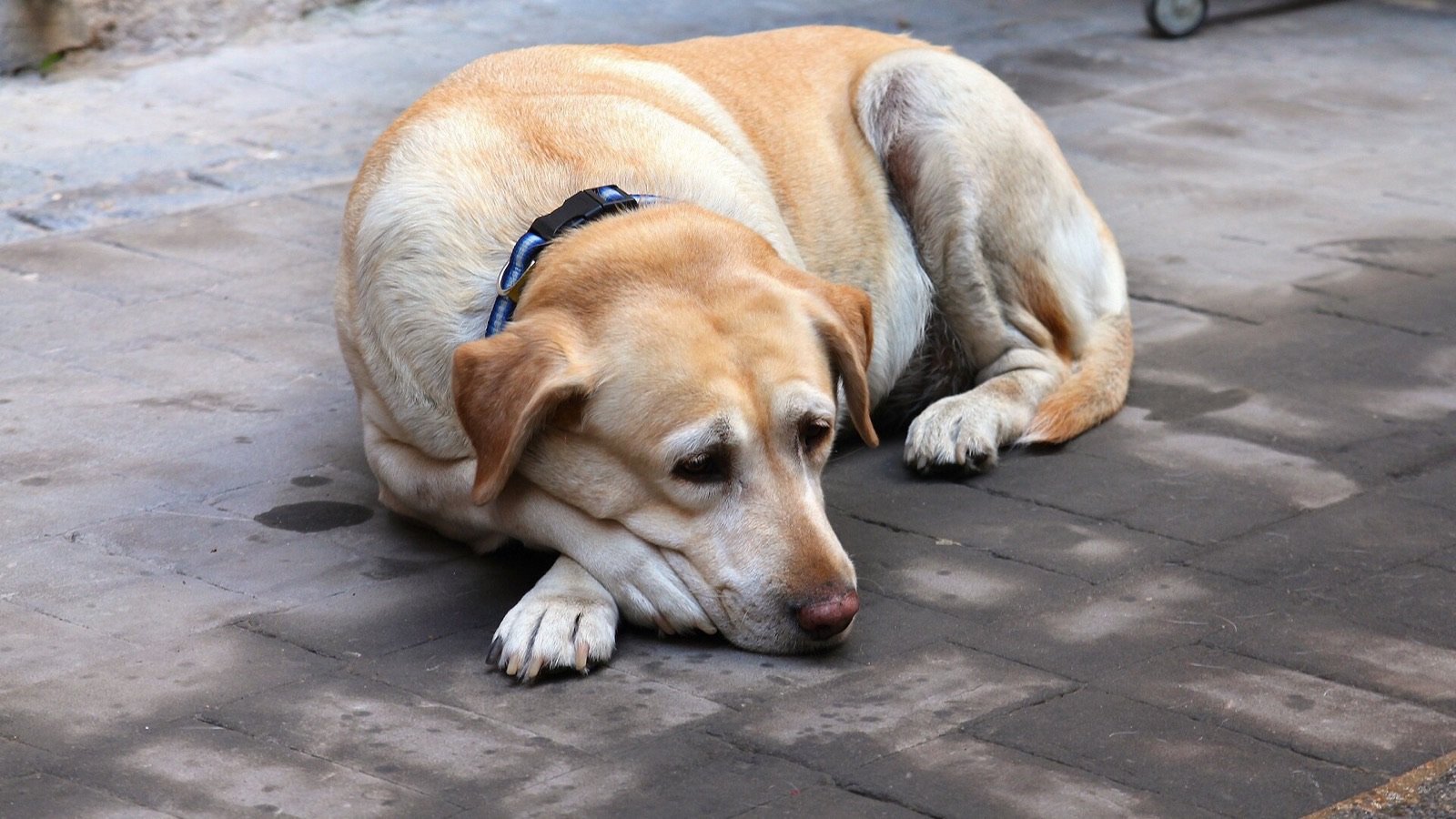
Night panting in an older dog usually means pain, Cushing's disease, heart disease, cognitive decline, laryngeal paralysis or a medication like steroids. Night makes it louder because the day's distractions are gone. Panting in a cool, calm room is not normal ageing and needs a vet.
Go to an emergency vet now if you see any of these: gums that are pale, grey, brick-red or blue · laboured or open-mouthed breathing your dog can't settle from · collapse, or not being able to stand · a hard, swollen belly with retching that brings nothing up · panting with a bluish tongue. These are emergencies, not "wait until morning" problems.
It's two in the morning and your old dog is panting on the floor beside your bed. The room isn't hot. They haven't moved in an hour. And you're lying there doing the thing every owner of an older dog does eventually — trying to work out whether this is nothing, or the beginning of something.
Here's the honest version, including a check you can do tonight that gives you an actual number instead of a feeling.
First: count their breaths
This is the single most useful thing you can do before you speak to a vet, and almost nobody tells owners about it.
Wait until your dog is genuinely asleep, not just lying down. Watch their ribcage and count one breath as chest up + chest down. Count for 30 seconds and double it, or a full minute if you can.
What the number means. A normal breathing rate for a dog resting calmly or asleep is roughly 15 to 30 breaths per minute. Lower is fine. Consistently above 30 while truly asleep is abnormal — and it's one of the earliest home signs of fluid building up in the lungs. Veterinary cardiologists use exactly this measure to monitor dogs with heart disease at home.
Write it down for a few nights. If you end up in a vet's consulting room, "he's been sleeping at 38 to 42 breaths a minute all week" is worth more than any description you could give, and it can change what happens next.
One caveat: panting itself isn't the same as breathing rate. A dog who is panting can't be counted accurately. Count when they've settled and are breathing through their nose.
Why does it happen specifically at night?
Two reasons, and they compound.
Nothing is competing for their attention. During the day there's noise, movement, food, you. At night an arthritic hip or a laboured breath is the loudest thing in your dog's world. This is why the same dog can seem fine at 4pm and be panting at 2am with nothing having changed.
Lying down changes the body. For a dog with fluid on the chest, lying flat makes breathing harder. For an arthritic dog, staying still stiffens everything up.
The six causes worth knowing
1. Pain — usually arthritis
The most common cause, and the most missed, because owners expect a limping dog. Many arthritic dogs don't limp. They pant, shift position all night, struggle to settle, take longer to get up in the morning, and hesitate at stairs or the car.
If your dog pants and trembles at night, put pain at the top of your list.
2. Cushing's disease
An excess of cortisol, common in older dogs, and panting is a listed clinical sign. The giveaway is the combination: panting plus drinking and urinating much more than before, plus a bigger appetite, a pot-bellied look, thinning skin, and hair loss along the flanks.
Veterinary references list the typical picture as increased thirst and urination, increased appetite, a pendulous abdomen, panting, muscle wasting and skin changes. It's diagnosed on blood tests and it's treatable — so ask about it by name if this sounds like your dog.
3. Heart disease
A failing heart lets fluid collect in the lungs, and that shows up first as faster resting breathing — which is why the count above matters. Look also for a soft cough (often worse at night or after lying down), tiring quickly on walks, and restlessness that won't settle.
4. Canine cognitive dysfunction
Dog dementia. It flips the sleep cycle, so dogs sleep in the day and become restless, anxious and vocal at night — Cornell's canine health centre describes older dogs developing "midnight walks", roaming the house in the small hours, and a sundowning pattern that worsens in the evening.
The tell is that the panting comes with confusion: staring at walls, getting stuck in corners, standing at the hinge side of a door, not settling anywhere.
5. Laryngeal paralysis
Common in older large-breed dogs, especially Labradors. The airway doesn't open properly, so breathing becomes noisy and harsh — a raspy, wheezy sound on the intake — and it gets dramatically worse with heat, excitement or exercise. It can escalate into a genuine emergency in hot weather.
6. Medication, heat and anxiety
Steroids such as prednisone cause marked panting and thirst — if the panting started within days or weeks of a new prescription, that's your answer, and it's worth a call rather than a worry. Also check the obvious: room temperature, bedding over a radiator, and a thick coat in summer.
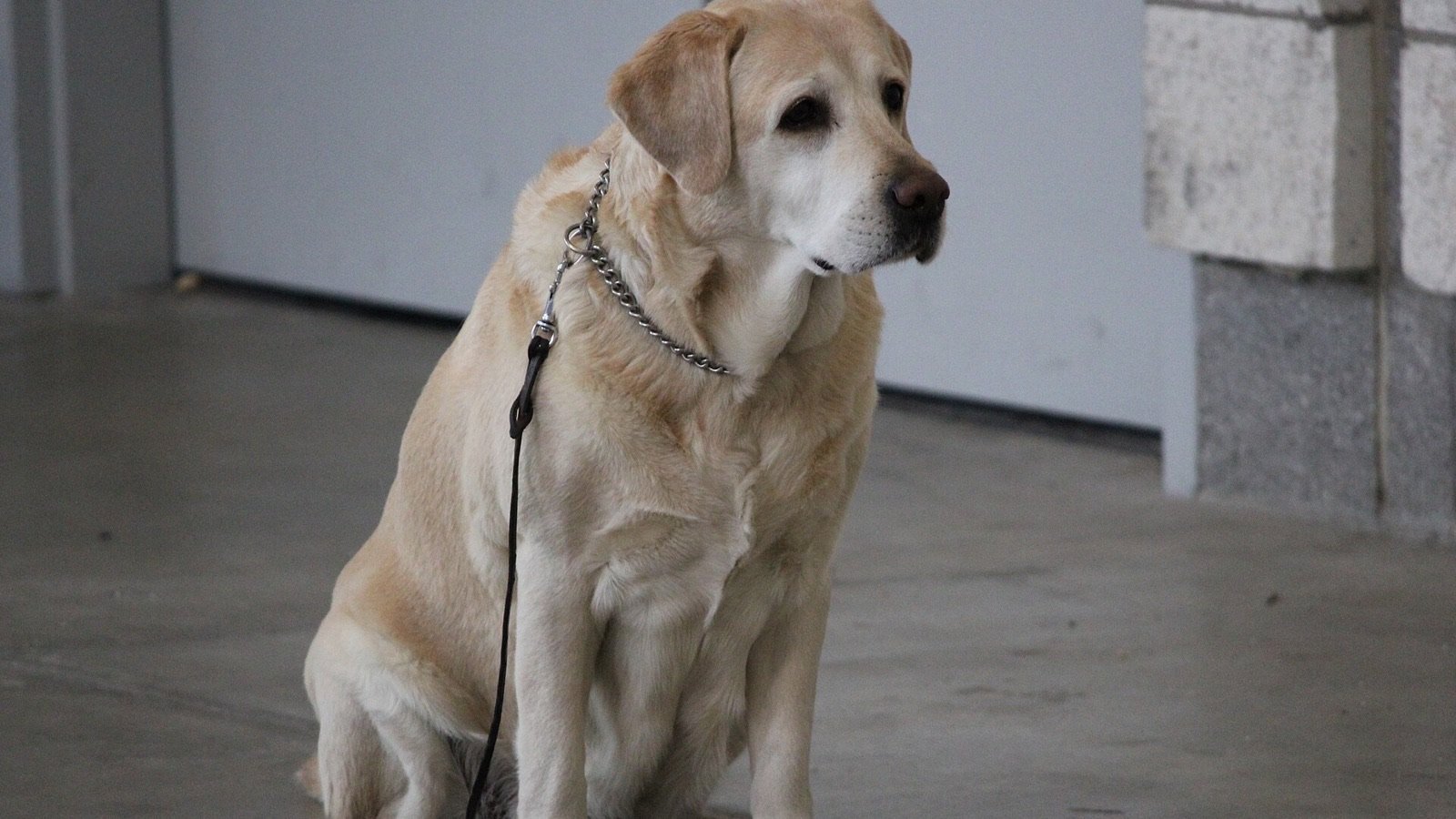
Panting plus drinking a lot of water?
Take that pairing seriously — it's the classic Cushing's presentation, and it's also worth ruling out diabetes and kidney disease, both of which cause increased drinking in older dogs. All three are diagnosed from blood and urine tests at a routine appointment. None of them improve by waiting.
Panting plus shaking or trembling?
Most often pain. Sometimes anxiety, which frequently travels with cognitive decline. Occasionally nausea.
What matters is that pain in an old dog is not something to let them push through, and it's often startlingly fixable. Vets see plenty of dogs whose owners thought they were simply "slowing down", who become far more comfortable within days on appropriate pain relief. That's a conversation worth having, and soon.
Never give human painkillers. Ibuprofen, paracetamol (acetaminophen) and aspirin are toxic to dogs and can cause serious harm at doses that seem small. Pain relief for dogs has to come from your vet.
Is my dog dying?
This is the question underneath most 2am searching, so it deserves a straight answer rather than being avoided.
Usually, no. Most night panting comes from causes that are treatable or manageable — arthritis, Cushing's, controlled heart disease. Panting on its own is not a sign that the end is near.
Panting can be part of the final stage of a dog's life, but it doesn't arrive alone. It comes with a cluster: no longer eating or drinking, not getting up, incontinence in a house-trained dog, withdrawal from people they've always sought out, and obvious distress that nothing eases.
And if you're reading this at 2am because you're frightened, that feeling is itself worth acting on. Ask your vet for a quality-of-life assessment. It's a normal appointment to request, they will not think it's premature, and going in with a plan is far kinder to both of you than lying awake guessing.
What can you actually do tonight?
While you wait for an appointment:
- Cool the room and move their bed away from radiators and direct sun.
- Fresh water within reach — an older dog shouldn't have to travel for it.
- Get them off hard floors. A properly padded orthopaedic bed changes the night for a stiff dog.
- Keep it dim and predictable. A night light helps a dog with failing sight or cognitive decline; so does a bed in the same place every night.
- Count the breaths and write the numbers down.
- Don't add supplements or human medicine before the appointment — you'll muddy the picture your vet is trying to read.
Once the cause is known and it's joint stiffness, comfort and mobility support becomes a fair conversation — alongside your vet's plan, never instead of it. We reviewed UltraK9 Pro honestly, including who it isn't for.
Read our UltraK9 Pro review → Independent review · we may earn a commission at no extra cost to you. Not a treatment for panting — get a diagnosis first.When should you see a vet?
Straight away if any of the emergency signs at the top of this page are present.
Within a few days for: panting in a cool room that keeps happening, sleeping breathing rate consistently above 30, panting with a big rise in thirst, panting with trembling, night-time confusion or pacing, noisy or raspy breathing, or a cough.
And in general — an older dog panting at night is your dog telling you something. It's rarely nothing, it's usually treatable, and it almost never improves by being watched for another month.
Frequently asked questions
Why is my senior dog panting at night?
The most common reasons are pain (usually arthritis), Cushing's disease, heart disease, canine cognitive dysfunction, laryngeal paralysis, and medications such as steroids. Night makes all of them louder because the day's distractions are gone and lying still lets discomfort surface. Panting in a cool, calm room isn't normal ageing.
How do I know if my dog's panting is an emergency?
Go to an emergency vet now for pale, grey or blue gums, laboured breathing your dog can't settle from, collapse, or a hard swollen belly with unproductive retching. Otherwise count the breaths while they sleep — consistently over 30 a minute at rest needs a same-week appointment.
What is a normal breathing rate for a sleeping dog?
Roughly 15 to 30 breaths per minute while resting calmly or asleep, in healthy dogs and in dogs whose heart disease is well controlled. Lower is fine. Consistently above 30 while genuinely asleep is abnormal and is one of the earliest home signs of fluid building in the lungs.
My senior dog is panting and drinking lots of water — what does that mean?
That pairing points strongly at Cushing's disease. Veterinary references list panting alongside increased thirst and urination, a bigger appetite, a pot-bellied appearance, thin skin and hair loss. It's diagnosed on blood tests and it's treatable — worth naming to your vet. Diabetes and kidney disease are also worth ruling out.
Why does my old dog pant and shake at night?
Panting and trembling together most often mean pain, which in an older dog usually means arthritis. It can also be anxiety, which often travels with cognitive decline. Both are treatable, and an arthritic senior on appropriate pain relief often sleeps completely differently within days.
Is night panting a sign my dog is dying?
Usually not. Most night panting comes from treatable causes. Panting can be part of the end of life, but it arrives with other changes — refusing food and water, no longer getting up, incontinence, withdrawal. If you're asking the question, ask your vet for a quality-of-life assessment rather than sitting with it alone.
Can I give my senior dog anything at home for panting?
Never human painkillers — ibuprofen, paracetamol and aspirin are toxic to dogs. Tonight you can cool the room, keep water within reach, get them off hard floors onto a padded bed, and keep things dim and calm. Then get a diagnosis: panting is a symptom, and the cause is what needs treating.
Sources
Where this guide makes a claim about health, this is where it comes from. Checked August 2026. This article is not veterinary advice.
- VCA Animal Hospitals. Home Breathing Rate Evaluation — a normal resting or sleeping breathing rate is 15–30 breaths per minute; rates consistently above 30 are considered abnormal and can be an early sign of heart failure. Accessed August 2026. vcahospitals.com
- Merck Veterinary Manual. Cushing Syndrome (Hyperadrenocorticism) in Animals — clinical signs in dogs include polyuria/polydipsia, polyphagia, a pendulous abdomen, panting, muscle wasting and dermatological changes. Accessed August 2026. merckvetmanual.com
- Cornell University College of Veterinary Medicine, Riney Canine Health Center. Cushing's syndrome — lists increased panting and a pot-bellied appearance among the signs. Accessed August 2026. vet.cornell.edu
- Cornell University College of Veterinary Medicine, Riney Canine Health Center. Senior dog dementia — describes night-time roaming ("midnight walks") and sundowning in older dogs with cognitive decline. Accessed August 2026. vet.cornell.edu
- Merck Veterinary Manual. Heart Failure in Dogs — owner-facing reference on the signs and progression of congestive heart failure. Accessed August 2026. merckvetmanual.com

Canine behavior writer & rescue foster
Megan has fostered more than 30 rescue dogs, a good number of them seniors, and has spent more than one night counting breaths on a bedroom floor. She is an informed owner, not a veterinarian, and writes PawHonest to help people know which worries need a phone call in the morning.
A note on trust: This article is general education and is not a substitute for veterinary care. Panting in an older dog is a symptom that deserves a diagnosis — please see your veterinarian, and an emergency service if any of the red-flag signs above are present. PawHonest is reader-supported: we may earn a small commission on purchases through our links, at no extra cost to you, and only recommend what we'd use on our own dogs.