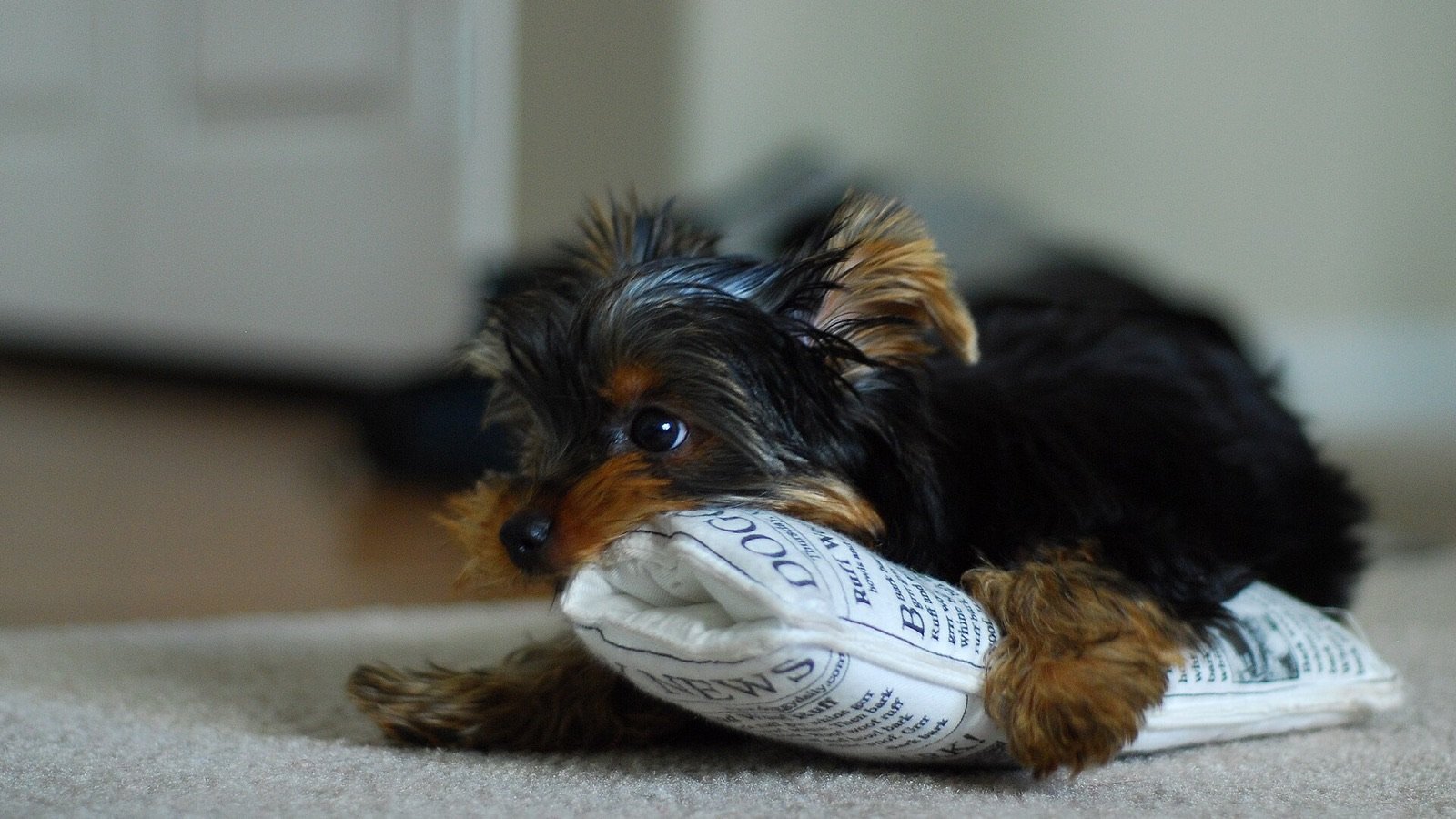
When teeth touch skin, freeze — don't snatch your hand back, because fast movement makes it worse. Then either swap in a toy or stand up and end the game for twenty seconds. Puppy biting is normal, peaks around eight to sixteen weeks, and gets dramatically worse when a puppy is overtired.
Your hands are covered in scratches, your sleeves have holes, and somewhere around six in the evening your sweet puppy turns into a small crocodile. You've probably also had the quiet, worrying thought: is there something wrong with my dog?
There almost certainly isn't. Puppy biting is one of the most normal things a puppy does — and it's also one of the most badly handled, because the instinctive human reaction makes it worse.
I've raised more than thirty foster puppies through this exact stage. Here's what works.
Why is my puppy biting me so much?
Three things drive it, and knowing which one you're dealing with changes what you do.
Teething. From about three to six months, adult teeth are pushing through sore gums. Chewing genuinely relieves that. This is a physical need, not a behaviour problem, and it doesn't respond to being told off.
How puppies play. Puppies play with their mouths — that's what they did with their littermates. Nobody has told them that human skin is different from a sibling's ear. That's your job, and it's a teaching job, not a discipline one.
Exhaustion. This is the big one, and it's the one almost everybody misses. I'll come back to it, because it's the reason most people feel like nothing is working.
How do you stop puppy biting in the moment?
Here's the sequence. It's short, and the first step is the one people get wrong.
- Go still. The instant teeth touch skin, stop moving your hand. Don't snatch it away — a hand whipping backwards looks exactly like fleeing prey, and it turns a nibble into a chase.
- Say nothing much. A quiet, flat "ah" is plenty. Shouting is exciting.
- Then pick one of two moves. Either put a toy where your hand was, or stand up and walk away for twenty to thirty seconds. Both teach the same lesson from opposite directions.
- Come back and carry on. The break needs to be short and unemotional, or it stops meaning anything.
The rule your puppy is learning is simple: teeth on skin ends the fun, teeth on toys keeps it going. That's it. Everything else is detail.
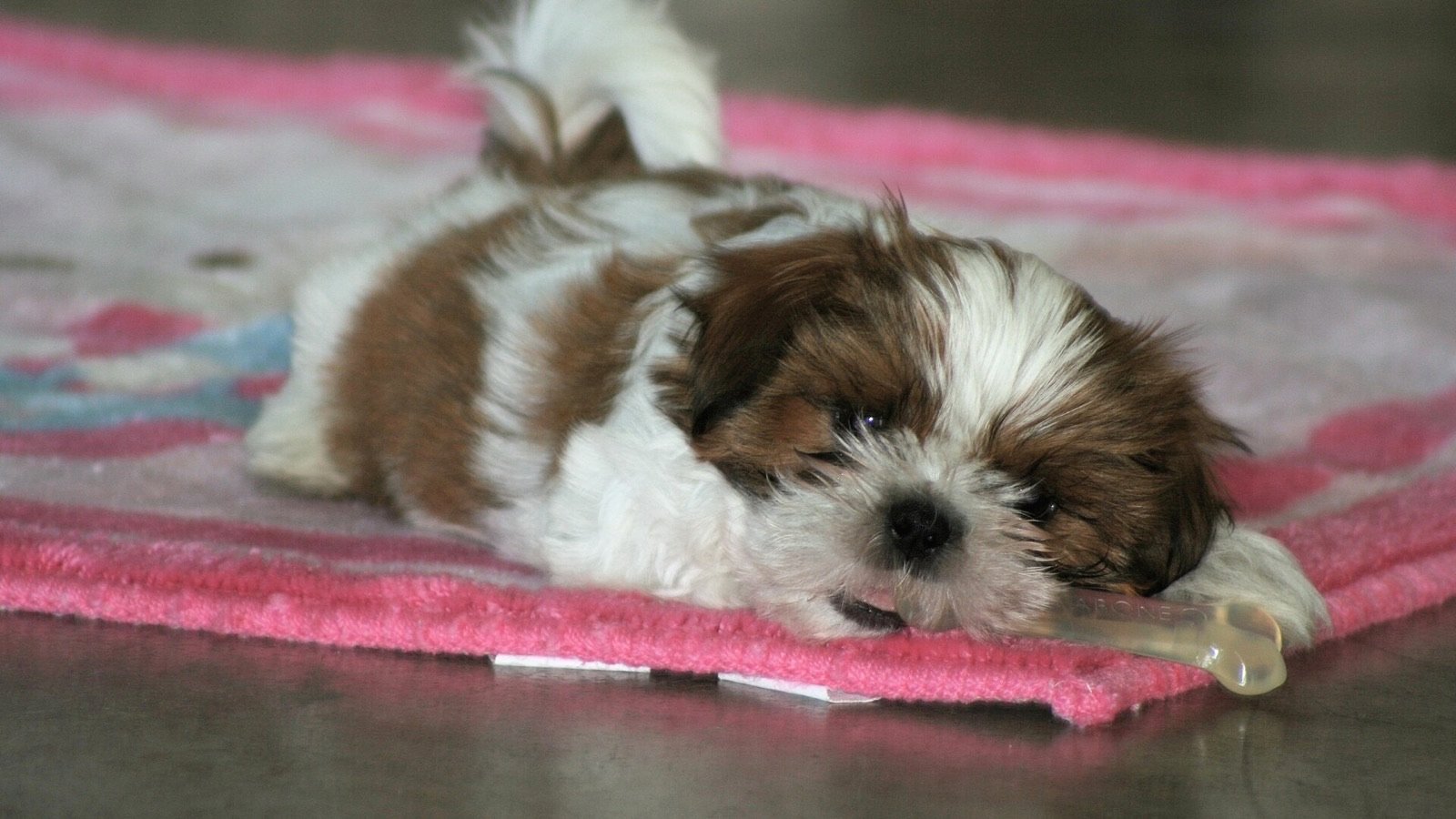
One caveat on the classic advice to yelp. It genuinely works for some puppies. For plenty of others, a high-pitched squeal is the most exciting thing that's happened all day and they come back harder. Try it once, watch what your puppy does, and if they wind up instead of backing off, drop it and just go quiet.
What if my puppy bites my feet and ankles?
Ankle-biting is its own special misery, especially with herding breeds, and it has a specific cause: feet move. Moving things trigger chase-and-grab.
So the fix is mechanical. Stop walking the second they latch on — a stationary ankle is deeply boring. Keep a toy in your pocket so you can trade rather than wrestle. And rehearse the boring version: walk past your puppy calmly when they're already settled, and drop a treat as you go, so walking humans stop being a game.
If it's happening most when you're moving around the kitchen at dinner time, that's not coincidence — see the next section.
Most puppy biting is unspent mental energy with nowhere to go. Brain Training for Dogs turns that energy into force-free games that build focus instead — the same principle, packaged as a course. Here's our honest take.
Read our Brain Training for Dogs review → Independent review · we may earn a commission at no extra cost to you.What if you've tried everything and nothing works?
This is the most common message I get, and nine times out of ten the answer isn't a better technique. It's sleep.
Young puppies need something like eighteen to twenty hours of sleep a day. Almost no puppy in a busy household gets that, because there's always something happening. And an overtired puppy doesn't get sleepy — they get frantic, mouthy and impossible, exactly like an overtired toddler.
The test: does the biting explode at roughly the same time every day, usually late afternoon or evening? If yes, you don't have a training problem. You have an exhausted puppy who cannot switch off on their own.
The fix feels counterintuitive, because your puppy will not act tired. Put them somewhere quiet — a crate, a pen, a dim room — before the meltdown rather than after, with something to chew. Many puppies protest for a minute and then sleep for two hours. Then you get a different dog back.
If crate time is a fight in your house, that's worth fixing on its own: see crate training a puppy.
Two other things worth checking before you conclude nothing works:
- Is everyone doing the same thing? If one person redirects calmly and another wrestles with their hands, your puppy isn't confused — they've simply learned that hands are a toy with that person.
- Is the brain getting used? Five minutes of sniffing work does more for evening chaos than a long walk does. There's a puppy-specific section in my guide to mental stimulation for dogs.
Is my puppy being aggressive? What about growling?
This is the fear underneath most late-night searching, so let's be plain about it.
Play growling is normal. It comes packaged with a loose, wiggly body, a bouncing play-bow, and natural pauses in the action. A puppy who growls, grabs your sleeve and then flops over is playing, not threatening.
What looks different is a body that goes stiff and still, a hard stare, lips lifted, and biting that arrives out of nowhere — particularly around food, a favourite item, or being picked up or handled.
If you're seeing that second pattern, don't wait it out and don't punish it. Growling is information, and a puppy who learns that growling gets punished simply skips the warning next time. Talk to your vet and a qualified, force-free behaviourist. That's rare — but it's real, and it deserves a professional rather than an article.
What should you never do?
- Hold the muzzle shut, smack, or pin your puppy down. These teach a puppy that hands are frightening.
- Snatch your hand away fast. The single most common mistake, and it directly rewards the chase.
- Play rough with bare hands. You can't teach "hands aren't toys" while using your hands as toys.
- Punish a growl. You remove the warning without changing the feeling underneath it.
- Wait it out and hope. Biting fades with age and teaching. Age alone leaves you with a big dog who still mouths.
The AVSAB's position is that reward-based methods should be used for all dog training, including behaviour problems, precisely because aversive methods carry a documented risk of fear and aggression. A puppy biting your hands is not the moment to gamble with that.
When does puppy biting stop?
The rough shape: mouthing peaks somewhere between eight and sixteen weeks, eases as the adult teeth settle around six months, and is mostly gone by seven or eight months in a puppy who's been taught what else to chew.
It goes faster when redirection is consistent and the puppy sleeps enough. It drags on when biting has been accidentally rewarded — with squealing, with wrestling, with any reaction that's more fun than being ignored.
And it does end. The stage that feels endless in week three is usually a memory by month seven.
Frequently asked questions
How do I stop my puppy biting me?
The moment teeth touch skin, go still — don't snatch your hand away, because fast movement looks like prey and makes the biting worse. Then either put a toy in their mouth or stand up and end the game for twenty to thirty seconds. Done consistently, your puppy learns that teeth on skin ends the fun and teeth on toys keeps it going.
Why does my puppy bite my feet and ankles?
Because feet move, and moving things trigger the chase-and-grab instinct — herding breeds especially. Stop walking the instant they latch on; a stationary ankle is boring. Keep a toy in your pocket to swap in, and rehearse calm walk-pasts when your puppy is settled rather than only at their wildest moment.
My puppy won't stop biting and I've tried everything — what now?
Almost always the missing piece is sleep, not technique. Young puppies need roughly eighteen to twenty hours a day, and an overtired puppy bites far harder and far more. If biting spikes at the same time each evening, that's exhaustion, not defiance. Put your puppy somewhere quiet for a nap before the meltdown, not after.
Is my puppy aggressive if they growl while biting?
Usually not. Play growling comes with a loose, wiggly body, a bouncy play-bow and pauses in the action. Warning signs look different: a stiff, frozen body, a hard stare, lifted lips, and biting that arrives out of nowhere over food, a toy or handling. If you see that second pattern, stop and call a qualified behaviourist.
At what age do puppies stop biting?
Mouthing usually peaks between about eight and sixteen weeks, eases as the adult teeth settle around six months, and is mostly gone by seven to eight months in a puppy who's been taught what else to chew. Consistent redirection and enough sleep speed it up; accidental rewards drag it out.
Should I yelp when my puppy bites?
Try it once and watch. For some puppies a short, calm "ouch" interrupts the moment. For plenty of others a high-pitched yelp is thrilling and they bite harder. If your puppy winds up rather than backing off, drop the yelping and just go quiet and still instead.
Can I punish my puppy for biting?
No. Holding the muzzle, smacking, pinning or shouting teaches a puppy that hands are frightening, and veterinary behaviour guidance is clear that aversive methods carry a real risk of fear and aggression. It also costs you the thing you most need later: a dog who trusts being handled.
Sources
Where this guide makes a claim about training method, behaviour or health, this is where it comes from. Checked August 2026.
- ASPCA. Mouthing, Nipping and Play-Biting in Adult Dogs / Puppies — reference guidance on normal mouthing behaviour and how to redirect it. Accessed August 2026. aspca.org
- American Veterinary Society of Animal Behavior (AVSAB). Humane Dog Training Position Statement, 2021 — recommends that only reward-based training methods are used for all dog training, including the treatment of behaviour problems. Accessed August 2026. avsab.org
- Merck Veterinary Manual. Behavioral Problems of Dogs — clinical reference on canine behaviour problems, including play biting and aggression. Accessed August 2026. merckvetmanual.com
Canine behavior writer & rescue foster
Megan has fostered more than 30 rescue dogs and has the scars to prove she's been through the shark-teeth stage more than once. She writes PawHonest to give owners the honest, force-free version of advice that usually arrives dressed up as discipline.
A note on trust: This guide covers normal puppy mouthing. Stiff, silent biting, guarding of food or objects, or biting that breaks skin deserves a veterinarian and a qualified behaviourist rather than an article. PawHonest is reader-supported: we may earn a small commission on purchases through our links, at no extra cost to you, and only recommend what we'd use on our own dogs.