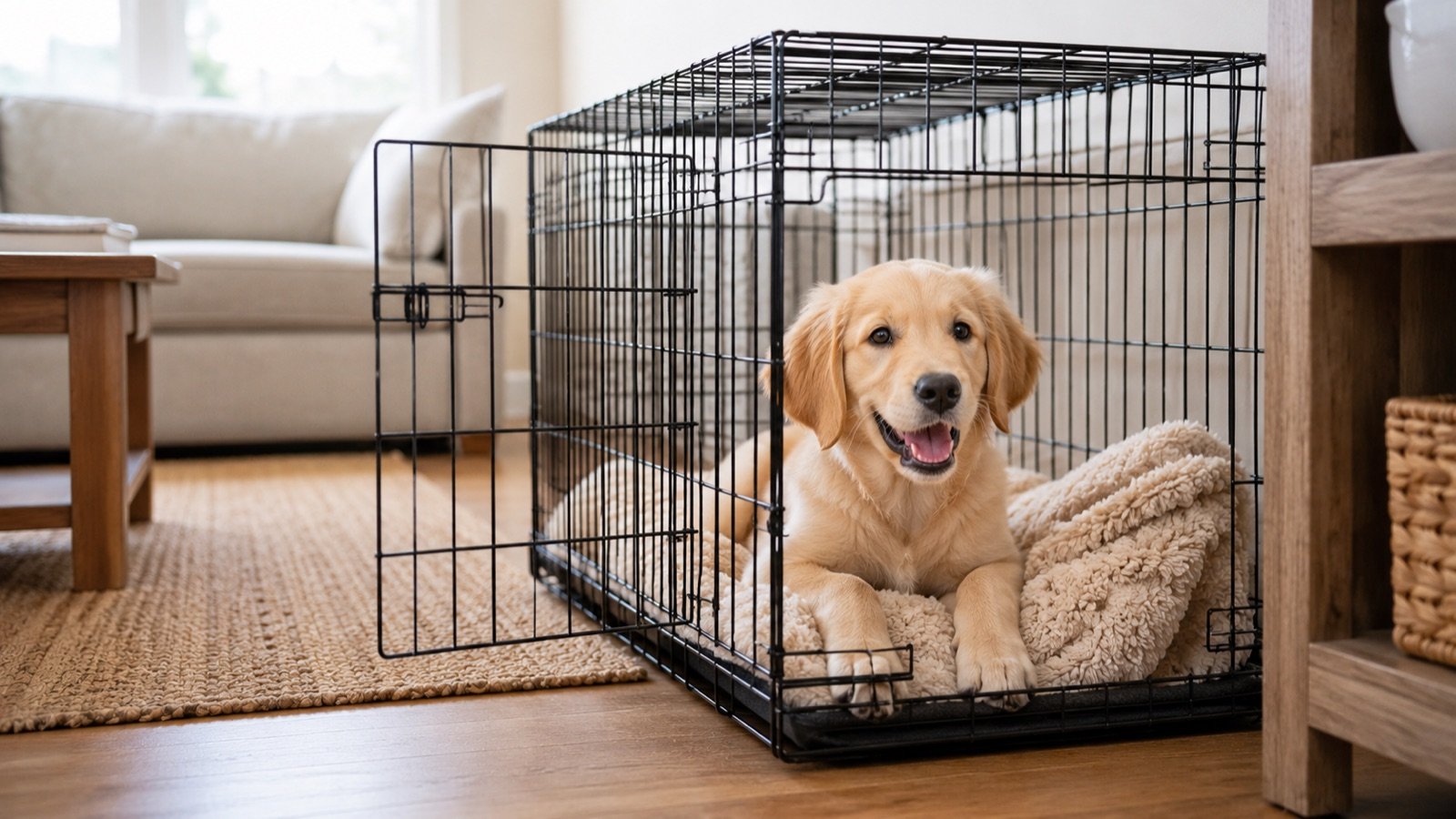
Crate training a puppy works best when the crate is always a positive, safe den — never a punishment. Introduce it slowly with treats and meals, start with short daytime sessions, and build up over the first week. Use it for naps and nights, take frequent potty breaks, and never crate a young puppy too long.
The crate is one of the kindest tools you can give a new puppy — a safe den of their own and a huge head start on house-training. But only if you introduce it the right way. Rush it or use it as a "time-out jail," and your puppy learns to dread it. Here's the gentle, day-by-day plan I use with every foster puppy.
Why crate train a puppy at all?
Dogs are den animals — a small, cozy space feels safe, not confining. A well-introduced crate gives your puppy a calm retreat, keeps them safe when you can't watch them, and speeds up house-training, because puppies naturally avoid soiling where they sleep. It also prevents a lot of chewing and trouble while your pup is learning the rules of the house.
What crate and setup do you need?
- The right size. Big enough for your puppy to stand up, turn around, and lie down — but not so big they can potty in one corner and sleep in the other. For a growing pup, buy a larger crate with a divider you move as they grow.
- Cozy bedding and a couple of safe chew toys, so the crate is a nice place to be.
- A good location. Somewhere near the family during the day, and in your bedroom at night for the first week or two.
As a rough guide, a puppy can hold their bladder about one hour for each month of age. A 2-month-old pup needs a potty break roughly every 2 hours — so plan crate time around that.
Source: general veterinary house-training guidanceYour day-by-day plan for the first week
Move at your puppy's pace. If any step causes stress, slow down and repeat the previous one.
Days 1–2: Make the crate wonderful
Leave the door open and toss treats inside. Let your puppy wander in and out freely. Feed a few meals just inside the door. Do not close the door yet — you're simply teaching "the crate = good things."
Days 3–4: Meals inside & the door closes briefly
Feed full meals inside the crate. While your puppy eats, gently close the door, then open it the moment they finish. Add a cue like "crate" or "bed" as they go in, and reward. Build to a minute or two with the door closed while you sit nearby.
Days 5–7: Short absences & naps
Pop your puppy in for a nap after play, when they're tired. Step out of the room for a few minutes, then longer. A stuffed frozen chew makes crate time something to look forward to. By the end of the week, many puppies will nap happily in the crate with the door shut.
Crate training goes smoother when your puppy is mentally satisfied and used to learning. Brain Training for Dogs builds that focus and confidence with gentle, force-free games. See what's inside in our honest review.
Read our Brain Training for Dogs review → Independent review · we may earn a commission at no extra cost to you.How do you handle the first nights?
The first few nights are the hard part — expect some whining. Here's how to get through them kindly:
- Put the crate by your bed. Being able to see and smell you keeps a new puppy calm.
- Last potty right before bed, and take your puppy out for a calm, boring bathroom break if they wake and cry — young puppies genuinely can't hold it all night.
- Meet needs, but don't throw a party. Keep night breaks quiet and business-like, then back to the crate. Avoid opening the door during a full-blown frantic tantrum, so you don't teach that screaming opens the door.
It gets better fast. Most puppies settle into calm nights within one to two weeks.
What mistakes should you avoid?
- Never use the crate as punishment. It has to stay a happy place, or the whole system breaks down.
- Don't crate too long. Follow the one-hour-per-month guide during the day, and make sure your puppy gets plenty of play, potty breaks, and company.
- Don't go too fast. Skipping the positive introduction is the number-one reason crate training fails.
What if your puppy panics in the crate?
A little first-night whining is normal. But genuine, sustained panic — frantic escape attempts, drooling, hurting themselves — is different, and pushing through it makes things worse. That can be a sign of separation-related distress, which needs a gentler, separate plan; I cover it in separation anxiety in dogs. When in doubt, check with your veterinarian. And remember, crate training is just one piece of raising a good dog — the full picture is in my home training guide.
Everything above still works for a dog of any age. But if yours is stiff getting up out of the crate, or reluctant to climb in at all, that's often a joint problem rather than a training one — a vet check comes first. Once pain is ruled out, UltraK9 Pro is the daily liquid we point older-dog owners to: turmeric for the inflammation side, collagen for the structural side, poured straight onto food. From $39 a bottle with a 60-day money-back guarantee.
Read our honest UltraK9 Pro review → Independent review · we may earn a commission at no extra cost to you.Frequently asked questions
How long does it take to crate train a puppy?
Many puppies are comfortable resting in the crate within a week of gentle, positive practice, though fully settled nights and longer stays can take a few weeks. Go at your puppy's pace and never rush it.
Should I let my puppy cry it out in the crate?
No. A young puppy usually cries because it needs a potty break or reassurance, not to manipulate you. Rule out needs first, keep the crate near you at night, and avoid opening the door during a frantic tantrum so you don't reward panic.
Where should the crate go at night?
For the first week or two, put the crate in your bedroom next to your bed. Being close to you lowers a new puppy's stress, helps them settle, and lets you hear when they need a night-time potty break.
Is it cruel to crate a puppy?
Not when done kindly. Dogs are den animals and many feel safe in a cozy crate. It's unfair only if used for punishment, too small, or for too long. Used well, it's a safe, calming space.
What is the 2:1 rule for crate training?
A handy guideline: for every 2 hours your puppy spends in the crate, they should get about 1 hour out of it. It keeps crate time fair and, for a young puppy still potty-training, matches their need for frequent breaks and activity.
What are the most common crate training mistakes?
The big ones: starting too late, using the crate as punishment, a crate that's the wrong size, leaving your dog crated too long, rushing past the positive introduction, and ignoring a genuinely panicked dog. Avoid those and crate training stays kind and effective.
At what age should you crate train a puppy?
You can start around 8 weeks, when puppies come home. If your dog is older and hasn't been crate trained, start now — adult dogs learn it too, just with a little more patience.
Sources
Where this guide makes a claim about training method, behaviour or health, this is where it comes from. Checked August 2026.
- American Veterinary Society of Animal Behavior (AVSAB). Humane Dog Training Position Statement, 2021 — recommends that only reward-based training methods are used for all dog training, including the treatment of behaviour problems. Accessed August 2026. avsab.org
- ASPCA. Separation Anxiety — signs, what distinguishes it from other behaviours, and treatment approaches. Accessed August 2026. aspca.org
- ASPCA. Common Dog Behavior Issues — reference library on everyday dog behaviour. Accessed August 2026. aspca.org

Canine behavior writer & rescue foster
Megan has raised and fostered more than 30 dogs, many of them puppies taking their very first nights in a new home. She's crate-trained every one with patience and treats — never force — and writes PawHonest to share the honest, gentle guidance she wishes she'd had at the start.
A note on trust: If your puppy shows genuine panic in the crate rather than ordinary first-night whining, don't force it — speak with your veterinarian or a certified trainer. PawHonest is reader-supported: we may earn a small commission on purchases through our links, at no extra cost to you, and only recommend what we'd use on our own dogs.