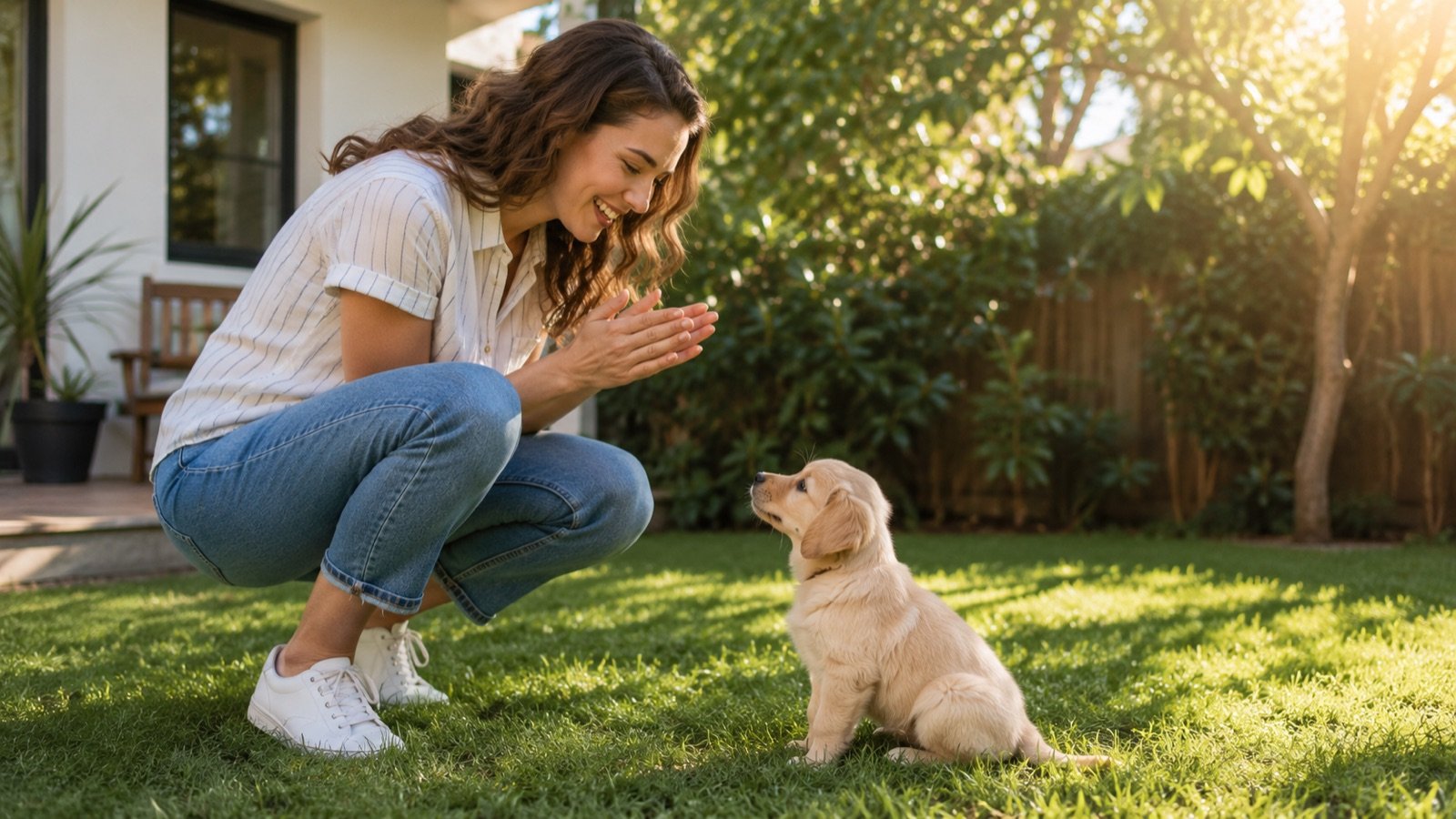
To potty train a puppy fast, take them out constantly — after waking, eating, drinking, and playing, and every hour or two — always to the same spot, and reward the instant they go. Supervise closely indoors, use a crate or playpen when you can't watch, and clean accidents with an enzyme cleaner. Consistency is everything.
Potty training feels overwhelming in week one and almost magical by week four — if you're consistent. There's no secret gadget, just a tight routine that sets your puppy up to succeed. Here's the exact plan I use with every foster puppy to get there fast.
How long does it take to potty train a puppy?
Most puppies start to understand the routine within two to four weeks, but being reliably accident-free often takes four to six months, because a young puppy's bladder simply isn't fully developed yet. The single biggest factor in how fast it happens is your consistency — the tighter your routine, the quicker it clicks.
As a rough guide, a puppy can hold their bladder about one hour for each month of age. A 3-month-old pup needs a potty trip roughly every 3 hours (and much more often after meals and play).
Source: general veterinary house-training guidanceWhat's the fastest way to potty train a puppy?
Speed comes from four things working together — miss one and progress slows:
- Frequent trips outside to the same spot, on a schedule.
- Instant reward — treat and praise the second your puppy finishes going, outdoors.
- Close supervision indoors so you catch the "I need to go" signs.
- Confinement (crate or playpen) when you can't watch, since puppies avoid soiling their sleeping area.
How often should you take a puppy out?
More often than you'd think. Always take your puppy out at these key moments — plus every hour or two in between:
- First thing when they wake up (and after every nap)
- Shortly after eating or drinking
- After play or excitement
- Right before bed, and as soon as you get home
Take them to the same spot each time — the scent tells them "this is the bathroom." Use a calm cue like "go potty," wait, and throw a little party the moment they go.
Reward outside, every single time. The most common reason potty training drags on is praising too late — or only indoors. Bring treats out with you and reward within a second or two of your puppy finishing, right there in the yard.
Your step-by-step daily routine
- Wake up → carry or hurry your puppy straight outside to the spot.
- Reward the instant they go; then some free supervised play indoors.
- Meals on a schedule (not free-fed) so potty times are predictable; out again 5–30 minutes after eating.
- Can't watch? Pop your puppy in the crate or playpen for a bit — a crate does double duty here, which is why I pair this with crate training.
- Repeat all day, shrinking the trips as your puppy grows and succeeds.
Potty training goes quicker with a focused, confident puppy who's used to earning rewards. Brain Training for Dogs builds that foundation with gentle, force-free games. See what's inside in our honest review.
Read our Brain Training for Dogs review → Independent review · we may earn a commission at no extra cost to you.What should you do about accidents?
Accidents are part of the process — how you handle them decides how fast training sticks:
- Never punish. Rubbing a puppy's nose in it or scolding after the fact only teaches fear and sneaky hiding. It genuinely slows training down.
- Catch it in the act? Calmly interrupt with a cheerful "oops — outside!" and hurry them to the spot, then reward if they finish there.
- Clean with an enzyme cleaner, not regular household cleaner. Enzyme cleaners remove the scent markers that pull your puppy back to the same spot.
How do you handle night-time?
Pick up the water bowl a couple of hours before bed, take a final potty trip right before sleep, and keep your puppy in a correctly sized crate near your bed. Most young puppies need one overnight break — set a gentle alarm, take them out calmly and quietly (no play), and straight back to bed. Within a couple of weeks, most puppies make it through the night.
When should you call the vet?
If a house-trained puppy suddenly starts having accidents, or is straining, going very frequently, or has blood in their urine, see your veterinarian — urinary tract infections and other issues are common and treatable. Ruling out a medical cause first saves a lot of frustration. Potty training is just one part of raising a great dog; the full picture is in my home training guide.
Frequently asked questions
How long does it take to potty train a puppy?
Many puppies get the hang of it in about two to four weeks of consistent effort, but reliably accident-free can take four to six months as their bladder matures. Consistency speeds it up more than anything else.
Should I punish my puppy for accidents?
No. Punishment — including the old "rub their nose in it" myth — only teaches your puppy to fear you and to hide when they go. If you catch them mid-accident, calmly interrupt and rush them outside, then reward. Clean past accidents with an enzyme cleaner.
How do I stop my puppy peeing in the house at night?
Pick up water a couple of hours before bed, take a last potty trip right before sleep, and use a crate sized so your puppy won't soil it. Young puppies usually need one overnight break — set an alarm and keep it calm and quick.
Why is my potty-trained puppy suddenly having accidents?
Sudden regression can be caused by a urinary tract infection or other medical issue, a change in routine, or stress. Rule out health problems with your vet first, then tighten up the supervision and schedule again.
Should I wake my puppy up to pee at night?
Young puppies usually can't hold it all night, so yes — for the first weeks, set a gentle alarm for one overnight potty break, keep it calm and boring, and head straight back to bed. As their bladder matures, they'll start sleeping through.
What is the fastest way to potty train a puppy?
Take your puppy out very often — after waking, eating, drinking and play, and every hour or two — always to the same spot, and reward the instant they go. Supervise closely indoors and use a crate or playpen when you can't watch. Consistency is what makes it fast.
Sources
Where this guide makes a claim about training method, behaviour or health, this is where it comes from. Checked August 2026.
- ASPCA. Common Dog Behavior Issues — reference library on everyday dog behaviour. Accessed August 2026. aspca.org
- American Veterinary Society of Animal Behavior (AVSAB). Humane Dog Training Position Statement, 2021 — recommends that only reward-based training methods are used for all dog training, including the treatment of behaviour problems. Accessed August 2026. avsab.org
- Merck Veterinary Manual. Behavioral Problems of Dogs — clinical reference on canine behaviour problems and their management. Accessed August 2026. merckvetmanual.com
Canine behavior writer & rescue foster
Megan has house-trained more than 30 fosters, from tiny puppies to adult dogs who'd never lived indoors. She's done it every time with a tight routine, an enzyme cleaner, and a lot of praise — never punishment — and writes PawHonest to share the honest, gentle guidance she wishes she'd had at the start.
A note on trust: Frequent accidents, straining, or blood in the urine can signal a urinary tract infection or other medical issue — see your veterinarian. PawHonest is reader-supported: we may earn a small commission on purchases through our links, at no extra cost to you, and only recommend what we'd use on our own dogs.