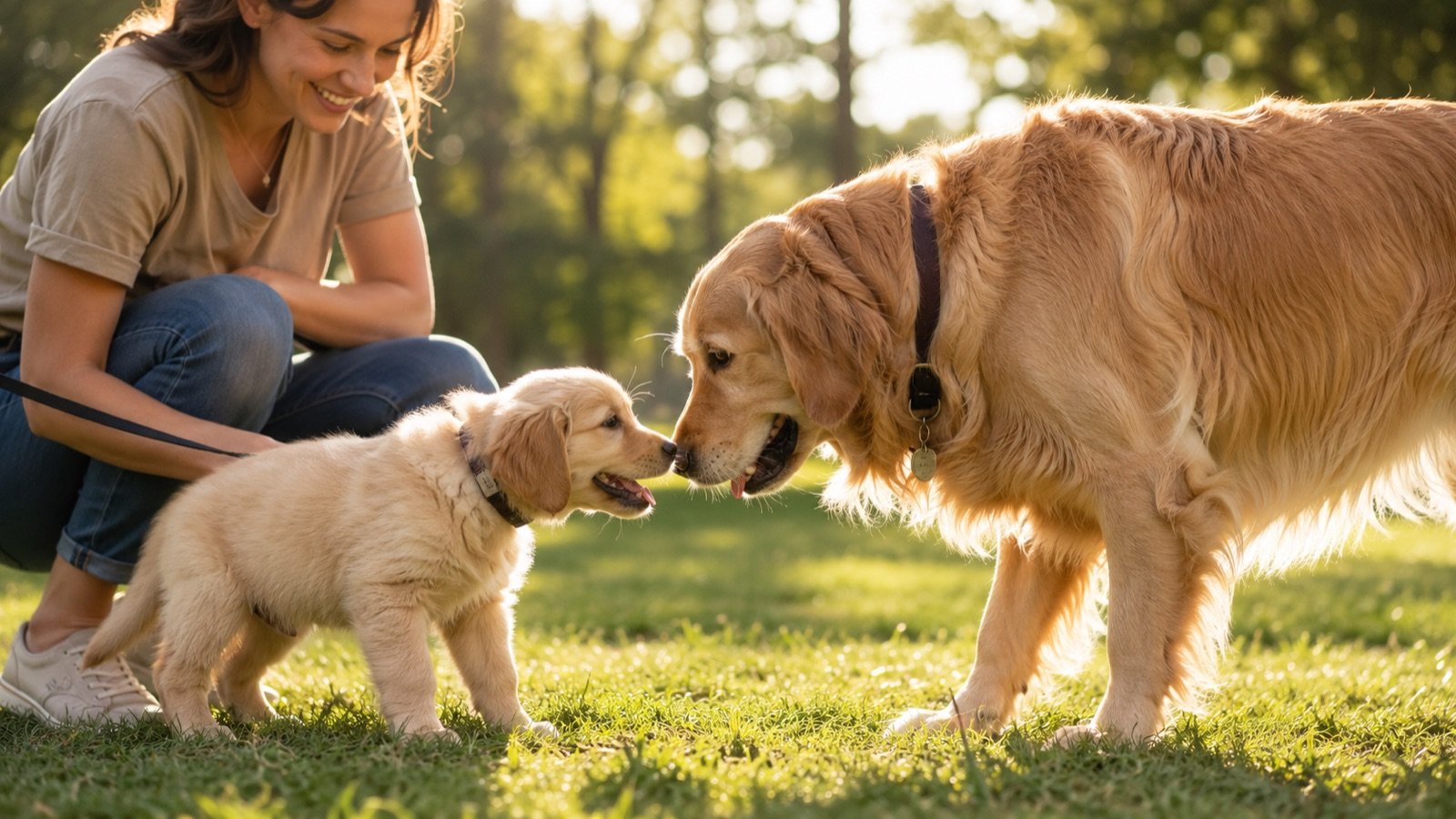
To socialize a puppy the right way, gently and positively expose them to lots of new people, dogs, places, sounds, and surfaces during their key window (about 3–14 weeks) — always keeping it happy and never forced. Pair every new thing with treats and praise, go at your puppy's pace, and stop before they get overwhelmed.
Socialization is the single most important thing you'll do for a young puppy — more than any trick or command. It's how a puppy learns that the world is safe and friendly. Get it right and you build a confident, easygoing adult dog. Here's how to do it well, and safely.
What is puppy socialization — and why does it matter so much?
Socialization means giving your puppy lots of positive experiences with the everyday world: different people, friendly dogs, sounds, surfaces, and situations. It's not just "meeting dogs." A well-socialized puppy grows into an adult who takes new things in stride instead of reacting with fear or aggression. Poor socialization is behind a huge share of the anxiety and reactivity I see in rescue dogs.
The critical socialization window for puppies. During this period their brain is primed to accept new experiences as normal — which is why veterinary behaviorists urge starting early, even before vaccinations are complete.
Source: AVSAB position statement on puppy socializationWhen is the socialization window?
The prime window runs from about 3 to 14 weeks of age, tapering off toward 16 weeks. After that, puppies naturally become more cautious of new things. That's why you can't wait until your puppy is fully vaccinated to begin — the most valuable weeks would already be gone. The goal is to make the most of this window safely.
How do you socialize a puppy safely before full vaccines?
You can protect your puppy's health and socialize at the same time:
- Carry your puppy through busy places — the street, outside a café, a hardware store — so they see and hear the world without touching risky ground.
- Invite healthy, vaccinated adult dogs and calm people to your home.
- Enroll in a well-run puppy class that requires vaccinations and cleans between sessions — the gold standard for safe early socialization.
- Avoid dog parks and areas where unknown or unvaccinated dogs toilet until your vet gives the all-clear.
What should you expose your puppy to?
Aim for variety, always paired with treats and a happy voice. A simple checklist:
- People: all ages, hats, beards, umbrellas, wheelchairs, uniforms.
- Dogs & animals: calm, friendly, vaccinated dogs of different sizes.
- Sounds: vacuum, doorbell, traffic, thunder (start quiet), fireworks recordings.
- Surfaces: grass, tile, metal, gravel, stairs, wobbly things.
- Handling: paws, ears, mouth, and being picked up — so vet and grooming visits are easy later.
- Situations: car rides, the vet's waiting room (just for treats), being alone for short spells.
What is the 7-7-7 rule for puppies?
The "Rule of 7s" is a handy breeder checklist for early socialization. The idea: by the time a puppy is 7 weeks old, they should have experienced seven of each of these — seven different surfaces (grass, tile, carpet, gravel…), seven different objects or toys, seven different locations, seven new people, seven new sounds or small challenges, and eaten from seven different containers. It isn't a rigid rule — it's a memorable way to make sure you're covering plenty of gentle variety right from the start, and a great checklist to keep going well past seven weeks.
Socialization and gentle brain games go hand in hand for a bold, happy pup. Brain Training for Dogs builds confidence and focus with force-free games. See what's inside in our honest review.
Read our Brain Training for Dogs review → Independent review · we may earn a commission at no extra cost to you.How do you socialize without overwhelming your puppy?
More isn't better — positive is better. One scary experience can do more harm than ten good ones do good. So:
- Watch body language. A loose, waggy, curious puppy is happy. A tucked tail, pinned ears, lip-licking, or trying to retreat means back off.
- Let your puppy choose. Never force them toward something scary — let them approach at their own pace and reward brave choices.
- Keep it short and sweet. A few calm exposures a day beats one exhausting outing.
- Always pair with good things — treats, praise, play — so the world predicts fun.
Can you over-socialize a puppy?
Not in the way people worry about. You can't give a puppy too many calm, positive experiences — those only build confidence. What does harm a puppy is overwhelming them: forcing interactions, chaotic dog-park free-for-alls, or pushing past their fear. A single frightening experience can set socialization back and even create the very anxiety you were trying to prevent. So the goal isn't "less socialization" — it's making sure every experience stays happy and below your puppy's stress threshold.
What if you have an older, under-socialized dog?
It's harder after the puppy window, but far from hopeless. Go slower, keep every experience below your dog's stress threshold, and use lots of rewards — never flooding. If your dog is fearful or reactive, that overlaps with anxiety-related behavior, and a certified trainer or behaviorist is worth it. Socialization also pairs naturally with early routines like crate training and the basics in my home training guide.
Frequently asked questions
When should I start socializing my puppy?
As early as possible. The most important window is roughly 3 to 14 weeks of age. Start gentle, positive exposures the day your puppy comes home, usually around 8 weeks.
Can I socialize before full vaccination?
Yes, safely — carry your puppy in busy places, invite healthy vaccinated dogs home, and attend a well-run puppy class. Avoid areas where unknown dogs toilet until your vet clears full vaccination. Don't wait entirely, or you'll miss the window.
What if I adopted an older, under-socialized dog?
You can still help a lot. Go slower, keep every experience positive and below your dog's stress threshold, use treats, and never force interactions. For fearful or reactive dogs, work with a certified trainer or behaviorist.
How much socialization is too much?
Quality beats quantity. A few calm, positive exposures a day beat one overwhelming outing. Watch your puppy's body language and stop before they get scared or exhausted.
What is the 7-7-7 rule for puppies?
It's a breeder checklist for early socialization: by 7 weeks of age, a puppy should have met 7 new people and experienced 7 surfaces, 7 objects, 7 locations, 7 sounds or challenges, and eaten from 7 different containers. It's a memorable way to make sure you cover plenty of gentle variety.
Can you over-socialize a puppy?
Not with calm, positive experiences — those only build confidence. The real risk is overwhelming a puppy with forced or chaotic situations, which can create fear. Keep every experience happy and below your puppy's stress threshold.
Sources
Where this guide makes a claim about training method, behaviour or health, this is where it comes from. Checked August 2026.
- American Veterinary Society of Animal Behavior (AVSAB). Puppy Socialization Position Statement — on the need for early socialisation and how vaccination protocols affect it. Accessed August 2026. avsab.org
- American Veterinary Society of Animal Behavior (AVSAB). Humane Dog Training Position Statement, 2021 — recommends that only reward-based training methods are used for all dog training, including the treatment of behaviour problems. Accessed August 2026. avsab.org
Canine behavior writer & rescue foster
Megan has fostered more than 30 rescue dogs, many of whom missed out on early socialization — so she's seen first-hand how much it matters. She writes PawHonest to help owners get it right from the start, gently and force-free.
A note on trust: Ask your veterinarian about the safest way to socialize before your puppy's vaccinations are complete, and consult a certified behaviorist for a fearful or reactive dog. PawHonest is reader-supported: we may earn a small commission on purchases through our links, at no extra cost to you, and only recommend what we'd use on our own dogs.