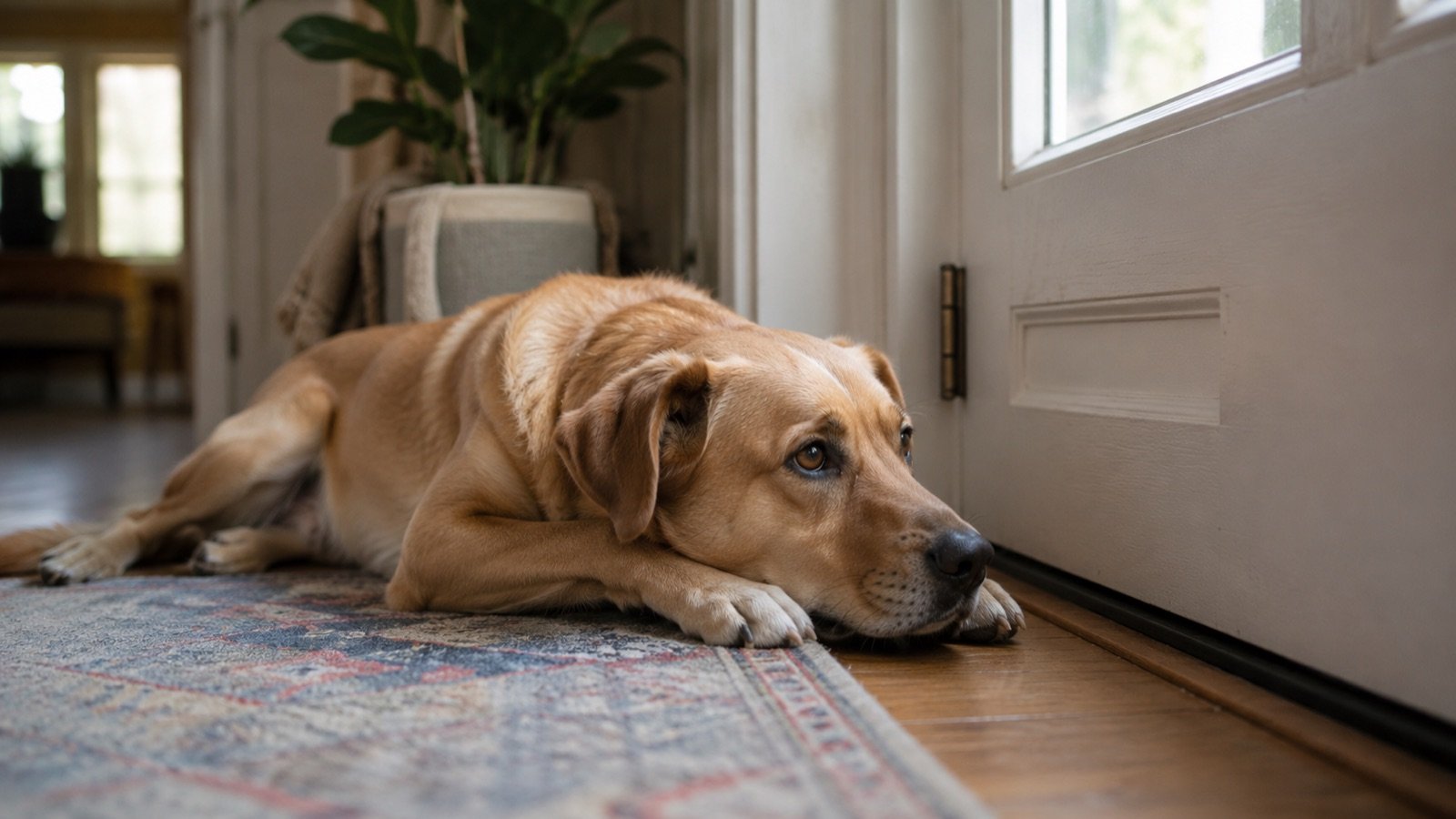
Separation anxiety in dogs is real panic at being left alone — not spite. Watch for distress that builds as you prepare to leave: pacing, drooling, nonstop barking, destruction near doors, or accidents in a house-trained dog. The fix is gradual desensitization to alone-time, never punishment, plus a vet's help for severe cases.
The hardest foster I ever had was a shepherd mix who screamed — really screamed — the second I stepped outside. He wasn't being dramatic or "getting back at me." He was terrified. Separation anxiety is one of the most misunderstood dog problems, so let's clear it up and get to what actually helps.
What is separation anxiety in dogs, really?
Separation anxiety is a panic response triggered by being left alone or apart from a specific person. It's not disobedience and it's not stubbornness — it's the canine version of a panic attack. That distinction matters, because you can't punish away a panic attack. You can only help your dog feel safe.
The estimated share of dogs seen by veterinary behaviorists for separation-related problems — making it one of the most common issues they treat.
Source: veterinary behavior literatureWhat are the signs of separation anxiety?
True separation anxiety shows up specifically around your absence — often before you even leave. Common signs include:
- Pre-departure worry: pacing, whining, or clinging as you pick up keys or put on shoes.
- Vocalizing: howling or barking that starts within minutes of you leaving and doesn't stop.
- Destruction near exits: chewing or scratching at doors, windows, or the crate — trying to escape and reunite.
- House-training lapses: a fully trained dog having accidents only when alone.
- Drooling, panting, or trembling when left, and frantic over-greeting when you return.
The tell is the pattern: it happens when your dog is alone, and it looks like distress, not mischief.
Is it separation anxiety or just boredom?
This is the question that changes everything, because the fixes are different. A quick way to tell them apart:
- Boredom tends to be calm and opportunistic — a dog that chews a shoe or raids the trash, then naps. It's spread across the day and eases with more exercise and enrichment.
- Anxiety is frantic and time-locked to your departure — distress that peaks in the first 15–30 minutes and centers on exits and your scent.
Not sure which you're seeing? Set up a phone or camera and watch the first 30 minutes after you leave. If the trouble is boredom, start with my list of 12 games that actually tire a dog out — enrichment alone often solves it.
Record before you assume. Filming your dog alone is the single most useful thing you can do — it tells you whether you're dealing with panic or simple boredom, and it shows whether your plan is working.
How do you help a dog with separation anxiety?
The core method is desensitization: teaching your dog, in tiny steps, that being alone is safe and always temporary. Move only as fast as your dog stays calm.
- Defuse your departure cues. Pick up your keys, then sit down. Put on your shoes, then make coffee. Repeated out of context, these cues stop predicting panic.
- Start with seconds. Step outside, close the door, come back before your dog worries — even if that's three seconds. Repeat, and stretch the time only when your dog stays relaxed.
- Keep arrivals and exits boring. No emotional goodbyes, no frenzied hellos. Calm in, calm out.
- Build independence at home. Reward your dog for settling on a mat while you move around, so being a few feet away feels normal.
- Add enrichment. A stuffed frozen KONG or a puzzle can help a mildly worried dog, though for true panic, desensitization does the heavy lifting.
These same calm, reward-based foundations run through all my training — you'll find them in the complete home training guide.
A calmer, more mentally satisfied dog copes with alone-time far better. Brain Training for Dogs builds focus and confidence through force-free games — a gentle complement to a separation plan. See what's inside in our honest review.
Read our Brain Training for Dogs review → Independent review · we may earn a commission at no extra cost to you.What does a step-by-step plan actually look like?
"Start small and build up" is the advice everyone gives, and it's useless on its own — because the hard part isn't the idea, it's knowing when you're allowed to move up. Here's how I actually run it.
First, get a camera. A phone propped on a shelf is enough. You cannot judge this from outside the door, and this is the step most people skip. A dog who is silent may still be panting, pacing or fixed on the door — and a dog who barks for ten seconds and then falls asleep is doing fine. You need to see which one you have.
Then work in short sessions. Three to five absences per session, a couple of sessions a day if you can. Each one is: walk out, close the door, come back, no fuss either way.
The rule that decides everything: you move up only when your dog stayed relaxed for the whole absence — lying down or moving about normally, not fixed on the door, no whining, no pacing, no heavy panting. If any of that shows up, you went too far. Drop back to a length they handled easily and rebuild from there. A setback isn't failure; it's information.
Don't climb in a straight line. This is the part almost nobody mentions, and it matters more than the numbers. If every absence is longer than the last, your dog learns that each departure predicts something worse, and starts worrying at the door. So mix it: thirty seconds, then five, then a minute, then ten seconds. Unpredictable-but-short beats a neat staircase every time.
A rough shape of the ladder — yours will move faster or slower, and that's fine:
- Hand on the door handle, then sit back down. Repeat until it's boring.
- Open the door, close it without leaving.
- Step out and back in — one or two seconds.
- Ten to thirty seconds, mixed lengths.
- One to five minutes, mixed.
- Five to fifteen minutes. For a lot of dogs this is the wall — the first few minutes are the hardest part, and once a dog settles past them, longer absences often come quickly.
- Thirty minutes and beyond, still varying.
The rule people find hardest: while you're training, try not to leave your dog alone for longer than they can currently handle. A single panicked four-hour afternoon can undo weeks of careful work. That's what daycare, a sitter, a neighbour or a friend's house are for during this period — not luxuries, part of the plan.
Expect this to take weeks, sometimes months, and expect bad days. Progress in this is never a straight line, and a dog who regresses after a change in routine hasn't lost what they learned.
What should you never do?
A few well-meaning moves make separation anxiety worse:
- Don't punish the barking, chewing, or accidents. Your dog is panicking, and punishment adds fear to an already frightening situation.
- Don't "flood" your dog by leaving for hours to "get used to it." Long, panicked absences deepen the fear instead of curing it.
- Don't rely on a second dog as a quick fix — most anxious dogs are bonded to you, not to company in general.
When should you see a vet or behaviorist?
Please treat this as the important part. If your dog hurts themselves trying to escape, panics the moment you leave, or the distress isn't improving, book a veterinarian or a certified veterinary behaviorist. Severe separation anxiety is a genuine welfare problem, and for many dogs a combination of a behavior plan and veterinary support — sometimes including anti-anxiety medication — is what finally brings relief. There's no shame in it; it's the kindest, fastest path for a truly panicked dog.
Frequently asked questions
Can dogs grow out of separation anxiety?
Rarely on their own. Without a plan it usually stays the same or worsens, because every panicked absence rehearses the fear. With gradual desensitization, though, most dogs improve a great deal and many recover fully.
Does getting a second dog help?
Usually not. Most dogs with separation anxiety are bonded to their person, not just craving company, so a second dog often becomes a second anxious dog. Work on the fear of being alone first.
How long does it take to fix separation anxiety?
It varies. Mild cases can improve in a few weeks of daily practice; moderate to severe cases often take several months. Progress is gradual because you can only move as fast as your dog stays calm.
Should I crate a dog with separation anxiety?
Only if the crate genuinely relaxes your dog. For many anxious dogs a crate increases panic and can cause injury. Watch your dog's response, and never use confinement to mask the distress instead of treating it.
How do I know when to leave my dog alone for longer?
Only when the last absence was genuinely relaxed for its whole length — your dog lying down or moving about normally, not fixed on the door, no whining, pacing or heavy panting. If any of that appears, drop back to a duration they handled easily and rebuild. Vary the lengths rather than always increasing, so departures stop predicting something worse.
Should I film my dog when I leave?
Yes, and it is the step most people skip. You cannot judge alone-time behaviour from outside the door. A phone propped on a shelf is enough. A dog who is quiet may still be panting and pacing, and a dog who barks briefly then sleeps is doing fine — you need to see which one you have.
What if my dog panics after weeks of progress?
That is normal and it is not lost work. Setbacks usually follow a change in routine, a longer absence than your dog was ready for, or an unrelated stress. Drop back to a length they succeeded at, rebuild from there, and avoid leaving them beyond their current tolerance while you retrain.
Can separation anxiety in dogs be cured?
Many dogs improve dramatically and some recover fully, but it takes a gradual desensitization plan and patience — there's no instant fix. Severe cases do best with a veterinarian or veterinary behaviorist, sometimes alongside anti-anxiety medication.
What are the first signs of separation anxiety?
Watch for distress that starts as you get ready to leave — pacing, whining, or clinging when you pick up your keys — plus barking or howling soon after you go, destruction near doors, drooling, or accidents in a house-trained dog when alone.
Sources
Where this guide makes a claim about training method, behaviour or health, this is where it comes from. Checked August 2026.
- ASPCA. Separation Anxiety — signs, what distinguishes it from other behaviours, and treatment approaches. Accessed August 2026. aspca.org
- Merck Veterinary Manual. Behavioral Problems of Dogs — clinical reference on canine behaviour problems and their management. Accessed August 2026. merckvetmanual.com
- American Veterinary Society of Animal Behavior (AVSAB). Humane Dog Training Position Statement, 2021 — recommends that only reward-based training methods are used for all dog training, including the treatment of behaviour problems. Accessed August 2026. avsab.org
Canine behavior writer & rescue foster
Megan has fostered more than 30 rescue dogs, several with serious separation anxiety, and has worked alongside veterinary behaviorists to help them learn that being alone is safe. She writes PawHonest to share honest, force-free guidance — and to say clearly when it's time to call a professional.
A note on trust: Separation anxiety is a real welfare issue. If your dog injures themselves, panics, or isn't improving, please see your veterinarian or a certified veterinary behaviorist — medication combined with a behavior plan helps many dogs. PawHonest is reader-supported: we may earn a small commission on purchases through our links, at no extra cost to you, and only recommend what we'd use on our own dogs.