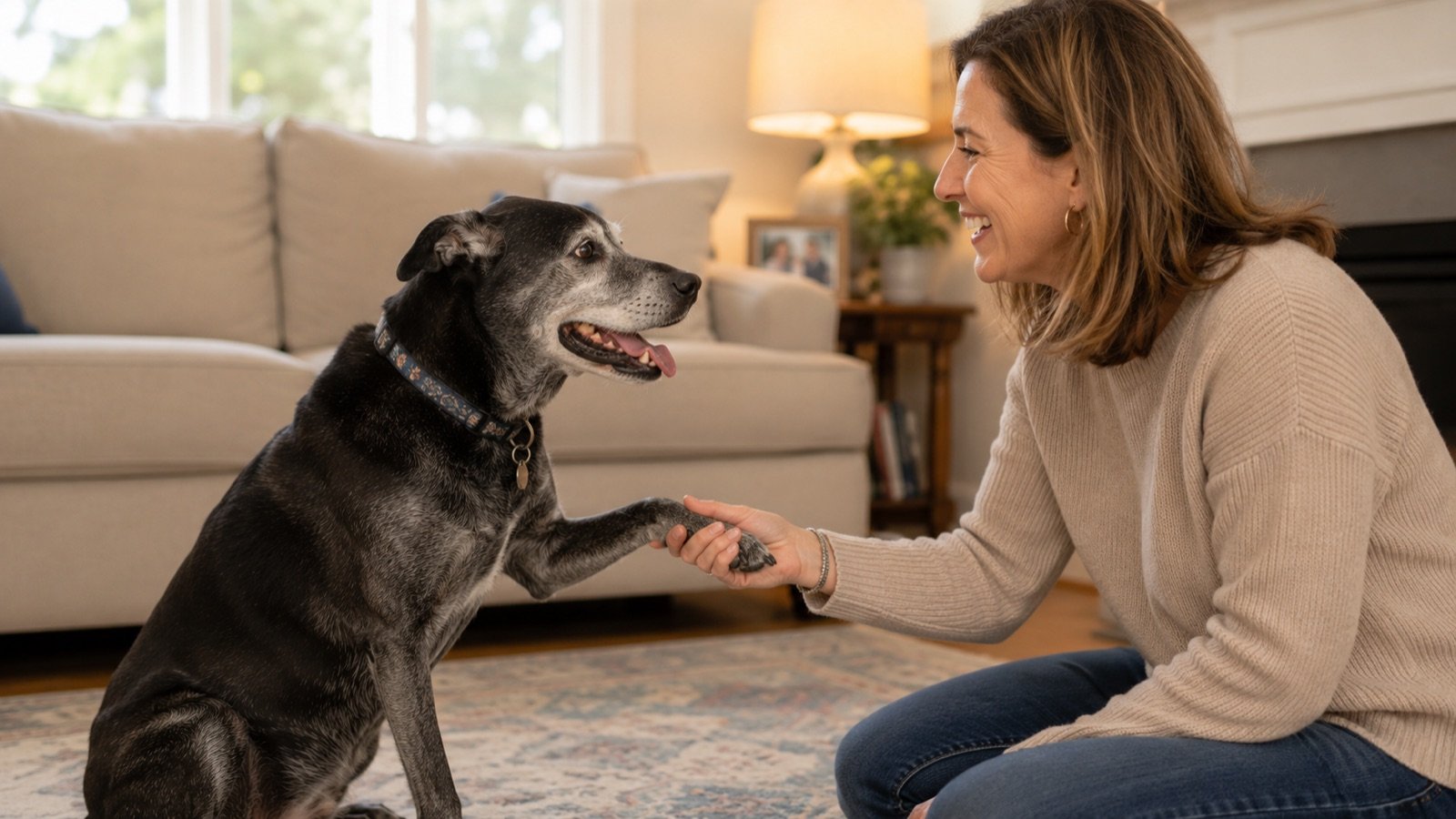
Yes — you absolutely can teach an old dog new tricks. Older dogs often focus better than puppies and learn readily with short, gentle, reward-based sessions. Adjust for their body with low-impact tricks and soft surfaces, allow for any hearing or vision loss, keep it fun, and rule out pain with your vet. Age is no barrier to learning.
Some of the most rewarding training I've ever done was with grey-muzzled seniors — dogs a shelter had written off as "too old to change." Every one of them learned new skills, and fast. If you've been told your older dog is past learning, let me put that myth to rest.
Can you really teach an old dog new tricks?
Yes — and sometimes more easily than a puppy. Dogs keep learning their whole lives. An older dog brings calmer energy, a longer attention span, and better impulse control to a training session, which are exactly the qualities that make learning stick. What changes with age isn't the ability to learn — it's the body you're working with.
The average dog can learn to understand around 165 words and signals — a capacity that doesn't switch off with age. Older brains keep forming new connections when you give them the chance.
Source: Dr. Stanley Coren, The Intelligence of DogsWhy is the old saying wrong?
"You can't teach an old dog new tricks" is folk wisdom, not science. Dogs of every age respond to the same reward-based learning: mark the behavior you want, pay for it, and repeat. A senior who seems "stubborn" is usually sore, hard of hearing, or simply never taught — not incapable. Fix those and the learning flows.
How is training a senior dog different?
You use the same force-free methods as always, with a few kind adjustments:
- Shorter, gentler sessions. A few minutes at a time suits older attention spans and energy.
- Protect the joints. Train on soft, non-slip surfaces and skip high-impact tricks like jumping or fast spins.
- Work with the senses. If hearing is fading, switch to hand signals; if vision is dimming, rely more on scent and touch cues.
- Check for pain first. A dog that won't sit may have achy hips, not a bad attitude — a vet check rules that out.
- Be patient and upbeat. Let your senior succeed often, and keep every session positive.
If your senior is stiff getting up rather than unwilling to learn, that's a body problem and not a training one — so a vet check comes first. Once pain has been ruled out, UltraK9 Pro is the daily liquid we point older-dog owners to: turmeric for the inflammation side, collagen for the structural side, poured straight onto food. From $39 a bottle with a 60-day money-back guarantee.
Read our honest UltraK9 Pro review → Independent review · we may earn a commission at no extra cost to you.What tricks are good for an older dog?
Pick rewarding, low-impact skills that build confidence without straining the body:
- Hand touch — nose to your palm (great, gentle, and endlessly useful).
- "Look at me" for focus and connection.
- A soft "shake" or "paw."
- Settle on a mat — calming and easy on the joints.
- Name recognition and recall, refreshed with tasty rewards.
Gentle games and training help older dogs stay bright and engaged. Brain Training for Dogs offers force-free, low-impact brain games perfect for seniors. See what's inside in our honest review.
Read our Brain Training for Dogs review → Independent review · we may earn a commission at no extra cost to you.How do you actually teach it? (step by step)
- Pick one small skill and grab high-value treats your senior loves.
- Mark and reward the instant your dog does the right thing — use a word like "Yes!" or a hand signal if hearing is poor.
- Keep it short: a few reps, end on a win, and stop before your dog tires.
- Repeat daily. Consistency, not intensity, is what teaches an older dog.
It's the same gentle framework as my home training guide — just dialed to a senior's pace.
Why mental stimulation matters even more for seniors
Keeping an older dog's brain busy isn't just fun — it helps them stay sharp and engaged as they age. Sniffing games, puzzle feeders, and easy training all give a senior's mind a workout. I keep a whole list in 12 mental stimulation games that actually tire dogs out; just choose the gentle, low-impact ones for an older dog.
When should you check with the vet?
Before starting anything new with a senior, a quick vet check is wise — especially to spot pain that could make training uncomfortable. And if your older dog seems disoriented, stares at walls, gets "lost" in familiar rooms, or has sudden changes in behavior, see your veterinarian: these can be signs of canine cognitive dysfunction, which is manageable with help. Never write off a sudden change as "just old age."
Frequently asked questions
Is it harder to train an older dog than a puppy?
Not usually. Older dogs often have longer attention spans and better impulse control than puppies, so they can actually learn faster. You just adjust for their body and any hearing or vision changes and keep sessions gentle.
What's a good first trick for a senior dog?
Low-impact skills are ideal: hand touch (nose to your palm), "look at me," a gentle "shake," or settling on a mat. They're rewarding, easy on the joints, and build confidence without jumping or twisting.
Can old dogs still be house-trained?
Yes. Adult and senior dogs learn house-training with the same routine as puppies — frequent trips outside and rewards — and often faster because they can hold it longer. Rule out medical causes with your vet if an older dog has accidents.
My old dog seems confused — is that just aging?
Not necessarily. Disorientation, staring at walls, or getting lost in familiar rooms can be signs of canine cognitive dysfunction, which a vet can help manage. Always get sudden changes checked rather than writing them off as old age.
What is the 3-3-3 rule for a newly adopted older dog?
It's a rough settling-in timeline for a rescue dog: about 3 days to decompress and feel overwhelmed, 3 weeks to learn your routine, and 3 months to feel truly at home. Go slow, keep training gentle, and let an older rescue adjust before expecting much.
What should you avoid with a senior dog?
Skip high-impact tricks (jumping, fast spins) that strain aging joints, don't train on slippery floors, avoid long or repetitive sessions, and never punish. And don't dismiss sudden confusion, stiffness, or behavior changes as "just old age" — get them checked by a vet.
Sources
Where this guide makes a claim about training method, behaviour or health, this is where it comes from. Checked August 2026.
- ASPCA. Behavior Problems in Older Dogs — including medical causes behind behaviour change in senior dogs. Accessed August 2026. aspca.org
- American Veterinary Society of Animal Behavior (AVSAB). Humane Dog Training Position Statement, 2021 — recommends that only reward-based training methods are used for all dog training, including the treatment of behaviour problems. Accessed August 2026. avsab.org
- Merck Veterinary Manual. Behavioral Problems of Dogs — clinical reference on canine behaviour problems and their management. Accessed August 2026. merckvetmanual.com
Canine behavior writer & rescue foster
Megan has a soft spot for senior fosters, and has taught grey-muzzled dogs everything from hand targets to new recall cues using gentle, reward-based methods. She writes PawHonest to prove that no dog is ever too old to learn — and to share the honest, force-free guidance she wishes she'd had at the start.
A note on trust: Before training a senior dog, and any time you notice stiffness, confusion, or sudden behavior changes, check with your veterinarian — pain and cognitive changes are common in older dogs and treatable. PawHonest is reader-supported: we may earn a small commission on purchases through our links, at no extra cost to you, and only recommend what we'd use on our own dogs.