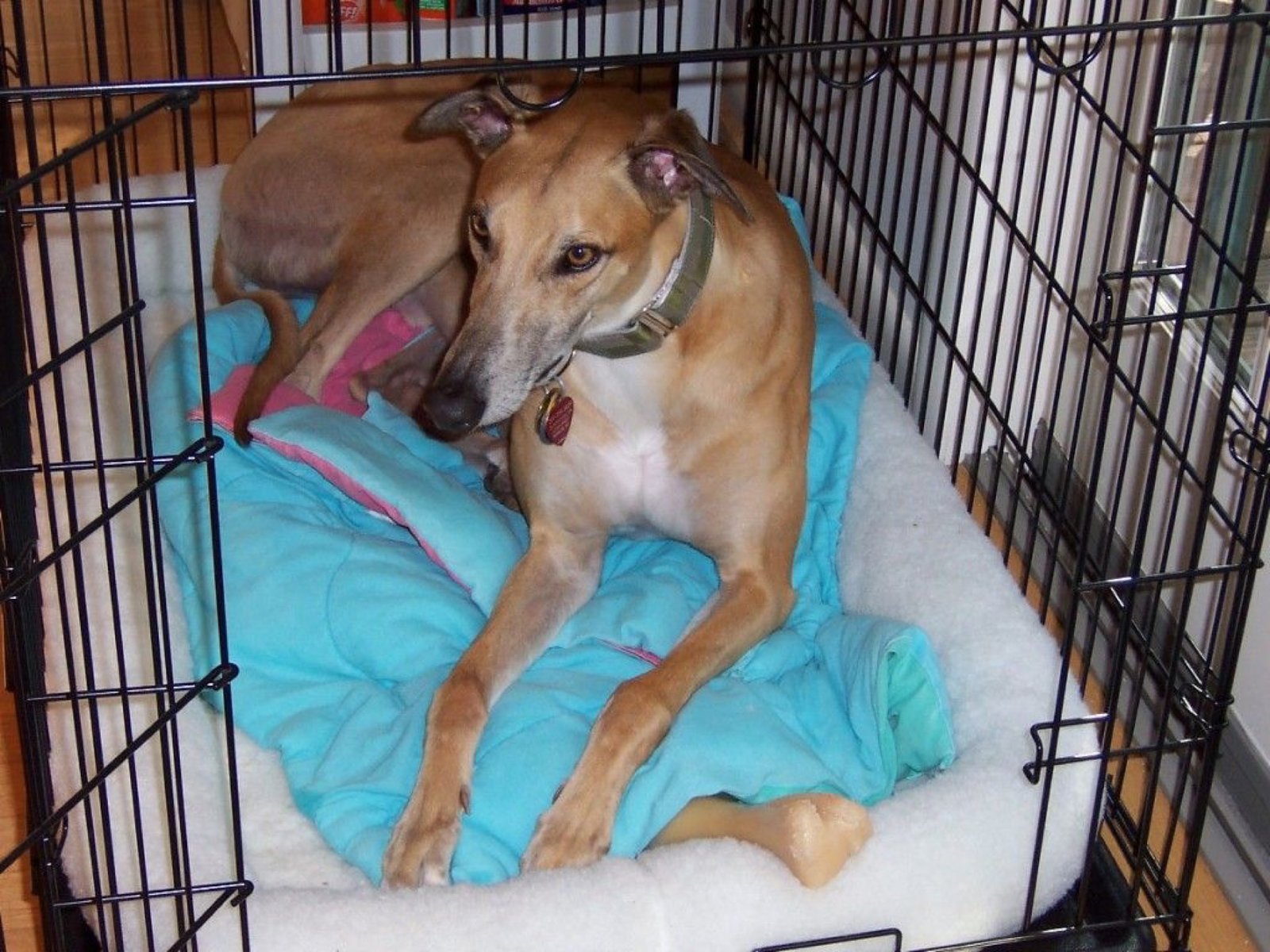
Adult and senior dogs can be crate trained with the exact same method used for puppies: feed near it, then in it, then close the door for seconds at a time and build up slowly. Most take one to four weeks. The one thing to check first — a dog with genuine separation anxiety can get hurt trying to escape a crate, and needs a different approach.
The oldest dog I ever fostered was a nine-year-old hound mix named Duke, surrendered when his owner moved into assisted living. He'd never seen a crate in his life. Two shelter volunteers told me, kindly, not to bother — "he's set in his ways." Three weeks later, Duke walked into that crate on his own every night and put himself to bed.
Crate training gets talked about like it's a puppy-only window that closes. It isn't. It's a learned association, and dogs can learn new associations at any age — the process is just a little slower to start with an adult who's never had a reason to trust a box with a door on it.
Why "too old" isn't really the problem
There's no biological cutoff for crate training the way there is for, say, housetraining a puppy's bladder control. What actually varies by dog isn't age — it's history. A dog with no crate experience at all, good or bad, usually learns fastest, because there's nothing to undo. A dog that was crated as punishment, or crated for too many hours too young, has real work ahead. Age alone predicts almost none of it.
The training itself uses the same positive-reinforcement approach used for teaching any command, like sit or stay: build the behavior in small steps, reward often, and never force it. An adult dog that already knows a few basic cues often picks up the "kennel" command faster than a puppy would, precisely because it already understands that following a cue earns a reward.
The number most guides don't give you: once your dog is comfortable, guidance from ASPCA Pet Insurance still caps a workday crate stretch — 8 or more hours without a break is too long, and it applies to adult dogs, not just puppies. Plan a midday walk or a dog walker if your day runs longer than that, no matter how well the training went.
The step-by-step method (works the same at any age)
This is the same core sequence VCA Animal Hospitals outlines for adult dogs — the only thing that changes with an older or newly adopted dog is patience with the pace, not the steps themselves.
- Step 1 — door open, for days, not minutes. Put the crate where your dog already spends time. Leave the door open. Put food, treats and water inside it and let your dog wander in and out on their own terms for several days before you touch the door.
- Step 2 — feed every meal there. Move the food bowl gradually deeper into the crate over a few days until your dog is eating a full meal with all four paws inside.
- Step 3 — teach "kennel" like any other cue. Use a single word, reward for stepping in, and build up how long your dog stays before the release word and the treat.
- Step 4 — close the door for seconds, not hours. Shut it while your dog eats, open it again before they're finished, then start adding a few seconds after the food is gone before you let them out.
- Step 5 — nights before days. Once your dog settles quietly in a closed crate while you're in the room, try a full night in the crate before you try leaving the house.
- Step 6 — short departures, then longer ones. Leave for a few minutes, come back calmly, and stretch the absence gradually from there.
Most dogs with no crate history move through this in one to two weeks. A dog with a rough past around confinement can take four to six weeks — that's normal, not a sign it isn't working.
Stop and reassess if you see this: intense scratching or chewing at the door or corners, drooling, a panicked reaction the moment the door clicks shut, or injuries to the mouth or paws from trying to get out. VCA Animal Hospitals is direct about this: crates should be used with caution for dogs with separation anxiety, because they "can promote intense escape attempts and may result in fairly serious injuries." That's not a training problem to push through — it's a sign to stop, switch to a safe room or pen instead, and talk to your vet.
The distinction that matters: does the panic happen only when you leave the room, or does it happen even with you sitting right next to the crate? The first points toward separation anxiety, where the crate isn't the trigger, being alone is — and confining a panicking dog can make that worse, not better. The second is more often plain unfamiliarity with confinement, which the step-by-step method above resolves.
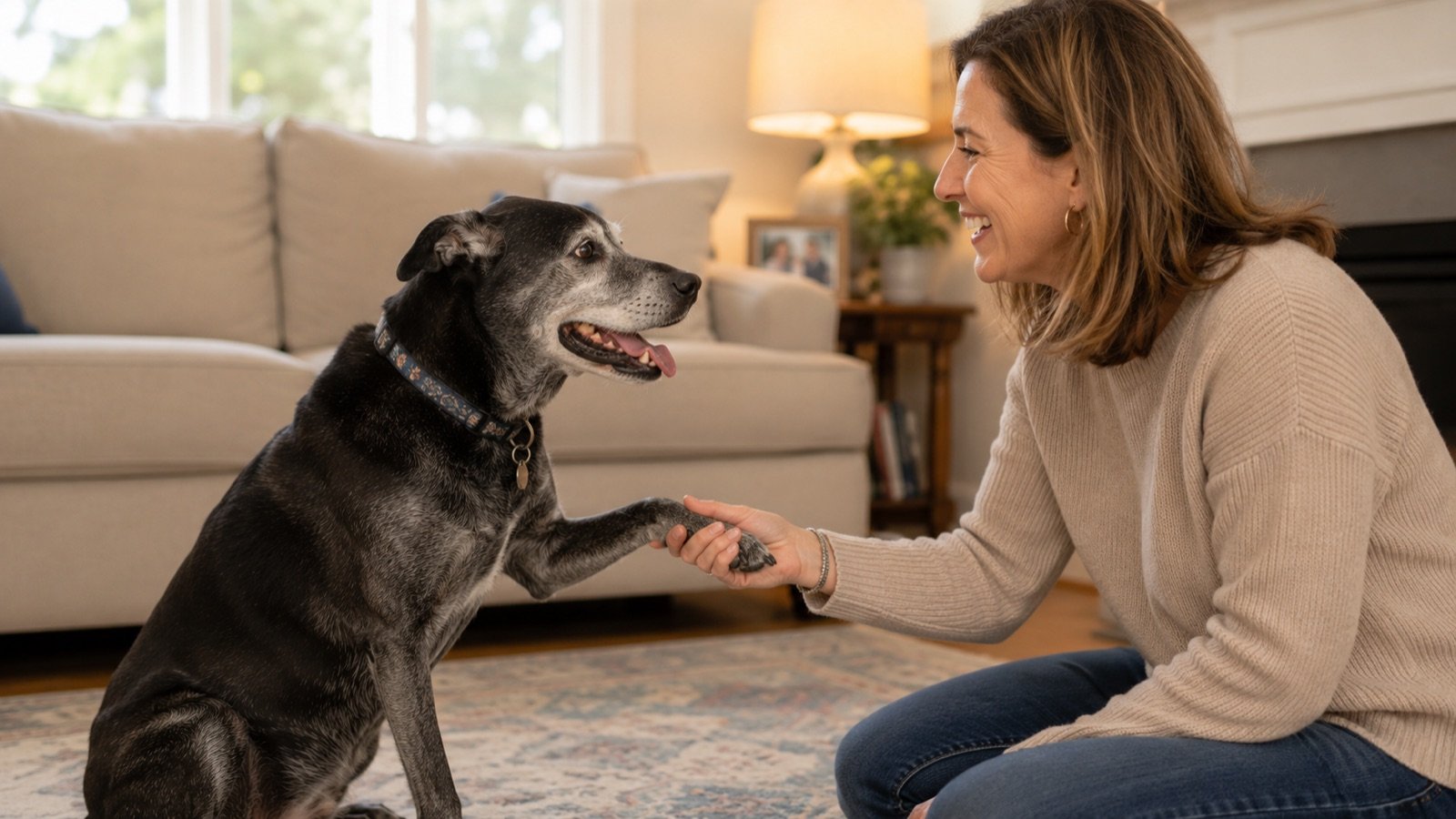
What actually convinced Duke. The turning point wasn't a special trick — it was moving his water bowl inside the crate on day four and leaving the door open around the clock, no closing it at all for the first full week. By the time I finally shut the door for ten seconds, he barely noticed. The rush to close the door early is the single most common thing I see owners get wrong, at any dog's age.
Crate training and everyday obedience run on the same principle — small steps, real rewards, no force. Brain Training for Dogs is the force-free course we point owners to for building that foundation, adult and senior dogs included.
Read our Brain Training for Dogs review → Independent review · we may earn a commission at no extra cost to you.Adjusting the method for a senior dog specifically
If your dog is genuinely a senior rather than simply an adult, a few practical tweaks help without changing the training itself:
- A lower step or ramp if arthritis or stiff hips make climbing into a raised crate uncomfortable — pain at the doorway will slow any training down, and it isn't a stubbornness problem.
- A thicker, orthopedic-style bed inside the crate. An older dog spending real time lying on hard plastic will start associating the crate with discomfort, undoing the positive work.
- Shorter stretches between bathroom breaks. Bladder control can loosen with age the same way it's still developing in a puppy — don't apply an adult dog's old numbers to a dog that's now a senior.
- Watch for confusion, not defiance. A senior dog that suddenly "forgets" the crate training it had for years is more often a sign to mention to your vet than a training lapse — cognitive changes in older dogs are real and worth ruling out.
If your dog won't even approach the crate
Go back a step instead of pushing forward. Stop closing the door completely — for a few more days if needed. Keep feeding every meal at, then inside, the open crate. Never lure your dog in with a treat thrown to the back and then shut the door behind them; that breaks the trust you're building. VCA's own guidance is to let the dog choose to enter on its own terms, which is slower than forcing it and considerably more durable.
The short version
Age doesn't block crate training — history does, and even a dog with a difficult history can get there with patience. Use the same steps you'd use for a puppy: door open for days, meals inside, the door closed for seconds before minutes before hours, nights before departures. Watch closely for the one warning sign — panic that shows up even with you in the room, or injuries from trying to escape — because that's separation anxiety, not confinement shyness, and it calls for a different plan entirely.
The patience that gets a dog into a crate is the same patience Brain Training for Dogs uses for recall, impulse control and settling on cue — a full force-free curriculum, not just crate steps.
See what's inside & current price → Independent review · we may earn a commission at no extra cost to you.Frequently asked questions
Can you crate train an adult or senior dog?
Yes. The method is the same one used for puppies — feed near the crate, then inside it, then close the door for a few seconds at a time and build up from there. Adult dogs often catch on faster than puppies because they already understand basic commands, though a dog with a genuinely bad past experience with confinement can take four to six weeks.
Is it too late to crate train a dog that's already 5, 8, or 10 years old?
No. There's no age cutoff for learning to accept a crate — it's a trained association, not a developmental window like potty training. A senior dog may need a lower step and a softer bed for aging joints, but the training steps themselves don't change with age.
How long can an adult dog stay in a crate?
Guidance from ASPCA Pet Insurance is that 8 or more hours in a crate during a workday is too long without a break — plan a midday visit or a dog walker. Most adult dogs do fine for shorter stretches once trained, but a crate isn't meant to replace a full day of human contact.
Should I crate a rescue dog with separation anxiety?
Be cautious. VCA Animal Hospitals warns that crates can promote intense escape attempts in dogs with separation anxiety and may cause fairly serious injuries. If your dog claws at the door, drools heavily, or panics the moment you close it, stop and use a safe room or pen instead, and talk to your vet or a behaviorist.
Why is my newly adopted adult dog panicking in the crate?
It usually means one of two things: the crate was introduced too fast, without the feeding and door-open stage first, or the panic is separation anxiety rather than simple unfamiliarity. Watch whether the reaction happens only when you leave the room (anxiety) or happens even with you sitting right there (confinement discomfort) — the fix is different for each.
What if my older dog refuses to go anywhere near the crate?
Go back a step rather than pushing forward. Stop closing the door entirely, feed every meal near then inside the open crate for several more days, and never lure or force a dog in — VCA's own guidance is to let the dog choose to enter on its own, using treats and patience, not physical pressure.
Sources
Where this guide makes a claim about a method or a number, this is where it comes from. Checked September 2026.
- VCA Animal Hospitals. "How to Crate Train Your Dog" — the step-by-step method for adult dogs (feeding in the crate, command training, progressive duration, nighttime before daytime departures), and the guidance to let a dog enter on its own rather than luring or forcing it. Accessed September 2026. vcahospitals.com
- VCA Animal Hospitals. "Separation Anxiety in Dogs" — the warning that crates should be used with caution for dogs with separation anxiety because they can promote intense escape attempts and fairly serious injuries, and the recommendation to use a safe room instead. Accessed September 2026. vcahospitals.com
- ASPCA Pet Insurance. "How to Crate Train a Puppy" — guidance that 8 or more hours in a crate during a workday is too long without a midday break, which the article states applies to adult dogs as well. Accessed September 2026. aspcapetinsurance.com

Canine behavior writer & rescue foster
Megan has fostered more than 30 rescue dogs, including several senior dogs with no crate history at all. She writes PawHonest to share honest, hype-free advice — and she is not a veterinarian.
A note on trust: This article summarises published veterinary and shelter-behavior guidance and is educational, not medical or behavioral advice. Megan is not a veterinarian or a certified behaviorist. If your dog shows signs of separation anxiety or panics in confinement, talk to your vet before continuing crate training. PawHonest is reader-supported: we may earn a small commission on purchases made through our links, at no extra cost to you.