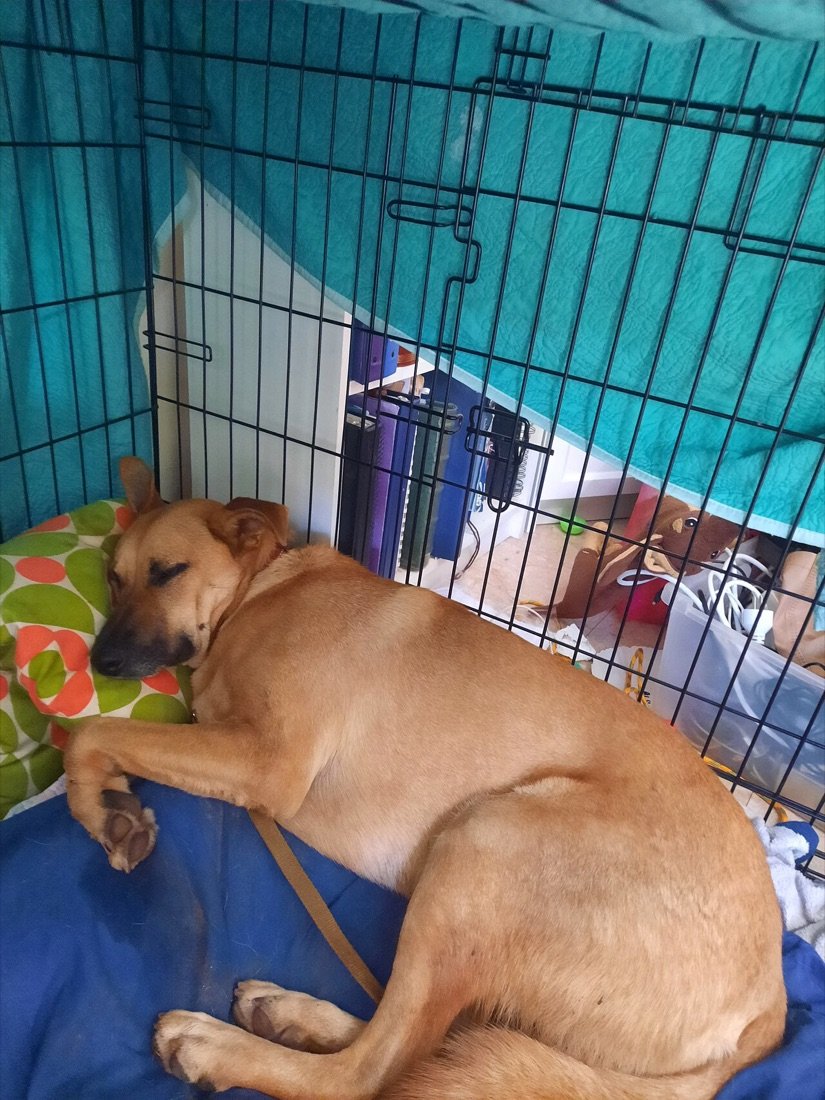

Keep the crate near your bed. Plan at least two potty trips a night at first, using an alarm so you get there before your puppy cries. Wait a minute or two when he fusses, then respond. Most puppies stop needing night trips between about 3 and 5 months, depending on which source you read.
Your puppy naps in the crate all day without a sound. Then the lights go off, and he sounds like the world is ending.
Night is where most crate training falls apart. It's also where the advice gets the most confusing. One vet handout says don't go to him. A board-certified vet behaviorist says comfort him. One source says he'll sleep through at 3 months, another says 5. Below you'll see what each one actually says, how to tell what a cry means, and a night plan you can start tonight.
- Respected sources put "sleeping through the night" anywhere from 3 months to about 5 months. Plan for the later end.
- Night trips work best on an alarm. You wake him before he wakes you, so crying never becomes the way out.
- Not every cry means the same thing. Distress, demand and "I need to pee" each get a different response.
- Long "cry it out" sessions aren't what current behavior advice recommends. A short pause, then a response, is.
If your puppy is coming home this week, start with our guide to the first day and night with a new puppy. This guide picks up from there, for the weeks and months after.
When Will My Puppy Sleep Through the Night?
Here is what four trusted sources say, side by side. They don't agree, and it helps to know that before you start counting nights.
| Source | What it says about nights |
|---|---|
| Carver Street Animal Hospital (vet client handout) | "Many puppies can control themselves through the night by 3 months of age," with a great deal of individual variability. |
| Purina Pet Expert Team | Puppies hold it about one hour per month of age by day, but most can hold it for six to seven hours overnight. |
| Preventive Vet (Cathy Madson, CPDT-KA, CBCC-KA) | A full night without a potty break is usually seen around 16–20 weeks. Most puppies handle about 6–7 hours of night crating at around 16 weeks. |
| VCA Animal Hospitals (veterinary behaviorist) | Puppies may need to go out during the night until about 5 months of age. |
| What we'd plan around | Expect night trips until 4–5 months. If yours sleeps through sooner, that's a bonus, not the rule. |
The last row is our reading of the sources, not a veterinary rule. Breed, size and how house training is going all shift the number, and Preventive Vet says so directly. A small-breed puppy with a tiny bladder may take longer than a Labrador.
Why plan for the later end? Because the cost of guessing wrong isn't equal. Wake him once too often and you lose a little sleep. Make him wait too long and he soils the crate, which Preventive Vet warns can set house training back a long way.
Should You Let a Puppy Cry It Out in the Crate?
This is where the advice splits most, so here it is plainly:
- Carver Street Animal Hospital's handout says that at bedtime the puppy should be exercised, crated and left for the night: "Do not go to the dog if it cries." In the same sentence, it offers keeping the crate in the bedroom as the alternative.
- Purina says not to open the door when your puppy whines, and to wait for a calm moment before letting him out.
- Dr. Wailani Sung, a board-certified veterinary behaviorist writing for PetMD, says you can ignore the first cries, since your puppy may just be checking you're nearby. If crying goes on for more than about two minutes, give a brief verbal response, two or three times. If it keeps escalating, go back in. Her reason: stressful events early in a puppy's life can hurt his ability to cope with stress later.
- Preventive Vet's trainer says to comfort a distressed puppy without coddling him, and that she waits one minute at most to see if a puppy settles on his own.
So the real gap is smaller than it looks. Everyone agrees on one thing: don't open the door during a screaming fit, or you teach that screaming works. Where they differ is how long to leave a puppy upset. The two sources most focused on behavior both say: a short pause, then a response. That's what we'd follow.
Notice, too, that the "don't go to him" advice comes paired with a crate in the bedroom. The same handout says a puppy shut away in a laundry room or basement is "far more likely" to cry. Closeness does a lot of the work for you.
What Is Your Puppy's Cry Telling You?
Preventive Vet sorts night crying into three kinds. Once you can tell them apart, you'll know what to do without guessing.
| Type of cry | What it looks like | What to do |
|---|---|---|
| Distress | High-pitched, non-stop barking or howling, or long whining. Often with pacing, panting, licking or trying to escape. Common in the first days. | Comfort him. Sit by the crate, talk softly, put your fingers through the bars. Move the crate closer if you need to. |
| Demand | Repetitive barking while he stares at you, waiting for your move. Often learned when every noise got a trip outside. | Pause briefly. Open up or step in only after a second or two of quiet, and offer a chew instead of a trip out. Check he isn't too hot, too cold or under-exercised. |
| Potty | Restless shuffling and turning first, then whining. Common up to 4–5 months. | Always respond. Wait for a second of quiet, then straight outside. Next night, set your alarm before that time. |
The rule of thumb: if you can't tell which one it is, assume potty. A wasted trip costs you five minutes. An accident in the crate costs you weeks.
How Do You Do Night Potty Trips Without Creating a Crying Habit?
The trick is to get there first. Preventive Vet's method is simple:
- Plan at least two trips at first. Preventive Vet suggests at least two potty breaks a night for very young puppies.
- Find his natural wake time. If he usually wakes at 1:00 a.m., set your alarm for 12:45 a.m.
- Push it later every few days. After a few nights, move the alarm 30 minutes to an hour later. As his body matures, the gaps grow on their own.
- Make it boring. No play, no chat. Carry him out if you can, which keeps him from waking up fully. If he doesn't go within about five minutes, back to the crate.
- Prep the door. Keep a flashlight, leash, collar or harness and bags by the exit, so he isn't waiting while you search in the dark.
One safety note: Purina and Preventive Vet both say to take the collar off before your puppy goes in the crate, so it can't snag on the wire. Put it back on at the door.
If he often goes out on your alarm and doesn't pee, that's good news. Preventive Vet's advice is to stretch the time between night breaks.
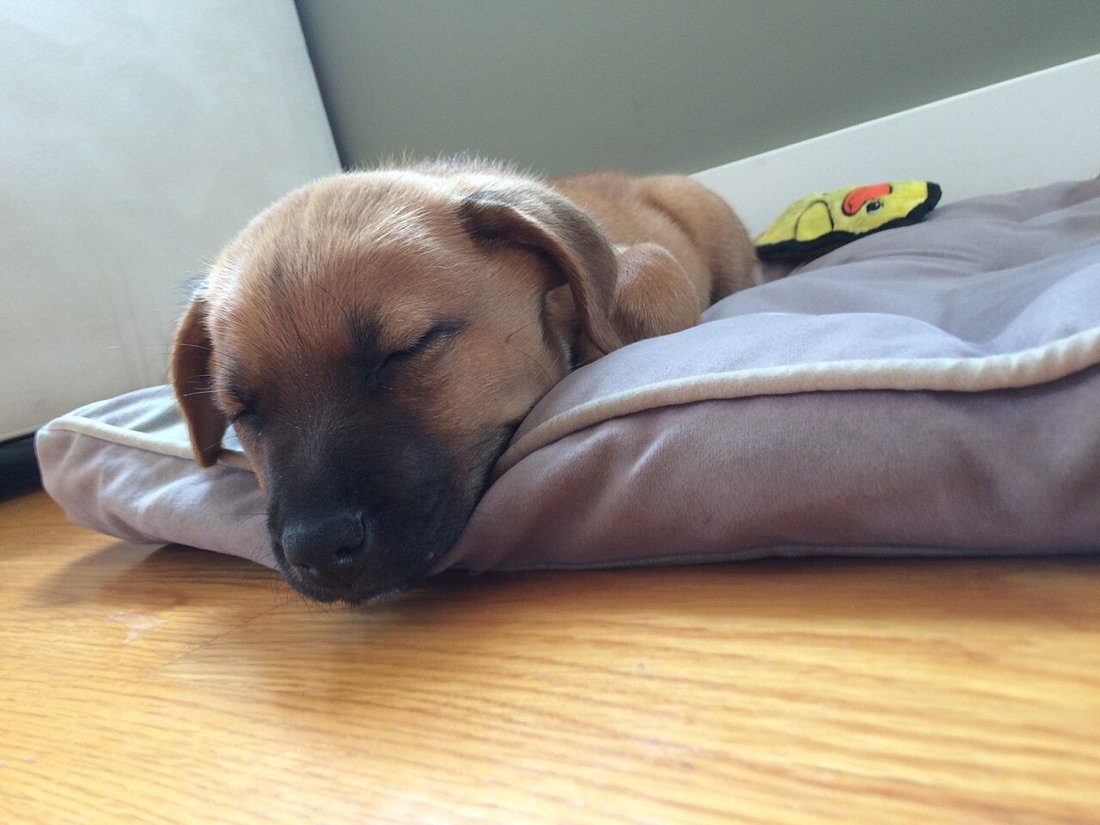
What Bedtime Routine Helps a Puppy Sleep in the Crate?
Most of a good night happens before the crate door closes. Pulled together from Preventive Vet and PetMD:
- Dinner 3–4 hours before bed. That gives him time to digest and go outside before lights out.
- A potty trip about 10 minutes after any drink. Young puppies need to go soon after drinking.
- Tire the brain, not just the legs. Preventive Vet warns that wild fetch or tug can over-excite some puppies right before bed. A sniff walk, a puzzle toy or a short training game settles them better. PetMD adds that it takes a fairly long play session to really tire a puppy out.
- Wind down with a chew. A safe chew in the crate gives him something calm to do while he drifts off.
- Last person to bed does the last trip. One final, quiet potty break.
- Practice in the daytime too. Preventive Vet says meals, chews and naps in the crate during the day speed up night training. If he only goes in at night, the crate means "alone in the dark."
Short thinking games before bed are one of the easiest ways to calm a wired puppy. That's the idea behind Brain Training for Dogs: bite-size games that work the brain and build calm, from settling on a mat to waiting at a door. We reviewed it honestly, including who it isn't for.
Read our Brain Training for Dogs review → Independent review · we may earn a commission at no extra cost to you.Where Should the Crate Go at Night?
Near you, at least at first. PetMD suggests two crates if you can: one in the family room for the day, and one in your bedroom for the night. Preventive Vet says the same, with one exception. If your puppy wakes at every rustle and creak, try a quiet corner of the room, or keep him close and run a fan or white noise to mask sounds.
When can you move it? Humane World for Animals says that once your puppy sleeps through the night with the crate near you, you can gradually move it to where you'd like it. A few feet every few nights works better than one big move.
Should You Cover the Crate or Leave Water In It?
Covering: PetMD says a blanket over the crate can create a calm, den-like space and block out distractions. Preventive Vet agrees it blocks light and muffles noise, with three cautions:
- Keep air flowing. A thin, dark sheet is better in warm weather.
- Some puppies need the door left uncovered so they don't feel shut in.
- If your puppy pulls fabric through the bars, don't cover the crate. Swallowed fabric can cause a dangerous blockage.
Water: here the sources differ again. Purina says to make sure he doesn't drink a lot right before bed. Preventive Vet's trainer goes further in the other direction: she recommends water at all times, and says to remove it an hour or so before bed only after checking with your vet. Some conditions, like diabetes or kidney disease, need free access to water. If you leave water in, a clip-on bowl or bottle stops spills.
Why Is My Puppy Suddenly Crying at Night Again?
Your puppy was sleeping well, and now he isn't. Before you assume he's "testing you," run through these:
- Does he need to go? A growth spurt, a new food or a bigger drink in the evening can shift his timing.
- Is he comfortable? Preventive Vet lists being too hot or too cold, like a heat vent or a drafty window, as a common reason for night barking.
- Did his days change? PetMD says that if crying continues, you may be leaving him alone for longer than he's ready for. Shorter daytime stretches often fix the nights.
- Did crying start getting him out? That's demand barking. Go back to alarm trips and wait for quiet before you open the door.
Talk to your vet if… your puppy suddenly needs to pee much more often, has accidents in the crate after weeks without them, strains, or has blood in his urine. Preventive Vet notes that frequent accidents can point to a medical problem, such as a urinary tract infection. No schedule can fix that.
When Is Night Crying More Than a Phase?
Some whining in the first week or two is normal. PetMD calls crying after leaving the litter a normal response, and the job is to keep the stress as low as you can.
It's a different story if your puppy is still frantic after a couple of weeks, drools, pants hard, or bites at the door until he hurts himself. PetMD says to get help from a board-certified veterinary behaviorist or a certified applied animal behaviorist if your puppy seems very scared and you aren't making progress. Carver Street's handout adds that ongoing anxiety in the crate can point to separation anxiety. Our guide to separation anxiety in dogs explains the signs.
If the crate itself is the problem, there are other options. Preventive Vet describes a "puppy zone" pen for nights, though it notes this can slow house training. Some puppies do better on a bed beside yours on a safe tether, which their trainer also describes. For the daytime side of building crate comfort, see our first-week crate training plan.
How Long Until Nights Get Easier?
Faster than it feels at 3 a.m. For most puppies, the crying fades as they settle in over the first couple of weeks. Night trips take longer, often until 4–5 months, but they get shorter and less frequent as the weeks go by. Write down his wake times for a few nights; Preventive Vet suggests a simple potty log, and seeing the gaps grow on paper helps a lot when you're tired.
For the full daytime picture, including how long he can stay crated at each age, see our puppy crate training schedule by age. And for potty training beyond the crate, our potty training guide covers the rest.
A puppy who learns to settle, wait and switch off during the day settles faster at night. Brain Training for Dogs builds those habits through short daily games. We reviewed it honestly, including who it isn't for.
Read our Brain Training for Dogs review → Independent review · we may earn a commission at no extra cost to you.For the bigger picture of training at home, start with our guide to training your dog without a trainer.
Frequently asked questions
When will my puppy sleep through the night in the crate?
Sources give different ages. A veterinary hospital handout says many puppies can last the night by 3 months, Preventive Vet says a full night without a potty break is usually seen around 16 to 20 weeks, and VCA says night trips may be needed until about 5 months. Plan for trips until 4 to 5 months and treat anything earlier as a bonus.
Should I let my puppy cry it out in the crate at night?
Not for long. Board-certified veterinary behaviorist Dr. Wailani Sung, writing for PetMD, says it is fine to wait a few minutes, then give a brief verbal response, and to go back in if the crying escalates. Preventive Vet waits one minute at most for attention barking. Always rule out a potty need first.
How many times a night should I take my puppy out?
Preventive Vet suggests planning at least two potty breaks a night for very young puppies, then adjusting as house training progresses. Set an alarm a little before your puppy usually wakes, and push it 30 to 60 minutes later every few days.
Should I wake my puppy up to pee at night?
Yes, in the early weeks. Preventive Vet recommends setting an alarm to wake up before your puppy does, so he goes out before he wakes up desperate and before crying turns into a habit. If he doesn't go within about five minutes, put him back to bed.
Should I put water in my puppy's crate at night?
Preventive Vet's trainer recommends access to water at all times and suggests removing it an hour or so before bed only after talking to your vet, because some medical conditions need free access to water. A clip-on bowl or bottle avoids spills.
Should I cover my puppy's crate at night?
It often helps. PetMD says a blanket can create a calm, den-like space, and Preventive Vet says it blocks light and muffles noise. Keep airflow open, leave the door uncovered if your puppy feels too shut in, and skip the cover if he pulls fabric through the bars.
Where should the crate be at night?
In or near your bedroom at first. PetMD suggests a separate night crate in the bedroom, and a veterinary hospital handout notes that a puppy shut away in a laundry room or basement is far more likely to cry. Once he sleeps through the night, you can move the crate gradually.
Sources
Every number and quote in this guide comes from these pages. Checked November 2026.
- Preventive Vet. Madson, C., MA, FDM, CBCC-KA, CPDT-KA. Crate Training Your Puppy at Night. Updated September 1, 2026. Accessed November 2026. preventivevet.com
- PetMD. Sung, W., MS, PhD, DVM, DACVB. Is Your Puppy Crying in Their Crate? Here's What To Do. Updated April 8, 2025. Accessed November 2026. petmd.com
- Purina. Purina Pet Expert Team. Puppy Training: How to Crate-Train a Puppy. Updated August 10, 2026. Accessed November 2026. purina.com
- Carver Street Animal Hospital. Puppy Crate Training (client handout). Accessed November 2026. carverstreetanimalhospital.com
- VCA Animal Hospitals. Lindell, E., VMD, DACVB; Feyrecilde, M., LVT, VTS (Behavior). House Training for Puppies and Dogs. Accessed November 2026. vcahospitals.com
- Humane World for Animals (formerly the Humane Society of the United States). How to crate train your dog or puppy. Accessed November 2026. humaneworld.org

Canine behavior writer & rescue foster
Megan has fostered more than 30 rescue dogs, plenty of them puppies who spent their first nights in a crate beside her bed. She uses force-free methods and writes PawHonest to share the honest, hype-free advice she wishes she'd had sooner.
A note on trust: I'm an experienced foster and an informed owner, not a veterinarian. The ages and routines in this guide are general guidelines from the sources above; your vet can adjust them for your puppy's breed, size and health. If your puppy shows real panic in the crate, talk to your vet or a qualified behavior professional. PawHonest is reader-supported: we may earn a small commission on purchases through our links, at no extra cost to you, and only recommend what we'd use on our own dogs.