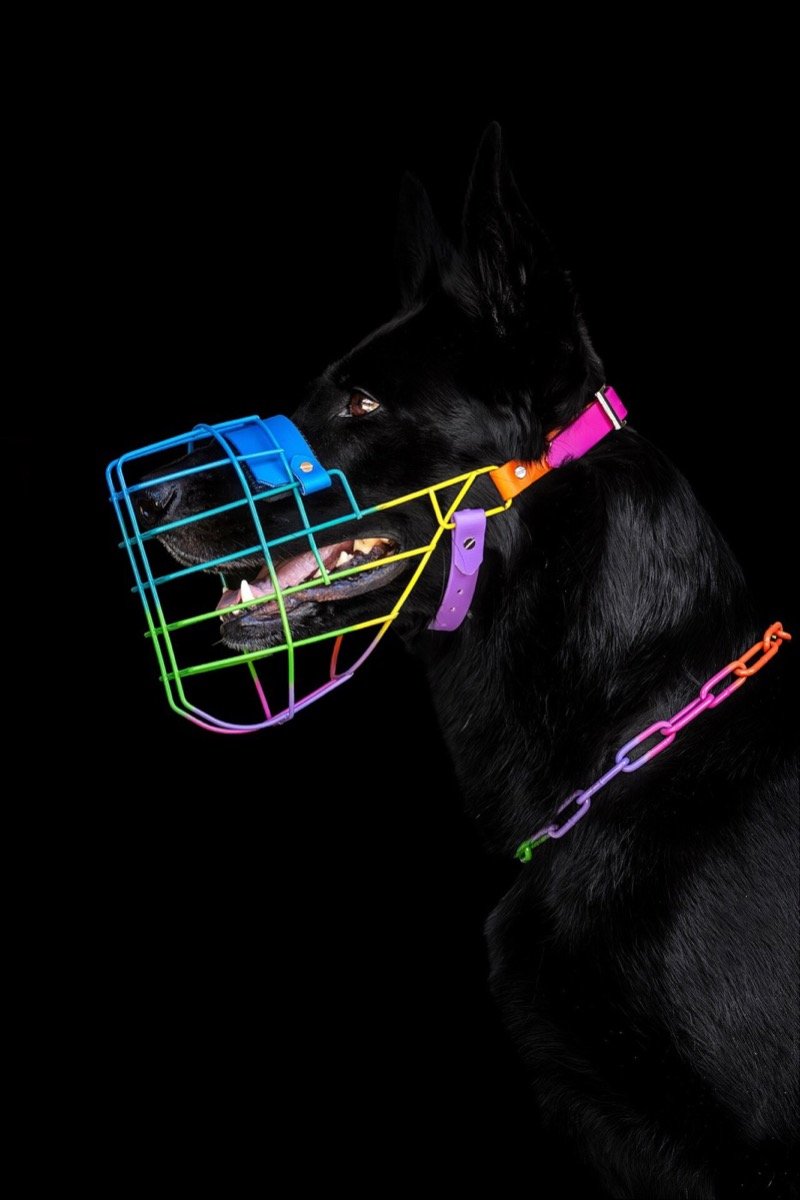

No. A muzzle stops bites, not fights. A basket muzzle makes a mistake less costly, but it does nothing about why the dogs fight. Use it as a safety tool inside a plan of separation, vet checks and gradual training, never as the plan itself.
After a fight, a muzzle feels like the obvious fix. Put one on the dog who bit, and the problem is solved. I understand the logic. But a muzzle covers a mouth. It doesn't touch the reason the dogs fought.
Here is what veterinary sources actually say a muzzle can do, what it can't, and how to use one safely if your dogs live together. For the full plan, see our step-by-step guide to stopping dog fights.
If a fight is happening right now, don't try to muzzle either dog. Never reach in with your hands. Use a barrier, a loud noise, or the two-person wheelbarrow method from the Central California SPCA.
Do Muzzles Actually Stop Dog Fights?
No. Cornell's Riney Canine Health Center describes a basket muzzle as a tool to "humanely prevent dog bites." That is a narrower job than preventing a fight.
The Muzzle Up! Project, which teaches muzzle training, says it plainly: the muzzle itself will not fix a dog's reactivity or dog-to-dog aggression. It is a tool that lets you work safely on training. The training is what changes the behavior.
A veterinarian at Synergy Veterinary Behavior compares a muzzle to a seat belt. You wear it in case something goes wrong. You don't buckle up and then go looking for a post to run into.
What Does a Muzzle Protect Against?
- Bite wounds. A basket muzzle covers the mouth. That lowers the chance that a bad moment becomes a vet bill or a person with a bite.
- The "one wrong second." The first supervised minutes back together are when a mistake is most likely. A muzzle lets a near-miss stay a near-miss.
- A dog in pain. Cornell notes that even the friendliest dog may be more inclined to growl or bite when handled in ways they aren't used to or when they're in pain.
That is real value. It just isn't the same as a solution.
What Does a Muzzle Not Do?
It doesn't fix the cause
Fights between housemates usually have a trigger: food, a toy, a doorway, excitement, pain, or something seen through a window. A muzzle leaves every one of those in place. Our guide on why dogs in the same home fight covers the common ones.
It doesn't protect the other dog
Synergy's veterinarian makes this point about dog parks. Muzzling your dog only prevents him from biting. It won't keep him from being bitten if another dog becomes aggressive. In a two-dog home, muzzling one dog leaves the other free to bite.
It can add stress, and stress raises reactivity
The Muzzle Up! Project warns that even when a dog can't put teeth on skin, being pushed into a situation that makes him react is still dangerous and strengthens the reactivity. In the same dog-park example, Synergy warns that it can make the behavior worse. Cornell advises against putting a dog in scary situations while he is still getting used to the muzzle.
It doesn't make it safe to leave them alone
Cornell says not to leave a muzzle on an unattended dog. It can come off, and the dog could chew it up or swallow pieces. A muzzle never replaces supervision or a closed door.
So When Is a Muzzle the Right Tool?
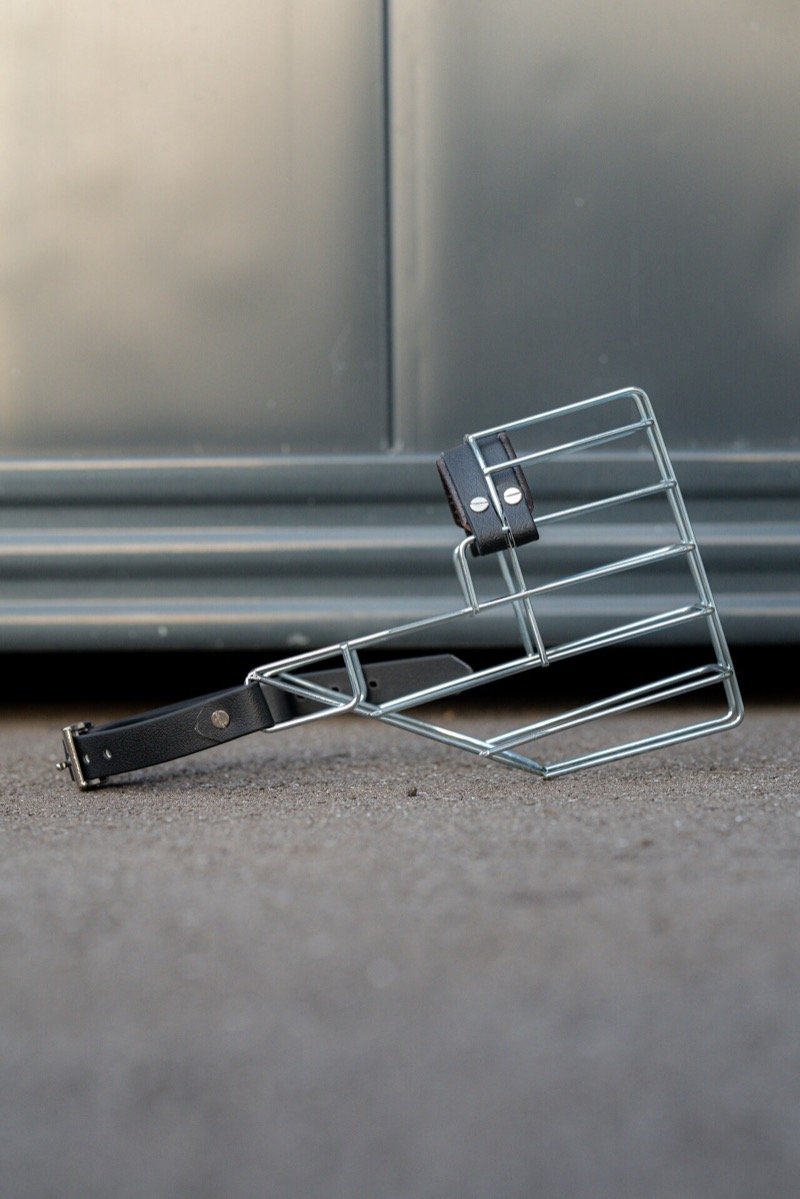
When it sits inside a bigger plan. The American Veterinary Society of Animal Behavior (AVSAB) says some dogs with a history of aggression should, or must, wear a muzzle during behavior therapy to keep everyone safe. A basket muzzle is ideal because the dog can take treats, drink and pant.
In the protocol from veterinary behaviorist Dr. Christine Calder on Veterinary Partner (VIN), basket muzzle training is a core step. The dogs are not together until both are 100% comfortable wearing them. Then come the later stages: parallel walks, short supervised sessions, and constant separation when you can't give the dogs your full attention.
Synergy adds a quieter benefit. A muzzle lets owners relax and focus on the behavior work instead of worrying that someone will get hurt. We walk through that sequence in how to reintroduce dogs after a fight.
Which Muzzle Should You Buy?
For dogs who need a muzzle at home, the answer is a basket muzzle. Here is how the two common types compare, based on Cornell and Synergy:
| Basket muzzle | Slip (fabric) muzzle | |
|---|---|---|
| Panting and drinking | Yes, with a proper fit | No, when fitted snugly |
| Treats while wearing it | Yes, through the basket | Limited |
| How long | About an hour at a time, supervised (Synergy) | About 10–15 minutes, never outdoors in heat (Synergy) |
| Best for | Training, behavior work, supervised time together | Quick vet-style procedures |
Cornell says nylon muzzles that constrict the mouth are not appropriate for most situations. Synergy adds that a slip muzzle loose enough for a dog to pant is loose enough for the dog to bite.
On fit: adjust the strap so it can't slip over the head, with one to two fingers fitting underneath (Cornell). VIN's Dr. Calder prefers a muzzle with a metal buckle over plastic clasps, which can break. Flat-faced dogs may need a custom-fit basket, per VIN. Check the fit before you ever count on it.
How Do You Train a Dog to Wear a Muzzle?
Slowly, and with treats. Cornell breaks it into two stages: comfort putting the nose in, then comfort with the strap. These steps follow Cornell and VIN's Sandra Robbins, a veterinary technician and certified trainer:
- Put a high-value treat inside the muzzle and let your dog come to it at his own pace. The dog moves toward the muzzle, never the other way around.
- Once his nose goes in, praise and back the muzzle away. Then offer it empty and feed a treat through it the instant his nose goes in.
- Keep sessions to 1–2 minutes, a few times a week, until he reliably pushes his nose in.
- Only then add the strap, loosely, and treat right away. At first, unclip it immediately. Add treats one by one before you extend the time.
- Make it fun: wear it for something he loves, like a walk. Take it off before he starts to worry.
If either dog has a history of biting or handling sensitivity, Cornell suggests a positive-reinforcement trainer or a board-certified veterinary behaviorist.
A sore or stiff dog is less tolerant of being bumped or crowded. Once your vet has checked, we looked at one joint-support option in our independent review. It's support alongside your vet's plan, not a fix for aggression.
Read our UltraK9 Pro review → Independent review · we may earn a commission at no extra cost to you.What Mistakes Make Muzzles Backfire?
- Muzzling for the first time on the day of the reunion. Train each dog separately, well ahead. The muzzle should predict treats, not trouble.
- Pushing it onto the dog. If you have to force it, he isn't ready. Go back a step.
- Only using it before stressful events. The Muzzle Up! Project describes a dog who only wore her muzzle around strangers and other dogs, so she learned it meant stress. Practice during calm, fun moments too, like on the sofa or at mealtime.
- Treating it as permission to relax. A muzzled dog still needs the same distance, supervision and short sessions.
- Leaving it on unattended. See Cornell, above.
- Skipping the vet. If pain is behind the fighting, no muzzle will change that.
When Should You Call a Professional?
If any fight has drawn blood, if a person was bitten, if the fights are escalating, or if you can't get a dog to accept a muzzle without stress, ask your vet for a referral to a veterinary behaviorist. A muzzle buys safety. A professional helps with the part a muzzle can't touch.
Impulse control, settling on a mat and a reliable "touch" are the skills that make a muzzle plan work. Brain Training for Dogs teaches them in short daily games. We reviewed it honestly, including who it isn't for.
Read our Brain Training for Dogs review → Independent review · we may earn a commission at no extra cost to you.Frequently asked questions
Do muzzles stop dogs from fighting?
No. A muzzle prevents bites, it does not prevent fights. Cornell describes it as a tool to humanely prevent dog bites, and the veterinary behaviorists we cite say it won't fix the cause of the aggression. Used well, it makes a mistake less costly while you do the real work: management and training.
Should I muzzle both dogs or just one?
Both, during any supervised time together. Veterinary behaviorist Dr. Christine Calder says the dogs should not be together until both are fully comfortable wearing muzzles. Muzzling one dog leaves the other free to bite, and a muzzled dog can still be bitten.
Can I leave muzzled dogs alone together?
No. Cornell warns never to leave a muzzle on a dog who is unattended, because it can come off and the dog could chew or swallow pieces of it. Muzzled dogs still need your full attention, or they need to be separated.
How long can a dog wear a basket muzzle?
A veterinarian at Synergy Veterinary Behavior advises about an hour at a time while supervised for a basket muzzle, and no more than 10 to 15 minutes for a snug slip muzzle, which blocks panting. Short, calm sessions are the goal during training.
Will a muzzle make my dog more aggressive?
Not if it is introduced with treats and never forced. Cornell and VIN both describe muzzle training as pairing the muzzle with good things. The risk is in using it as a punishment or putting a muzzled dog into situations that stress him, which can make behavior worse.
Are muzzles cruel?
A properly fitted basket muzzle lets a dog pant, drink and take treats, and VIN's Sandra Robbins says muzzles should never be viewed as punishment. Cornell notes muzzled dogs can get more gentle handling and less physical restraint, which most dogs prefer.
Sources
Where this guide makes a claim about behavior or safety, this is where it comes from. Checked October 2026.
- Cornell University College of Veterinary Medicine, Riney Canine Health Center. Basket muzzle training (with the Duffield Institute for Animal Behavior). Page updated December 23, 2025. Accessed October 2026. vet.cornell.edu
- Synergy Veterinary Behavior. The Misunderstood Muzzle. Accessed October 2026. synergybehavior.com
- The Muzzle Up! Project. Muzzles are a tool, not a green light to ignore criteria. Accessed October 2026. muzzleupproject.com
- Veterinary Partner (VIN). Robbins, S., CVT, VTS (Anesthesia & Analgesia), CPDT-KSA, KPA-CTP. Desensitizing Your Dog to a Muzzle. Published August 17, 2021. Accessed October 2026. veterinarypartner.vin.com
- Veterinary Partner (VIN). Calder, C., DVM, DACVB. Aggression Between Familiar Dogs. Published January 5, 2021. Accessed October 2026. veterinarypartner.vin.com
- American Veterinary Society of Animal Behavior (AVSAB). Introducing a Muzzle. Accessed October 2026. avsab.org
- Central California SPCA. How to Break Up a Dog Fight the Right Way. Accessed October 2026. ccspca.com

Canine behavior writer & rescue foster
Megan has fostered more than 30 rescue dogs and manages tense moments with distance, gates, and counter-conditioning, never confrontation. She writes PawHonest to share the honest, hype-free advice she wishes she'd had sooner.
A note on trust: I'm an experienced foster and an informed owner, not a veterinarian or veterinary behaviorist. If any dog has bitten a person or drawn blood, or the aggression is escalating, get a veterinary behaviorist or certified behavior consultant involved. This guide is educational, not a substitute for that. PawHonest is reader-supported: we may earn a small commission on purchases through our links, at no extra cost to you, and only recommend what we'd use on our own dogs.