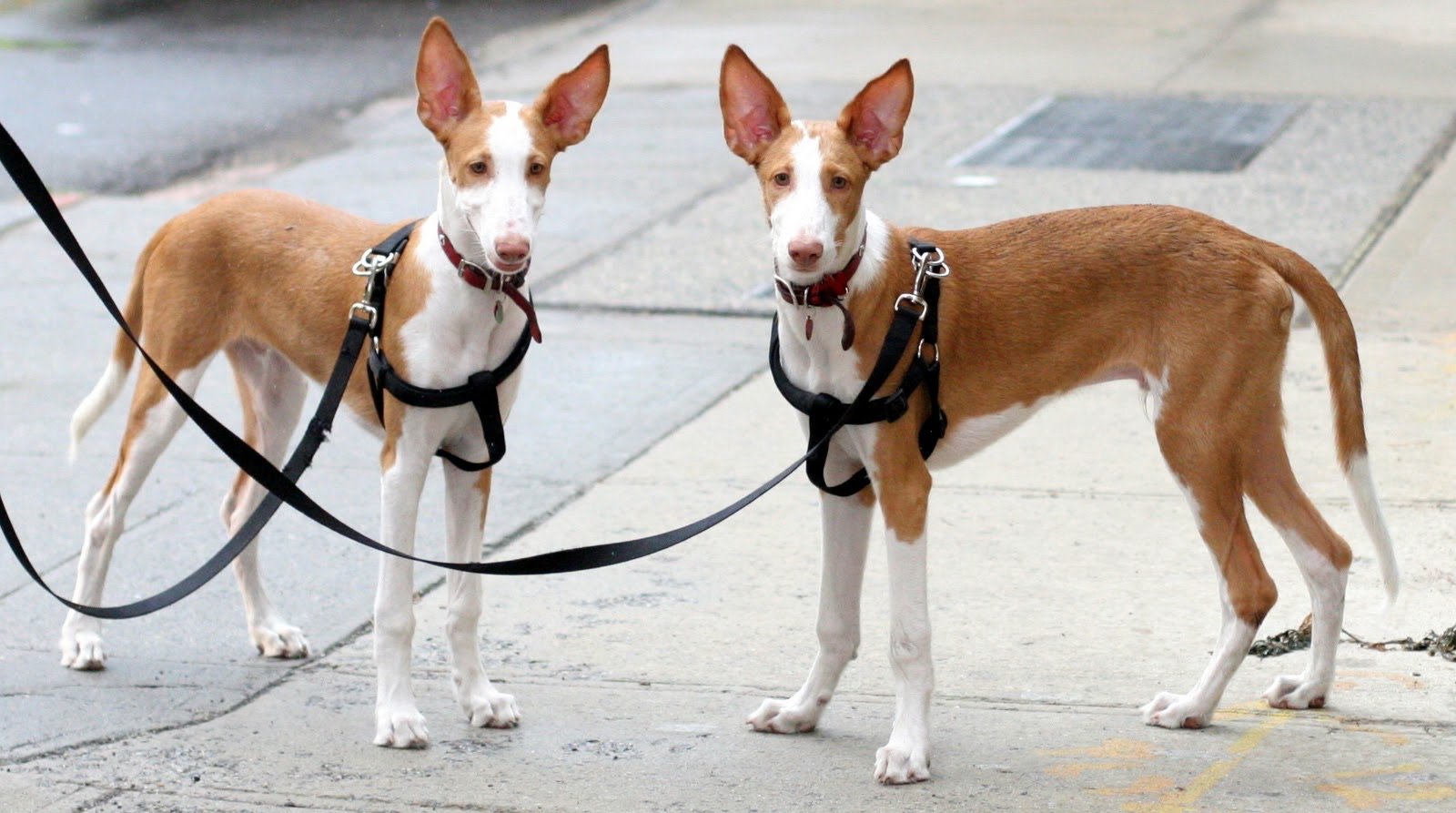

Stopping two dogs from fighting takes a structured protocol, not a single fix: separate them completely with no visual contact, get both dogs checked by a vet, teach each dog to wear a basket muzzle as a positive skill, then rebuild trust in stages — safe havens, parallel walks, short supervised time together — before ever leaving them alone again. Rushing any step is the most common reason it fails.
We already covered why dogs fight in the same home — the triggers, the age pattern, the medical causes. This guide is the part people actually ask for next: what to physically do, in what order, starting today. I've run this exact sequence with foster pairs more than once, and the households that succeed are almost always the ones that follow the order, not the ones that move fastest.
If a fight is happening right now: with two people, use the wheelbarrow method — each person lifts their own dog's back legs and pulls the dogs apart, turning away so they can't re-engage. Alone, never reach for a dog's mouth or collar near the face — pull back on a harness or the base of the tail instead, and stay back if it's too dangerous to get close. Check both dogs for hidden puncture wounds under the fur afterward, and see a vet the same day for anything beyond a scrape. Full breakup details and why fights start are in the companion article.
Step 1: Stop all contact, starting now
Before anything else, the dogs need zero opportunity to rehearse the fight again. That means separate rooms, baby gates, or crates — with no visual contact, not just physical distance. Two dogs who can see each other through a gate are still negotiating tension, even if they can't reach each other.
Set up a rotation so both dogs still get walks, play, and attention, just never together: one dog out while the other is gated in a different room, then switch. This stage isn't a punishment for either dog. It's what removes the ability to practice the fight while you work through the rest of the plan.
Step 2: Get both dogs checked by a vet
Do this before you troubleshoot anything behavioral. Pain, a skin or ear infection, or a change in one dog's scent from illness can change how the other dog reacts to being approached — and no amount of muzzle training or reintroduction work fixes a fight that's actually medical. Veterinary behaviorists writing for VCA Animal Hospitals list a physical exam as the first step in any aggression assessment between household dogs, not an afterthought.
This is also when you rule out the age pattern: aggression between dogs living together most often starts when the younger dog reaches social maturity, roughly between one and three years old, and begins contesting resources it previously deferred on without question.
The age range in which fighting between household dogs most often begins, as the younger dog matures socially and starts testing resources it used to leave alone.
Source: VCA Animal Hospitals, veterinary behaviorists Lindell, Horwitz & LandsbergStep 3: Find the actual trigger
You can't manage what you haven't identified. For a week, write down exactly what happened in the seconds before each incident: where each dog was, what resource was nearby, what either dog could see or hear. A pattern almost always shows up faster than expected — a food bowl, a doorway, a person walking past the window.
- Resource guarding — food, a toy, a resting spot, or a person. The most common trigger, and usually the most manageable once named.
- Tight spaces — narrow doorways, crates placed too close together, or play that escalates past either dog's comfort.
- Redirected aggression — one dog gets aroused by something out of reach and turns on the nearest dog instead. This can look random if you didn't see the original trigger.
Step 4: Teach each dog to wear a basket muzzle
This is the step most owners want to skip, and the one that makes every later step safer. A buckle-style basket muzzle — not a soft fabric one — lets a dog pant, drink, and take treats normally, which is what makes it possible to train as a positive skill instead of forcing it on.
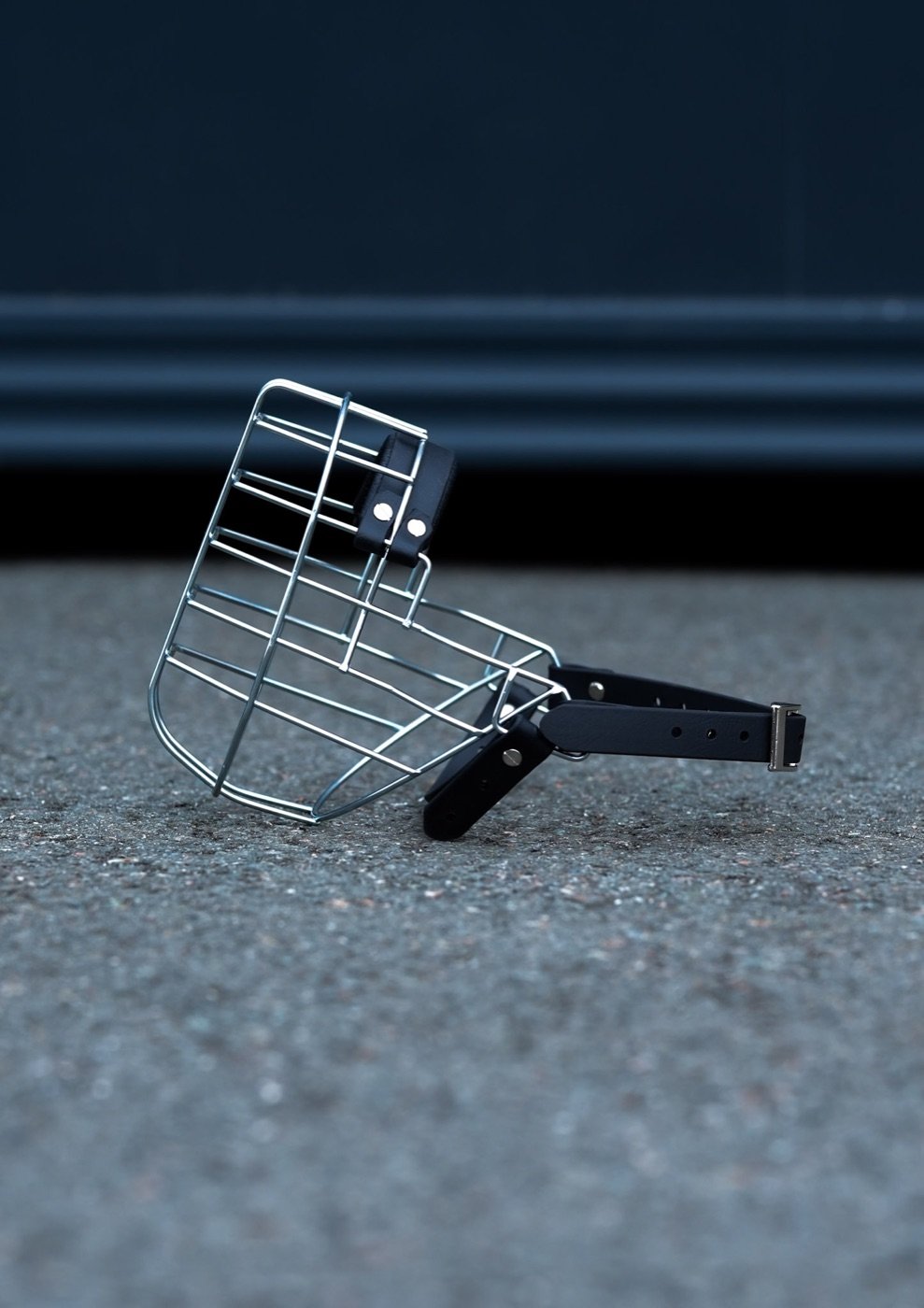
Go slowly, in short sessions, over several days:
- Let the dog sniff the muzzle and eat treats near it — no muzzle contact yet.
- Smear something the dog loves (peanut butter, soft cheese) inside the basket and let them push their nose in on their own to lick it, then pull away freely.
- Once they're pushing in eagerly, buckle it for one second, unbuckle, treat. Extend the time by a few seconds each session.
- Practice normal life in it — sitting, walking, a short game — before you ever use it during a reintroduction.
Do this with both dogs separately. Neither one wears the muzzle for the first time on the same day you're trying to reintroduce them.
While you're running this protocol, each dog spends real time alone. An under-stimulated dog is more reactive, not less — frustration is exactly what spills over into guarding and redirected aggression. Brain Training for Dogs gives each dog structured, solo mental work to burn that energy during separation.
Read our Brain Training for Dogs review → Independent review · we may earn a commission at no extra cost to you.Step 5: Give each dog a safe haven
A crate or a room where only good things happen — food puzzles, a chew, calm background noise, nothing stressful ever staged there. Each dog needs somewhere they can fully relax without the other dog around, and that sense of safety is what everything else in the plan is built on top of. Skipping this and rushing straight to reintroduction is a common reason plans stall.
Step 6: Parallel walks before anything off-leash
Once both dogs are comfortable in their muzzles, walk them side by side — one adult handling each dog — starting at a distance where neither dog reacts, then closing the gap over multiple sessions only as both stay relaxed. This is also a good point to teach each dog to settle on a mat; it gives you a concrete cue to use once they're back in the same room.
This is the same patience my step-by-step home training guide asks for elsewhere — small, boring, repeated wins, not one dramatic breakthrough.
Step 7: Short, supervised time together
Both dogs muzzled and on leash, one adult per dog, sitting on opposite sides of a room with a long-lasting chew or toy each. Keep sessions short — a few minutes — and end on calm, not on the first sign of trouble. Watch for a hard stare held longer than three seconds, a stiff posture, or either dog fixating, and redirect or end the session before tension builds, not after.
| Signs you're ready for the next stage | Signs to drop back a step |
|---|---|
| Loose body, soft eyes, ignoring each other or briefly sniffing | Hard stare held more than 3 seconds, stiff tail or body |
| Takes treats calmly with the other dog in the room | Refuses food, won't settle, or scans constantly |
| Several calm sessions in a row at the current distance | Any growl, snap, or lunge, even without contact |
| Recovers quickly if startled by something else | Takes minutes to settle after a small stressor |
Step 8: Extend time together gradually — and never skip supervision
Increase duration and reduce equipment (leash, then muzzle) only after multiple consistently calm sessions at the current stage, never after just one. Keep feeding fully separate through this entire process and generally afterward too, since food stays one of the most common triggers even between dogs who are otherwise getting along again. Don't leave the dogs alone together unsupervised until a professional has told you it's safe — that can take weeks, and getting there early is the whole point of going slowly now.
Golden rule: a relapse means the last stage moved too fast — it doesn't mean the plan failed. Drop back two steps, not zero, and continue. Most successful cases include at least one setback along the way.
How do I read the warning signs before the next fight?
Shelters that manage dog-to-dog conflict daily teach the same short list: cowering, lip licking, an exaggerated yawn, turning away, flattened ears, a tucked or stiffly held tail, "whale eye" (head turned away, one eye still fixed on the other dog), and piloerection — the hair standing up along the spine. None of these guarantee a fight, but any of them is the cue to calmly separate before it escalates, not after.
Reading rising stress accurately is the same skill that makes separation anxiety and reactive on-leash behavior easier to manage — the earlier you catch it, the smaller the intervention needed.
When does this need a professional, not just patience?
Call a veterinary behaviorist (credential DACVB) or a certified behavior consultant if any fight has drawn blood, fights are increasing in frequency or intensity, you can't identify a consistent trigger even after tracking incidents, or you don't feel safe managing the dogs day to day. Board-certified behaviorist Dr. Christine Calder, writing for Veterinary Partner, notes that aggression between female dogs tends to be the hardest to resolve and carries the highest injury risk — that pairing is worth involving a professional early rather than waiting to see if it improves alone. Medication for anxiety may also be recommended for one or both dogs during this process; that's a normal part of treatment, not a sign the plan failed.
A sore or less mobile dog gets snappier about being approached or bumped — sometimes that's most of the story. Once your vet has confirmed or ruled out a medical cause, ongoing joint and mobility support is a fair next step alongside their plan. We reviewed UltraK9 Pro honestly, including who it isn't for.
Read our UltraK9 Pro review → Independent review · we may earn a commission at no extra cost to you. Not a treatment for aggression — get a vet exam first.Frequently asked questions
How long does it take to stop two dogs from fighting?
Most professionally guided cases take somewhere between several weeks and a few months, depending on the severity of the fights and how consistently the household follows the plan. Skipping steps to go faster is the single most common reason a reintroduction fails and the dogs end up worse than before.
Can I skip muzzle training and just reintroduce them carefully?
You can, but it removes your safety net during the exact stage where a mistake is most likely — the first supervised moments back together. Muzzle training takes only a few days of short, reward-based sessions, and it lets a near-miss stay a near-miss instead of becoming a second fight.
What if the dogs fight again after weeks of progress?
Go back to full separation immediately, the same as after the first fight, and drop back at least two steps in the protocol before trying again. A relapse means the last stage moved too fast, not that the plan failed — most successful cases include at least one setback.
Do I need a professional, or can I do this myself?
A motivated owner can run the early stages — separation, muzzle training, a safe haven for each dog — without help. Bring in a veterinary behaviorist (DACVB) or certified behavior consultant before the first supervised reintroduction if any fight has drawn blood, since that is the highest-risk step in the entire process.
Should I rehome one of the dogs instead?
Rehoming is a legitimate option, not a failure, when the fighting is severe, escalating, or the household can't manage safe separation. It's a decision worth making with a professional's input rather than in the middle of a crisis, since some pairs genuinely do better living apart.
Is it safe to let the dogs eat in the same room once things calm down?
Not until well after supervised time together is going consistently well. Food is one of the most common fight triggers, so feeding stays fully separated — different rooms or crates — for the entire protocol and often permanently, even after the relationship is repaired.
Sources
Where this guide makes a claim about behavior or safety, this is where it comes from. Checked September 2026.
- VCA Animal Hospitals. Lindell, E., Horwitz, D. & Landsberg, G. Dog Behavior Problems: Aggression Between Household Dogs — Assessment. Accessed September 2026. vcahospitals.com
- Veterinary Partner (VIN). Calder, C., DVM, DACVB. Aggression Between Familiar Dogs, 2021. Accessed September 2026. veterinarypartner.vin.com
- Merck Veterinary Manual. Landsberg, G., DVM, DACVB. Behavior Problems in Dogs — Behavior Problems Associated with Aggression. Accessed September 2026. merckvetmanual.com
- Central California SPCA. How to Break Up a Dog Fight the Right Way — the wheelbarrow method and post-fight care. Accessed September 2026. ccspca.com
Canine behavior writer & rescue foster
Megan has fostered more than 30 rescue dogs, including several multi-dog households with real tension to manage, and has rebuilt every one of those relationships with force-free management — never by letting dogs "sort it out." She writes PawHonest to share the honest, hype-free advice she wishes she'd had sooner.
A note on trust: Any fight that draws blood, or a pattern of repeated fighting, deserves a veterinary and behaviorist evaluation — this guide is not a substitute for that. PawHonest is reader-supported: we may earn a small commission on purchases through our links, at no extra cost to you, and only recommend what we'd use on our own dogs.