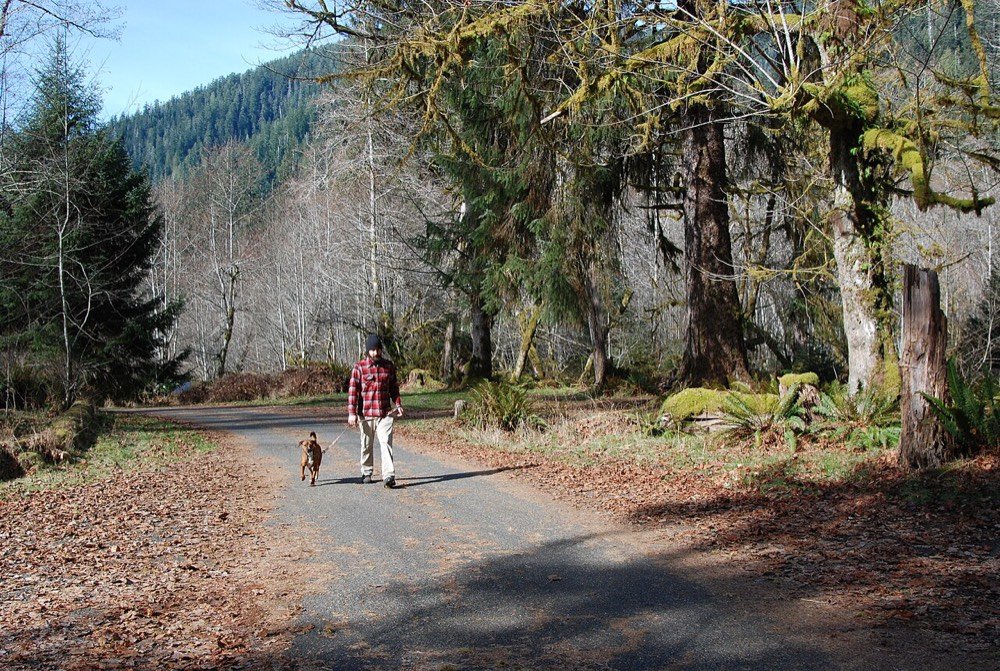

Sudden aggression on walks usually comes from pain or illness, fear, or frustration at being held back by the leash. Book a vet exam first, then work out the trigger. Don't scold. Add distance, keep the leash loose and reward calm behavior.
Your dog has walked past the same houses for years. Then one morning he lunges at a stranger, or snaps at a dog across the street, and you're left holding a leash and a racing heart. It feels like it came from nowhere.
It rarely does. Behavior that looks sudden usually has a cause we didn't see building. Here is what veterinary sources say about why it happens, what to check first, and how to handle the next walk safely.
Safety first. If your dog has bitten or broken skin on a person or another dog, stop walking him in public until you have talked to your vet or a veterinary behaviorist. A fear-based dog who feels cornered can bite even when the other person means well.
Why Is My Dog Suddenly Aggressive on Walks?
Three causes come up again and again in the veterinary sources: pain or illness, fear, and frustration. VCA's board-certified veterinary behaviorists (Lindell, Martin and Buzhardt) put it this way: a dog that experiences fear, anxiety, frustration or pain may be less tolerant of perceived threats and may respond with an aggressive display.
Notice what is missing from that list: "dominance" and "being stubborn." The sources we checked don't frame it that way. They frame it as a dog who feels something is wrong and is trying to make it stop.
Could Pain or Illness Be Behind It?
Check this first, especially if the change was sudden. VCA says bites are most likely when a dog's arousal is high, when he is physically ill or in pain, or when earlier, lower-level warnings were ignored. It adds that aggression may be caused by pain or by diseases such as those affecting the nervous system, so your vet should examine your dog carefully.
The ASPCA says the same in plainer words: an otherwise gentle, friendly dog can behave aggressively when in pain. On a walk, pain has plenty of chances to show up. A sore hip on stairs, a tender paw on pavement, an ear infection when another dog's head comes near.
Clues that it might be physical:
- The change started within days or weeks, not slowly over months.
- He is stiff getting up, slower on stairs, or licking or favoring a limb.
- He reacts mostly when something comes close to a sore spot: a hand on the collar, a harness going on, a dog bumping into him.
- He is also different at home: more irritable, sleeping differently, less interested in food.
Once your vet has ruled out other causes, joint comfort is one thing some owners support in older or active dogs. We looked at one option in our independent review. It's support alongside your vet's plan, not a treatment for aggression.
Read our UltraK9 Pro review → Independent review · we may earn a commission at no extra cost to you.Is It Fear or Frustration?
If your vet finds nothing, the leash itself is the next suspect. Best Friends Animal Society says there are two main reasons dogs show leash reactivity: fear or frustration. It's worth telling them apart, because the body language is different.
| Fear | Frustration | |
|---|---|---|
| What he wants | The trigger to go away | To reach the trigger |
| Body language | Distance-increasing: snarling, growling, backing away | Distance-decreasing: bouncy, playful-looking barking |
| What the leash does | Blocks escape, so he "fights" instead | Blocks the greeting and adds to the frustration |
Veterinary Partner (VIN) gives two examples. A dog sees a balloon, barks, dodges away and hides behind its owner: that's fear. A dog pulls hard toward another dog barking at a fence, eyes wide, growling: fear again, and being restricted from escaping or reaching it makes the reaction worse.
VCA also explains why a fearful dog can look like he changed overnight. Fearful dogs often start with defensive postures, such as barking while backing away. If the scary thing keeps coming closer, they may switch to offensive ones, like lunging. Scolding makes it worse: the dog may become more frightened and lunge instead of backing off.
Why Does It Seem to Come Out of Nowhere?
Usually because the build-up was invisible. Three things can hide it:
Trigger stacking
Best Friends describes it as many small triggers piling up over time. Each one on its own may not push a dog over his threshold, but together they do. A noisy morning, a delivery truck, a cyclist, then a dog behind a fence. The last small thing gets the blame, but the whole walk did it.
Warnings that went unnoticed
Dogs usually warn before they bite. VCA lists the signals from low to high intensity: looking away, yawning or lip licking, ears pinned back, crouching or a tucked tail, stiffening or freezing, growling, snapping, then biting. If a dog has been freezing and stiffening for weeks, the lunge can feel brand new.
A dog who learned that warnings don't work
VCA notes that dogs punished for low-level displays may be at risk of behaving aggressively during social interactions. A dog told off for growling may stop growling. That doesn't mean the fear went away.
Is Reactive the Same as Aggressive?
Not exactly. Cornell's Riney Canine Health Center says reactive dogs are not necessarily aggressive dogs, but any reactive dog can be pushed into aggression, which is why reactivity should be taken seriously. Best Friends adds that many dogs who are leash-reactive do not show those behaviors off leash.
Our guide to what reactivity means and how to help goes into the difference. If the target is mostly other dogs, dog-to-dog aggression: causes and fixes is the next read.
What Should You Do on the Next Walk?
- Have the vet look at him first. Do this before any training plan if the change was sudden.
- Avoid the trigger for now. VIN suggests a different route, the other side of the street or a different time of day. Cornell's Dr. Katherine Houpt says to avoid triggers while you work on a plan, so the behavior doesn't become an ingrained habit, and to walk when others aren't out.
- Stay under threshold. If he notices the trigger but doesn't react, you're at a good distance. If he reacts, you're too close. Best Friends describes an "emergency U-turn": simply increase the distance until he's calm again.
- Keep the leash loose. Best Friends notes your stress travels down the leash. Take slow, even breaths. Don't physically hold him back, which can increase frustration and may lead to a redirected bite.
- Pay for calm. Carry tasty treats. When he sees something scary, feed a few. VIN says you are not rewarding fear, you are building new, happy associations. Cornell says to reward as soon as the trigger appears, at a safe distance.
- Use a front-clip harness or head halter if you need more control. VIN recommends them to maximize leash control and minimize discomfort, and says to check with a professional on how to use them. Our loose-leash walking guide covers the basics.
- Don't scold, jerk or use pain. VIN counts even shouting "no" as punishment if the dog finds it unpleasant, and says the risks outweigh the benefits. Best Friends warns against prong, choke and shock collars for reactivity.
One detail from Best Friends is worth remembering: skip the petting and cooing at a frightened dog in the moment. It won't reinforce fear, but it may make him feel more trapped, or he may redirect his fear onto you in the form of a bite.
The skills behind these steps are attention, impulse control and a quick "look at me." Brain Training for Dogs teaches them in short daily games, away from the trigger. We reviewed it honestly, including who it isn't for. It isn't a treatment for aggression.
Read our Brain Training for Dogs review → Independent review · we may earn a commission at no extra cost to you.What Mistakes Make It Worse?
- Training before the vet visit. If pain is the cause, no amount of treats will fix it.
- Testing him. Cornell says immersing a dog in situations where he is uncomfortable will increase his fear and may make behavior worse. Skip the dog park.
- Forcing greetings. Cornell reminds us a dog doesn't have to be friends with every person or dog. Tell people your dog is "in training" and ask them to keep their distance.
- Expecting a quick fix. VIN says there is none and that improvement can take days, weeks or months.
- Waiting too long. Behavior that is practiced gets stronger.
When Should You Call a Professional?
Right away for any sudden change: start with your vet. VCA says that if no physical disease is present, a veterinary behaviorist should assess your dog, and that the sooner you seek treatment, the better the chance for improvement. It also says that treatment can often reduce how often and how intense the aggression is, but may not "cure" it, and long-term management is typically needed.
Ask for help sooner if anyone has been bitten, if it's getting worse, or if you can't keep your dog under threshold. VIN says that if you aren't achieving success and things are getting worse, ask for help.
If a muzzle is on your vet's list, read what a muzzle can and can't do before you buy one. And if the target is another dog in your own home, redirected aggression may be what you're seeing.
Frequently asked questions
Why is my dog suddenly aggressive on walks?
The three most common reasons are pain or illness, fear, and frustration. VCA's board-certified veterinary behaviorists say a dog that experiences fear, anxiety, frustration or pain may be less tolerant of perceived threats. A sudden change is a reason to book a vet exam first, then look for the trigger.
Can pain make a dog aggressive on walks?
Yes. VCA says bites are most likely when a dog is physically ill or in pain, and the ASPCA notes an otherwise gentle, friendly dog can behave aggressively when in pain. If the change was sudden, have your vet examine your dog before starting any training plan.
Is leash reactivity the same as aggression?
Not exactly. Cornell says reactive dogs are not necessarily aggressive dogs, but any reactive dog can be pushed into aggression. Best Friends Animal Society adds that many dogs who are reactive on leash do not show the same behavior off leash.
Should I scold my dog for growling or lunging on walks?
No. VCA's behaviorists say not to confront or scold a dog who shows aggression, and warn that a dog scolded for low-level warnings may become more frightened or frustrated. Veterinary Partner (VIN) counts even shouting no as punishment, with risks that outweigh the benefits.
What should I do when my dog lunges at another dog on a walk?
Create distance, calmly, before your dog is over threshold. Cross the street or turn around, keep the leash loose, and reward calm behavior with treats. Cornell and VIN both recommend avoiding triggers while you work on a training plan, and Best Friends describes an emergency U-turn.
When should I call a professional?
Call your vet right away for any sudden change, and ask for a veterinary behaviorist referral if the behavior is getting worse, if anyone has been bitten, or if you can't keep your dog under threshold. VIN advises asking for help when you aren't achieving success and things are getting worse.
Sources
Where this guide makes a claim about behavior or safety, this is where it comes from. Checked October 2026.
- VCA Animal Hospitals. Lindell, E., VMD, DACVB; Martin, K., DVM, DACVB; Buzhardt, L., DVM. Aggression in Dogs. Accessed October 2026. vcahospitals.com
- Cornell University College of Veterinary Medicine, Riney Canine Health Center. Managing reactive behavior (reprinted from DogWatch, with Dr. Katherine Houpt). Accessed October 2026. vet.cornell.edu
- Veterinary Partner (VIN). Spooner-Raymond, M., LVT, VTS (Behavior), KPA-CTP. Leash Reactivity in Dogs. Published May 5, 2021. Accessed October 2026. veterinarypartner.vin.com
- Best Friends Animal Society. Dealing with Leash Reactivity. Accessed October 2026. bestfriends.org
- ASPCA. Aggression (classification of aggressive behavior). Accessed October 2026. aspca.org
Canine behavior writer & rescue foster
Megan has fostered more than 30 rescue dogs and manages tense moments with distance, gates, and counter-conditioning, never confrontation. She writes PawHonest to share the honest, hype-free advice she wishes she'd had sooner.
A note on trust: I'm an experienced foster and an informed owner, not a veterinarian or veterinary behaviorist. If a dog has bitten a person or another dog, or the aggression is sudden or escalating, get your vet and a veterinary behaviorist or certified behavior consultant involved. This guide is educational, not a substitute for that. PawHonest is reader-supported: we may earn a small commission on purchases through our links, at no extra cost to you, and only recommend what we'd use on our own dogs.