
A reactive dog is one that overreacts to a normal trigger, like another dog, a stranger, or a passing car, with barking, lunging, growling, or freezing that's out of proportion to the situation. It's usually rooted in fear or frustration, not dominance or "badness," and it's managed by keeping your dog below their reaction threshold while pairing triggers with something good. Correcting or punishing it tends to make it worse.
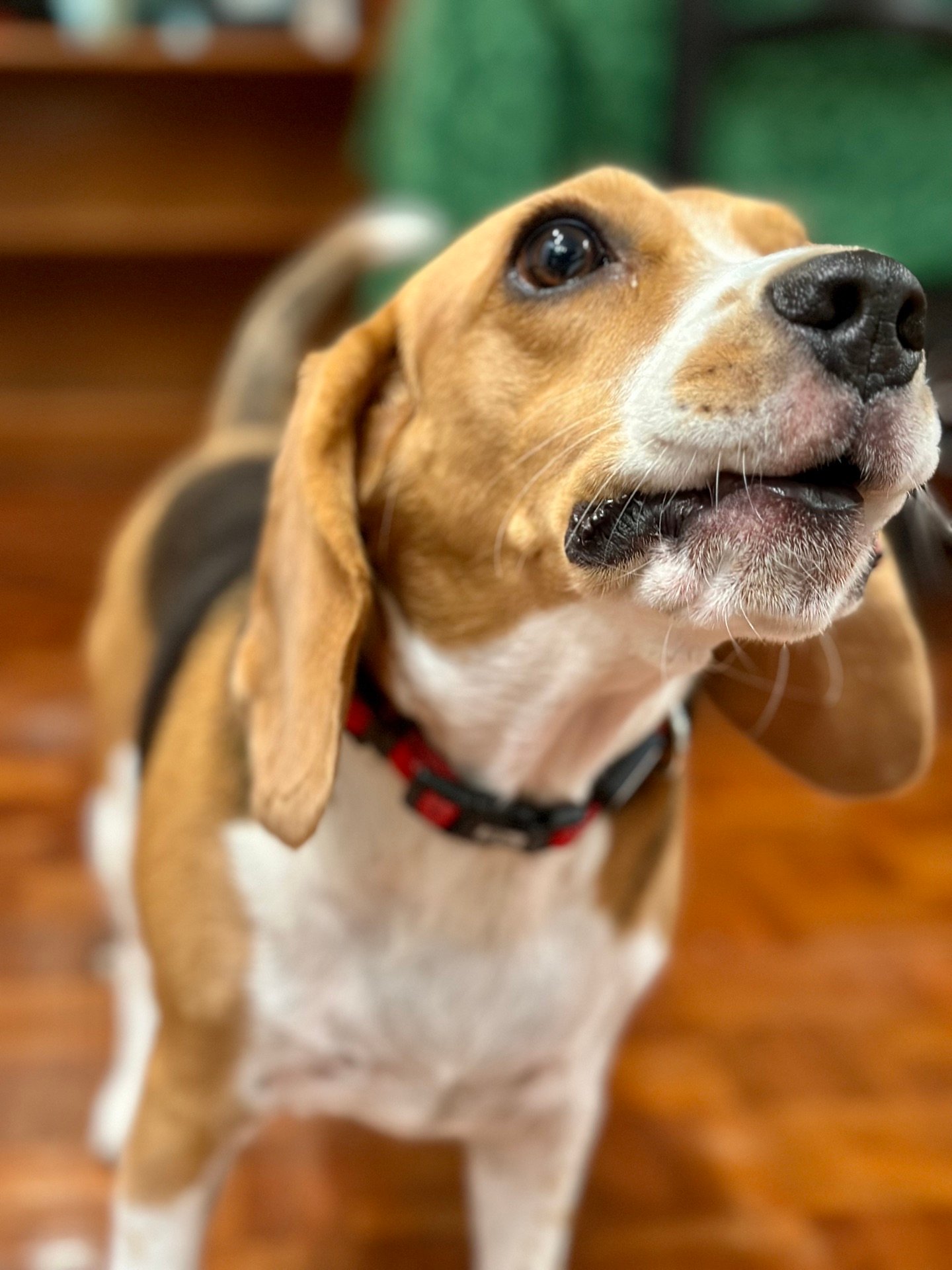
I fostered a hound mix, Baxter, who would go from zero to screaming-lunging the second he spotted another dog a block away, then act completely normal five seconds after it passed. That gap between "fine" and "losing it" is the whole story of reactivity, and it's smaller than most owners think.
This guide covers what reactivity actually means, why the internet's favorite fixes usually backfire, and the method that actually moves the needle. If your dog's reactivity is specifically toward other dogs in your own home, our guide to why dogs fight in the same household and the step-by-step reintroduction protocol go deeper on that specific case.
What Does "Reactive Dog" Actually Mean?
Formally, it's a dog that overreacts to a stimulus most dogs would barely notice. That stimulus, called a trigger, might be another dog, a stranger, a skateboard, or a delivery truck. The reaction, barking, lunging, growling, or freezing in place, is bigger and more intense than the situation calls for.
Dr. Katherine Houpt, behavior medicine professor at Cornell's Riney Canine Health Center, puts it simply: these dogs are usually fearful dogs. The reaction isn't the dog being defiant, it's the dog's nervous system deciding a normal thing is a threat and responding accordingly.
Reactivity is also context-specific. Plenty of dogs are reactive only on-leash (called leash reactivity) and are relaxed with the exact same trigger off-leash, because the leash removes their ability to create distance or flee, so they escalate instead.
Signs Your Dog Is Reactive, Not Just Excited
An excited dog and a reactive one can look similar for half a second, which is why so many owners miss it early. The body tells you which one you're looking at.
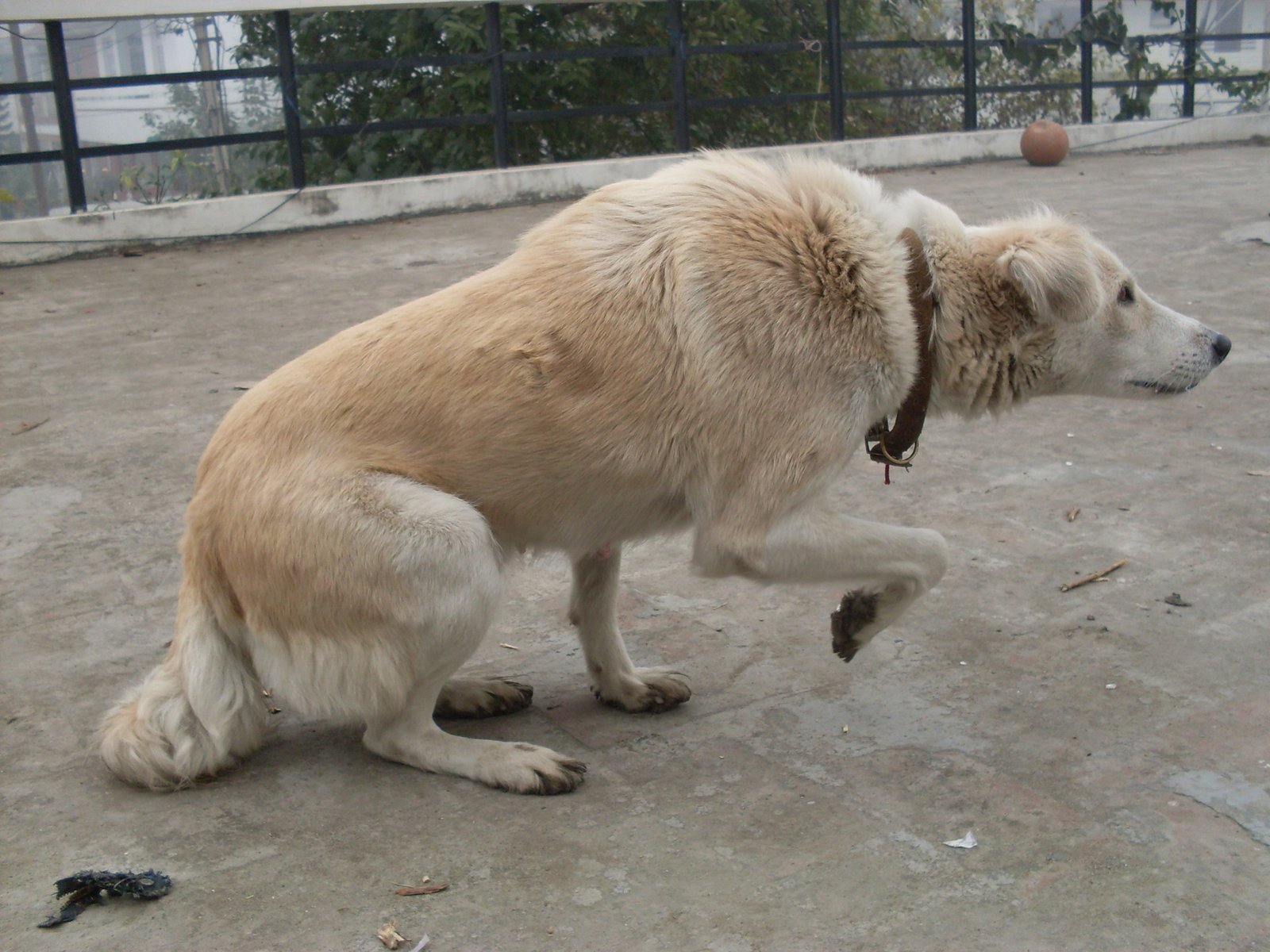
- Barking or whining that's sharp, repetitive, and doesn't stop when you move away
- Lunging or pulling hard toward the trigger, not away from it
- A stiff, frozen body or a hard, fixed stare (sometimes called "whale eye," where you see the whites of the eyes)
- Growling or snarling, showing tension in the face and body
- Piloerection, the hair standing up along the spine
- Trouble recovering — it takes minutes, not seconds, to settle after the trigger is gone
A happy, excited dog has a loose, wiggly body and recovers almost instantly once the exciting thing is out of sight. A dog with real reactivity stays keyed up, and the same trigger tends to produce the same intensity every single time.
What Causes a Dog to Become Reactive?
There's rarely one clean cause. Houpt and other behaviorists point to a handful of overlapping factors:
- Genetics — some dogs are simply wired more anxious, and reactivity can run in a line
- Lack of socialization — not enough safe, varied exposure to people, dogs, and environments during the critical puppy window
- A prior bad experience — one scary encounter with a specific type of trigger (a big dog, a man in a hat) can generalize into ongoing fear of that category
- Insufficient training — the dog never learned an alternative response to arousal, so barking and lunging became the default
Notice what's missing from that list: the dog trying to dominate you or the household. Current behavior science has moved away from the "dominance" framing entirely, reactivity and aggression are almost always about fear, frustration, or anxiety, not a power struggle.
Reactive vs. Aggressive: Where's the Line?
Reactive dogs are not necessarily aggressive dogs. Most never bite, they bark and lunge to increase distance from something scary, and once that distance exists, they settle.
Aggressive dogs show some of the same signals, stiff body, growling, staring, but the intent is different: to cause harm, not just to create space. The uncomfortable truth is that any dog with reactivity can be pushed into aggression if the trigger keeps getting closer and the dog feels it has no other option. That's exactly why reactivity is worth taking seriously early, instead of writing it off as "just noise on walks."
Why "Correcting" a Reactive Dog Often Backfires
The instinct when a dog is barking and lunging is to stop it, fast, often with a leash jerk, a sharp "no," or physically forcing the dog to sit. This is the single most common mistake I see in foster dogs that arrive already reactive.
A 2009 University of Pennsylvania survey of 140 dog owners, published in Applied Animal Behaviour Science, measured exactly what happens when owners use confrontational corrections. The results are the clearest data on this that exists.
The share of dogs that responded with aggression when owners used common "corrections": hitting or kicking the dog (43%), growling back at the dog (41%), forcing an item from the dog's mouth (39%), the "alpha roll" (31%), a hard stare-down (30%), and grabbing the dog's jowls (26%).
Source: Herron, Shofer & Reisner (2009), University of Pennsylvania, Applied Animal Behaviour Science 117:47–54In plain terms: the corrections that feel like they should establish control provoke an aggressive response in roughly a quarter to nearly half of the dogs they're tried on. A frightened animal that's cornered, stared down, or physically manipulated is defending itself, not learning a lesson.
Reward-based methods, by contrast, almost never triggered aggression in the same study. That's the entire case for force-free training in one number, and it's the approach behind every guide on this site.
Reactivity burns a huge amount of mental and emotional energy. A dog that never gets structured mental work outside of walks tends to be more on-edge, not less. Brain Training for Dogs gives your dog daily impulse-control and focus work that makes the threshold method below easier to run.
Read our Brain Training for Dogs review → Independent review · we may earn a commission at no extra cost to you.How to Help a Reactive Dog: The Threshold Method
The method that actually works isn't about stopping the reaction after it starts. It's about managing distance so the reaction never gets triggered in the first place, while slowly changing how your dog feels about the trigger.
1. Find your dog's threshold
The threshold is the closest distance to a trigger where your dog notices it but stays calm enough to take treats and respond to you. For most dogs starting out, that's much farther away than owners expect, sometimes the length of a soccer field.
2. Pair the trigger with something great, every time
The moment your dog notices the trigger at a safe distance, start feeding high-value treats, one after another, until the trigger is gone. This is counter-conditioning: over enough repetitions, the trigger itself starts to predict good things instead of danger.
3. Use "Look at That" instead of forcing eye contact away
Rather than yanking your dog's attention away from the trigger, teach them to glance at it and then look back to you for a reward. Trainers at Best Friends Animal Society use this "LAT" cue specifically because it lets the dog process the trigger instead of suppressing the reaction, which tends to hold up better under real-world pressure.
4. Close the distance gradually, never all at once
Only move closer to a trigger after several calm sessions in a row at the current distance. If your dog reacts, you moved too fast, back up and rebuild, you didn't fail.
| Signs you're at a workable distance | Signs you're too close |
|---|---|
| Notices the trigger, then looks back at you | Fixates and won't disengage |
| Takes treats normally | Refuses food entirely |
| Body stays loose | Body goes stiff, ears pin, hackles rise |
| Recovers within seconds once the trigger passes | Stays keyed up for minutes afterward |
This is the same underlying skill that makes structured mental games and early puppy socialization pay off later, teaching a dog to stay thoughtful instead of purely reactive under mild pressure.
Do Reactive Dogs Calm Down With Age?
Sometimes. Dogs generally reach social maturity between one and three years old, and some fear-based reactivity softens once a dog is past that period and more settled in general. But age on its own rarely fixes it.
Reactivity built on a specific bad experience, or one that's been practiced daily on walks for years without any counter-conditioning, tends to stay the same or get worse. The dogs who improve are almost always the ones whose owners actively worked the threshold method, not the ones who just waited it out.
Are Some Breeds More Prone to Reactivity?
Breed can influence a dog's baseline arousal, sensitivity to movement, or wariness of strangers, herding and guarding breeds are common examples people bring up. But breed is a tendency, not a sentence, and plenty of "chill" breeds develop serious reactivity from a bad experience or a socialization gap, while plenty of typically "intense" breeds never do.
Genetics loads the gun, in Houpt's framing, but experience and training decide almost everything else. Treating a specific dog in front of you, not a breed stereotype, is what actually predicts whether the threshold method will work.
When Does This Need a Professional, Not Just Patience?
Call a certified behavior consultant or veterinary behaviorist (credential DACVB) if your dog has ever bitten, if the reactivity is getting worse despite consistent counter-conditioning, if you can't find a workable threshold distance even in an empty parking lot, or if you don't feel safe managing walks day to day. Reactivity that's escalating is exactly the pattern the household aggression guide covers in more depth if the trigger is specifically another dog you live with.
Medication for anxiety is sometimes part of a professional's plan alongside training, and that's a legitimate tool, not a sign the training failed.
Golden rule: if your dog reacted, the trigger was too close, too fast, or both. That's information about distance, not a reason to correct the dog harder next time.
An under-stimulated dog has a shorter fuse around triggers. Structured brain work between walks lowers baseline arousal, which is exactly what makes the threshold method above easier to run consistently.
See our Brain Training for Dogs review → Independent review · we may earn a commission at no extra cost to you.Frequently asked questions
How do you fix a reactive dog?
You don't "fix" it with a single trick — you manage triggers while counter-conditioning changes how the dog feels about them. Keep your dog under threshold, pair the trigger with something good every time it appears, and work with a certified trainer or veterinary behaviorist if progress stalls or the dog has ever bitten.
What not to do with a reactive dog?
Don't yell, jerk the leash, use an alpha roll, or force your dog closer to a trigger to "get them used to it." A 2009 University of Pennsylvania study found these confrontational corrections provoked an aggressive response in roughly a quarter to nearly half of the dogs on which owners tried them.
Can reactivity be trained out of a dog?
Most reactive dogs improve significantly with consistent counter-conditioning, and many stop reacting to their main triggers entirely. Some dogs will always need more management around specific triggers than the average dog, and that's a realistic outcome, not a failure.
What calms a reactive dog down fast, in the moment?
Increase distance from the trigger first — that's faster than any cue. Then get your dog's attention with a high-value treat or a "look at that" cue, and move away calmly. Once your dog is over threshold and fully reacting, training doesn't work; the only job left is to get out safely.
Do reactive dogs calm down with age?
Some dogs become less reactive as they mature past the social maturity window of roughly one to three years, especially if the reactivity was fear-based and never escalated to a bite. Reactivity rooted in a bad experience or unmanaged practice tends to stay the same or worsen without training, age alone rarely resolves it.
Is a reactive dog the same as an aggressive dog?
No. A reactive dog overreacts out of fear, frustration, or anxiety, and most never bite. But any dog with reactivity can escalate into aggression if the trigger isn't managed, which is why trainers treat it seriously instead of writing it off as "just noise."
Sources
Where this guide makes a claim about behavior or safety, this is where it comes from. Checked September 2026.
- Cornell University, Riney Canine Health Center. Houpt, K., VMD, PhD. Managing Reactive Behavior. Accessed September 2026. vet.cornell.edu
- Herron, M.E., Shofer, F.S. & Reisner, I.R. (2009). Survey of the use and outcome of confrontational and non-confrontational training methods in client-owned dogs showing undesired behaviors. Applied Animal Behaviour Science, 117(1-2), 47–54. Accessed September 2026. sciencedirect.com
- Best Friends Animal Society. "Look at That" (LAT) Training for Reactive Dogs. Accessed September 2026. bestfriends.org
- PetMD. What Is a Reactive Dog? Signs and How To Help. Accessed September 2026. petmd.com

Canine behavior writer & rescue foster
Megan has fostered more than 30 rescue dogs, several of them reactive on arrival, and has never once used a correction-based method to work through it. She writes PawHonest to share the honest, hype-free advice she wishes she'd had sooner.
A note on trust: If your dog has ever bitten, or reactivity is escalating despite consistent training, get a veterinary behaviorist or certified behavior consultant involved, this guide is educational, not a substitute for that. PawHonest is reader-supported: we may earn a small commission on purchases through our links, at no extra cost to you, and only recommend what we'd use on our own dogs.